A toddler named Klieber Morán was pulled alive from a collapsed building in Venezuela — six days after twin earthquakes buried him under the rubble.
Story Snapshot
- Jordan’s Civil Defense team rescued a toddler alive from earthquake rubble in Venezuela’s La Guaira state on June 30, 2026 — six days after the disaster struck.
- The child, identified as Klieber Morán, received first aid on-site and was rushed to the hospital after the rescue.
- Venezuela’s acting President Delcy Rodriguez confirmed the rescue in a public Telegram message, and Jordan’s Civil Defense released footage of the operation.
- News outlets reported the child’s age differently — most said three years old, while the BBC reported two — a small but notable gap in the coverage.
A Child Pulled From the Rubble After Six Days
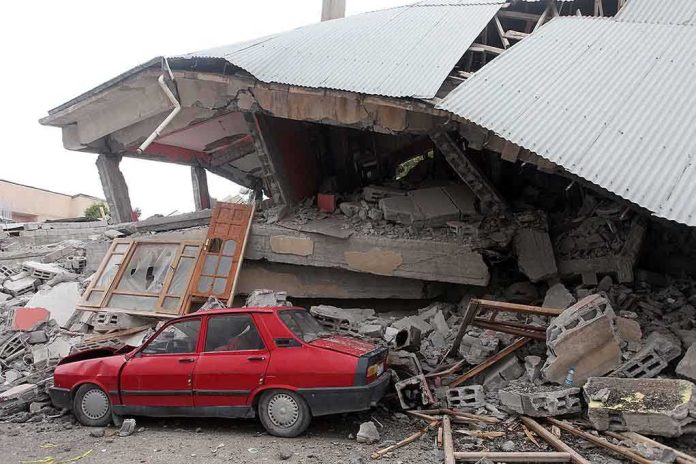
Jordan’s Civil Defense team rescued a young boy alive from the wreckage of the Los Corales Garden 1 building in La Guaira state, Venezuela, on June 30, 2026. The rescue came six days after twin earthquakes hit the region and caused widespread destruction. The child was identified as Klieber Morán. Venezuelan acting President Delcy Rodriguez confirmed the rescue in a Telegram post, calling it a sign of hope amid the ongoing disaster response.
Jordan’s Civil Defense released footage showing its team carefully freeing the boy from the debris. Rescuers gave him first aid at the scene before taking him to a hospital. The operation highlighted the skill and dedication of international rescue teams working in dangerous and unstable conditions long after the initial disaster — when most hope of finding survivors had faded.
International Teams Step In When Local Resources Fall Short
Jordan sent a trained search-and-rescue team to Venezuela as part of the international disaster response. Their success on day six is a reminder of what specialized teams can accomplish when they refuse to give up. It also raises a harder question: how many other countries hit by disasters lack the resources — or the international connections — to get that kind of help in time? Venezuela has struggled for years with economic collapse and weak public institutions, making outside support even more critical.
The broader disaster response in Venezuela has drawn limited international media attention. Detailed reporting on the death toll, the number of buildings destroyed, and the full scope of the damage has been sparse. That gap matters. When governments and media fail to document disasters fully, victims and their families are left without a clear record of what happened — and accountability becomes nearly impossible.
Small Discrepancies, Big Media Patterns
Most outlets — including Reuters, the Jordan Civil Defense, and several news agencies — reported the rescued child as three years old. The BBC reported him as two years old. The difference may seem minor, but it reflects a recurring problem in disaster coverage: basic facts like a victim’s age often get reported inconsistently when information flows are disrupted and verification is hard. It does not change the core story — a child survived against long odds — but it does show how easily details slip through the cracks.
JUST IN – Three-year-old rescued six days after Venezuela earthquakes: Jordanian civil defense
— Insider Paper (@TheInsiderPaper) June 30, 2026
Disasters like this one tend to produce a single powerful image or story — in this case, a toddler pulled from the rubble — while the fuller picture stays hidden. The total death toll, the number of families displaced, and the state of Venezuela’s emergency response system deserve the same attention as the miracle rescue. A government that is slow to report those numbers, and a media environment that moves on quickly, leaves ordinary people without the information they need to hold anyone accountable.
Sources:
youtube.com, reuters.com, ynetnews.com, instagram.com, facebook.com