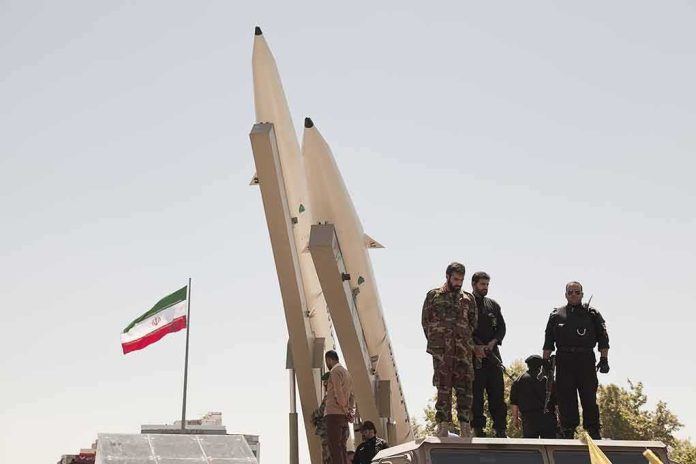
Iran’s state media announced that Supreme Leader Ali Khamenei was killed in joint U.S.–Israeli strikes, triggering vows of revenge and a scramble for control.
Story Snapshot
- Iranian state outlets reported Khamenei’s death after coordinated U.S.–Israeli strikes.
- Officials in Tehran promised revenge and signaled a prolonged crisis.
- Reports described no immediate successor and an interim transition setup.
- A 40-day mourning period underscored the scale of the shock.
What Iran Announced And Why It Matters
Iranian state media reported that Supreme Leader Ali Khamenei, age 86, died following joint airstrikes by the United States and Israel that hit targets in Tehran and beyond. The reports said the attacks were part of a wider campaign against Iran’s leadership network. The confirmation from state channels moved the story from rumor to national crisis. This matters because the Supreme Leader sits atop Iran’s political, military, and religious system, and directs key security and foreign policy choices.
BBC and Al Jazeera coverage showed anchors repeating the state announcement and describing a nation in shock. Several outlets said Khamenei’s daughter, son-in-law, and grandchild were also killed, pointing to a strike that hit his inner circle. The government declared a 40-day mourning period. That length is common in Shia tradition, but using it here signals the regime wants unity and time to organize after the loss of its top leader.
Signals From Tehran: Revenge And A Power Gap
Iran’s president and senior officials vowed revenge, calling it a right and duty after the killing. That message aims to deter further attacks and calm hardline voices at home. Yet state reports and broadcast summaries did not name a successor at the time, hinting at a stopgap phase. Deutsche Welle reported that an interim council had been formed to manage the transition. That step suggests leaders saw a vacuum and tried to lock in order fast.
Several reports framed the moment as a profound crisis for the Islamic Republic and warned of escalation risks across the region. Yet even those accounts cautioned that Iran’s Islamic Revolutionary Guard Corps remained intact and capable. That point matters for readers who think removing one man ends the system. Security organs, clerical networks, and patronage ties often carry on even after a leader falls, which can blunt the impact of decapitation strikes.
What This Means For Americans Across The Spectrum
American conservatives who see strength in neutralizing enemy leaders will view this as a major victory against a regime that targets U.S. partners and assets. American liberals who fear wider war will focus on blowback risks, oil shocks, and humanitarian harm. Both sides share a core worry: powerful institutions make choices with huge costs, while ordinary people have little say. The promise of revenge from Tehran and the lack of a named successor increase uncertainty that drives energy prices and security alerts.
For those frustrated with “the deep state” on either side, this episode shows how fast secret planning and elite decisions can reshape the world overnight. The strikes were kept tight, the announcements were controlled, and now markets, families with loved ones in uniform, and regional communities must live with the fallout. Leadership targeting may disrupt a hostile regime, but history shows it does not guarantee stability or change on terms that help regular citizens.
Open Questions And The Road Ahead
Key facts are established by broad reporting: state media confirmed Khamenei’s death; officials promised revenge; an interim setup began; and mourning was declared. What remains uncertain is how fast Iran’s elite will agree on long-term succession and how the security forces will coordinate strikes or restraint. Those choices will shape shipping security, oil prices, and the risk of a wider fight that could pull in U.S. forces and allies across the Middle East.
Sources:
en.wikipedia.org, aljazeera.com, youtube.com, cnn.com, rt.com, dw.com, bbc.com, npr.org, taylortailored.co.uk