
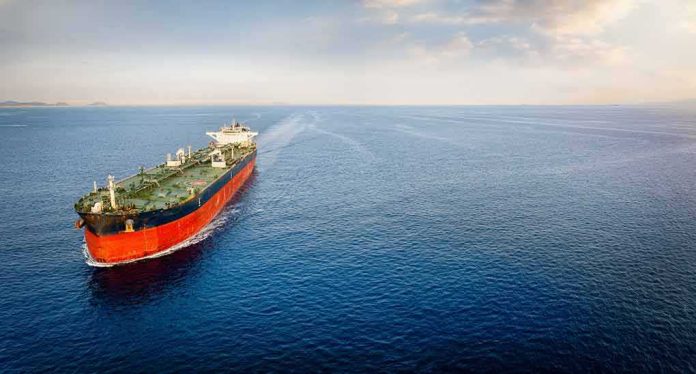
Two Saudi oil tankers flipped course in the Red Sea after Houthi warnings, and no shots were fired.
Story Snapshot
- Houthis declared an immediate naval blockade on Saudi Arabia, triggering tanker reversals.
- Reuters reported two Saudi crude carriers made U-turns after the warning, jolting oil markets.
- Saudi exports from Yanbu have shown resilience in past crises, limiting worst-case supply shocks.
- United States guidance flags higher risk in the Red Sea and Bab al-Mandab for commercial ships.
What Happened in the Red Sea on July 21
Reuters reported that two tankers carrying Saudi crude oil made U-turns in the Red Sea after a public warning from Yemen’s Iran-aligned Houthi movement on July 21, 2026. The announcement followed the group’s declaration of a maritime blockade on Saudi Arabia a day earlier, said to be effective immediately. The reversals marked the first clear disruption tied to the blockade claim, showing how a threat at a chokepoint can alter shipping choices quickly without combat.
The Bab al-Mandab Strait links the Red Sea to world markets. Houthis control Yemen’s coast along this narrow lane. That geography gives a small force leverage over very large flows of oil and goods. Past campaigns since late 2023 show that warnings, not only strikes, can push ships to reroute or delay. This time, the public warning alone appears to have prompted immediate adjustments by at least two Saudi-linked cargoes, underlining the power of perceived risk.
Why It Matters for Energy and Prices
Oil markets react to risk at chokepoints because even small delays can tighten supply. The Red Sea carries a major share of Saudi exports from the port of Yanbu, tied to the cross-country pipeline from the Gulf. If more ships hesitate, insurers may raise costs, and buyers may seek safer routes. That can add days and dollars to each barrel. Traders have seen this movie since 2023, and they price in the fear of a wider shutdown, even before shots are fired.
At the same time, Saudi operations in the Red Sea have shown toughness in earlier flare-ups. In April, trading sources told Reuters that crude loadings at Yanbu continued despite an attack on the East-West Pipeline, suggesting strong contingency plans and backups. MarineLink reported the port had recently pushed near its maximum throughput, signaling capacity to keep barrels moving when pressure rises. That record offers a counterweight to the darkest scenarios if shippers and Riyadh adapt again.
Security Signals: What Ships Are Being Told
The United States Department of Transportation’s Maritime Administration issued guidance warning United States-flagged commercial vessels of higher risk in the Red Sea, Bab al-Mandab, the Gulf of Aden, the Arabian Sea, and the Somali Basin. The notice highlights that ships with Automatic Identification System transponders on are at increased risk of targeting by adversaries in this region, and it urges stronger caution during transits. That advisory affirms that the danger is credible, even when attacks are not happening every day.
Security warnings, insurance shifts, and headlines can combine to slow commerce like a governor on an engine. Shipmasters weigh crew safety first. Owners weigh hull risk, premiums, and delivery penalties. A public threat by a group with a track record makes those choices harder. This is how asymmetric tactics work: low-cost signals cause high-cost reactions. When the Houthis talk about “an eye for an eye,” they aim to show reach at sea without risking a large fight in open waters.
The Bigger Picture: Power, Policy, and Pocketbooks
Americans watching gas prices know global shocks land at home fast. Families already face higher costs from years of supply snarls and wars. Voters on the right and left see leaders talk tough but struggle to keep shipping lanes safe and prices steady. A small militia can stall tankers while the world’s biggest powers argue over rules, budgets, and red lines. That gap feeds the sense that the system serves insiders while ordinary people pay the bill at the pump.
At least one of the oil tankers that yesterday U-turned in the Red Sea has performed a 2nd U-turn, heading again toward the Bab el-Mandeb controlled by the Houthis.
The vessel, carrying Saudi oil, is signalling "CHINA CREW & OWNER." At current speed, she will cross the strait in…
— Javier Blas (@JavierBlas) July 22, 2026
Washington and Riyadh may deter attacks, but they cannot erase risk overnight. Houthis can mix warnings with sporadic strikes, keeping markets on edge. Saudi Arabia can lean on spare capacity, storage abroad, and flexible routing to blunt the blow. Both things can be true at once: threats move ships today, and resilience limits damage tomorrow. For readers, the bottom line is simple. Until this standoff cools, energy costs will carry a conflict premium, and that hits every household budget.
Sources:
youtube.com, nytimes.com, en.wikipedia.org, reuters.com, turkiyetoday.com, bloomberg.com