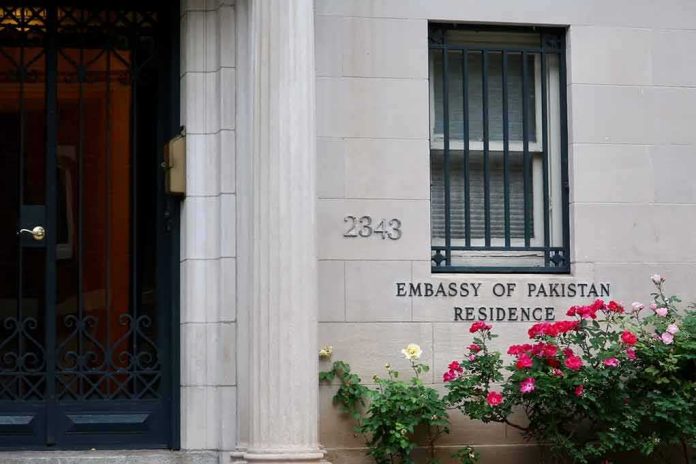
Washington and Tehran just circled a date—July 11 in Pakistan—to trade pressure for promises, again.
At a Glance
- Media reports set July 11 for new United States–Iran talks in Pakistan focused on sanctions, frozen assets, and nuclear issues.
- Diplomatic sources say a recent Islamabad Memorandum of Understanding frames the agenda and a 60-day push.
- United States Secretary of State Marco Rubio cited “some advancement,” but major gaps remain.
- A failed April round in Pakistan shows how hard limits on uranium and Strait of Hormuz control can stall progress.
What Is Locked In, What Is Still Loose
Al Arabiya, echoed by two outlets, reports the next meeting is set for July 11 in Pakistan, with sanctions relief, frozen funds, and nuclear steps on the table. Dawn, a leading Pakistani newspaper, says Islamabad is the leading venue and that a new Islamabad Memorandum of Understanding shapes the talks, even as the exact site remains unannounced. This pairing—clear date and still-fluid logistics—signals momentum with caveats. It tracks with past United States–Iran rounds that launch fast and then struggle to land.
Reuters quoted United States Secretary of State Marco Rubio in May saying there was “some advancement” toward a possible agreement after a meeting with allies in Sweden. That modest claim matters. It keeps allies engaged and pressure steady while avoiding overpromising at home. But Rubio also flagged the hard parts: Iran’s enriched uranium and governance in the Strait of Hormuz. Those two issues sank April’s session in Pakistan and will test July’s round from the first handshake.
The Framework Pakistan Is Selling
Pakistani mediators pitched a path: work inside the Islamabad Memorandum of Understanding signed two weeks ago, then stack technical talks over 60 days to lock details. That cadence favors practical moves like sequencing sanctions relief and setting verifiable steps for nuclear activities. It also brackets what many call spoiler topics. If both sides stay inside that frame, they could trade limited relief for measurable curbs. If they wander to missiles or proxy wars, the clock will run out—again.
United States negotiators pushed a fifteen-point package in April with firm nuclear limits, according to accounts from that failed round; Iranian officials answered with ten points that leaned on regional demands, including control in the Strait of Hormuz and a halt to Israeli strikes on Hezbollah. Pakistan’s format tries to keep talks on sanctions and nuclear guardrails. That is smart process design. But process cannot paper over red lines: Tehran wants full sanctions relief upfront; Washington wants phased relief tied to compliance.
Why April’s Failure Still Matters
Public reporting shows April’s Islamabad talks ran 21 hours and ended without a deal. That failure was not a fluke. It mapped the fault lines we see today: how much uranium Iran can enrich, where it goes, who verifies, and how the Strait of Hormuz is governed. Iran signaled it would not discuss highly enriched uranium specifics. The United States said no nuclear specifics, no deal. That standoff is simple to describe and hard to solve. Verification is math; trust is politics.
Amid delicate US-Iran peace talks, Iranian Parliament Speaker Mohammad Bagher Ghalibaf traveled to Islamabad to meet the US Vice President. Fearing an Israeli assassination attempt, the Pakistan Air Force escorted the Iranian delegation's aircraft within Pakistani airspace. pic.twitter.com/4TtZPfwDkx
— sana_hon_yar (@sana_504) July 4, 2026
Conservative common sense says measure twice, cut once. Phased relief for phased steps respects that rule. It deters cheating and rewards proof, not promises. If reports are right that Iran seeks comprehensive sanctions lifting and fast access to frozen funds, expect the United States to resist, and for good reason. Snapback power only works if relief is conditional and reversible. Congress, markets, and allies look for teeth, not wish lists. A durable deal must survive the next election, not just the next news cycle.
Who Shows Up Signals How Far This Goes
Al Arabiya reported Iran would set its delegation after the funeral for Supreme Leader Ali Khamenei, which points to direct oversight from Tehran’s top tier. High-level delegates can trade big chips, but they also carry rigid red lines. Pakistan’s military leadership has already been in Tehran to grease the skids, which confirms active third-party facilitation. Strong sherpas matter. They can keep tempers cool when leaks, strikes, or social media noise try to knock the talks off course.
What Would Count As Real Progress
Three markers would show movement on July 11. First, a joint note that anchors phased sanctions relief to specific, time-bound nuclear steps with outside verification. Second, a mechanism to handle frozen assets that releases limited funds for humanitarian channels or supervised projects first, with audits attached. Third, a side channel to manage Strait of Hormuz incidents without folding it into the nuclear core. Each is narrow, practical, and trackable. Each also squares with allied expectations and Rubio’s cautions.
Why This Round Still Matters If It Fails
Stalled talks still draw red lines on paper. That map becomes the next team’s starting point. Pakistan’s Memorandum of Understanding can force clarity about what is in and out, and how to check it. Even a terse readout can give energy markets, shippers, and insurers a signal that tempers risk. The choice is not deal or war. The choice is progress that can be verified, or drift that invites a crisis at the worst time. July 11 will tell which path the players chose.
Sources:
redstate.com, i24news.tv, dawn.com, globaltimes.cn, pbs.org, reuters.com