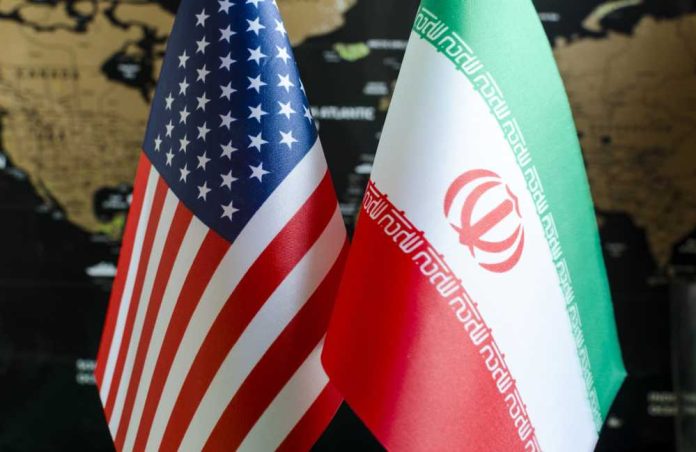
A 60-day U.S.–Iran ceasefire framework is on the table, but both sides still need to sign off—and the stakes for American security and energy prices are huge.
Story Highlights
- Negotiators reached a tentative 60-day memorandum, pending President Trump’s approval [1].
- The draft would reopen talks on Iran’s nuclear limits and maritime traffic in the Strait of Hormuz [1].
- Axios reports Iran signaled readiness to sign, but has not verified internal endorsements [2].
- Iranian outlets say the text is not finalized, underscoring the deal’s fluid status [3].
What The Reported Framework Does And Does Not Do
U.S. and Iranian negotiators reached a tentative 60-day memorandum to extend the ceasefire and launch new talks, according to CBS and Axios reports [1][2]. The draft is not a final peace deal. It is a short-term structure to cool fighting and set the table for tougher issues, including nuclear limits and energy transit [1][2]. The White House has not announced a signed agreement. The proposal still needs President Trump’s approval before it can move forward, per both outlets [1][2].
Axios says the memorandum outlines initial negotiation topics, like how to manage uranium enrichment and where to send highly enriched uranium for disposal [2]. CBS describes a plan to reopen negotiations on nuclear issues and restore safer shipping in the Strait of Hormuz [1]. These are starting points, not finished rules. Iran’s public media has not confirmed a final text, which means details can still shift before any signatures are placed [1][3].
Iran’s Position And The Verification Gap
Axios reports that U.S. officials said Iran’s team claimed it had needed endorsements and was ready to sign, but Iran did not verify that claim in public [2]. Reuters-linked summaries of Iranian coverage, echoed in broadcast reporting, say the text was not finalized or confirmed on Tehran’s side [3]. CBS also notes that Tehran had not yet provided a response to the latest draft when its piece published [1]. That leaves a clear gap between private statements and on-the-record confirmation [1][2][3].
This gap is common in high-stakes talks. Both sides leak details early to shape the story while leaders decide next steps [1][2]. That cycle can make a rough outline look like a done deal, even when the document is still changing. Here, the reporting shows several open items: Iran’s public sign-off, nuclear specifics, and maritime terms. Until both capitals confirm the same language, the framework should be viewed as a live draft, not a binding agreement [1][2][3].
What It Means For Energy, Security, And Leverage
CBS reports the framework aims to restore safer shipping in the Strait of Hormuz, a narrow route that carries a large share of global oil traffic [1]. Any easing of threats there could help lower risk premiums on fuel and freight. For American families, that can mean steadier gas and grocery prices. For U.S. forces and allies, fewer attacks at sea reduce the chance of a deadly spiral. But the benefit only comes if rules on transit are clear and enforced [1].
Axios says the draft would pair talks on sanctions relief and asset access with nuclear and maritime steps [2]. That creates leverage. Real relief should follow real, verified actions that reduce threats to the United States and our partners. The framework’s value rests on inspections, enforcement, and a firm line against any push for nuclear weapons. If Tehran stalls or backtracks, Washington can hold relief and keep pressure on until concrete steps are in place [1][2][3].
How The Trump Administration Can Lock In Strength
Final approval rests with President Trump, according to both outlets [1][2]. A smart path sets clear triggers: no sanctions relief until shipping lanes are safe, nuclear fuel is out or capped, and inspectors confirm facts on the ground. Short timelines, snap-back penalties, and public reporting help keep everyone honest. That approach defends American workers from energy shocks, protects our troops, and blocks any path to a nuclear weapon [1][2].
What To Watch Next
Watch for three signals. First, a public text or joint statement that matches what reports describe today [1][2][3]. Second, confirmed actions at sea that reduce harassment and allow free transit through Hormuz. Third, a verifiable plan for enriched uranium, with outside checks. If these arrive, the framework could calm the region and support lower energy costs. If not, it remains talk—useful only if it builds pressure for a better, enforceable deal [1][2][3].
Sources:
[1] Web – Details on Trump’s potential deal with Iran
[2] Web – Trump recently edited possible U.S.-Iran agreement, including on …
[3] Web – U.S. and Iran reach deal but need Trump’s final approval, officials …