
A massive offshore quake just rattled the Philippines, reminding Americans why strong borders, strong energy, and strong leadership still matter in a dangerous world.
Story Snapshot
- A magnitude 7.8 earthquake off Mindanao triggered regional tsunami warnings and coastal evacuations.
- Dozens are reported dead, hundreds injured, and multiple buildings have collapsed or been heavily damaged.
- Officials warn of aftershocks and highlight the need for resilient infrastructure and serious disaster planning.
- The event exposes how fragile supply chains and global systems can quickly impact American security and the economy.
A Powerful Quake Pounds Mindanao’s Coast
The Philippine Institute of Volcanology and Seismology recorded a powerful magnitude 7.8 earthquake offshore of Sarangani, on the southern island of Mindanao, at 7:37 a.m. local time on June 8, 2026.[3] According to the United States Embassy in Manila, the epicenter was about 32 kilometers south of Sarangani, placing the rupture just off a densely populated and economically vital coastline.[3] This offshore location increased the risk of tsunami waves and complicated emergency response logistics on land.
Television footage and on-the-ground reports show entire low-rise commercial buildings in General Santos City crashing down in seconds as the quake struck, including a popular fast-food restaurant that was reduced to rubble.[2] Reporters on scene describe frantic rescue operations as workers and customers were pulled from the debris, with local officials confirming multiple trapped individuals had to be dug out by hand and by heavy equipment.[2] Several other nearby structures, including schools and public facilities, suffered severe structural damage or partial collapse.[2]
Tsunami Warnings, Rising Death Tolls, And Ongoing Aftershocks
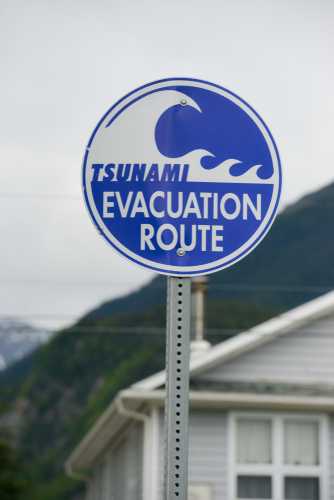
The offshore quake triggered immediate tsunami warnings for at least nine coastal provinces in the southern Philippines, including Sarangani, Davao Occidental, Tawi-Tawi, Sulu, Basilan, Zamboanga del Sur, Zamboanga Sibugay, Sultan Kudarat, and South Cotabato.[3] The United States Embassy alert warned that initial waves could arrive between 7:37 a.m. and 9:37 a.m., with hazardous waves continuing for hours along exposed shorelines.[3] Authorities ordered residents in low-lying coastal communities to move to higher ground and stay away from beaches and harbors.[3]
Local and international news agencies report a steadily climbing human cost as search teams work through collapsed buildings and damaged neighborhoods.[2][4] One American news report cites Philippine officials who say at least 32 people were killed and more than 200 injured as the day wore on.[4] Earlier live coverage referenced at least three confirmed deaths from collapsed structures, highlighting how casualty figures in a major disaster often rise as rescuers reach previously cut-off areas.[4][2] Officials also warn residents to expect strong aftershocks that could further weaken already damaged buildings.[2]
Fragile Infrastructure, Global Ripples, And What It Means For Americans
General Santos City, a key regional hub for trade, agriculture, and fishing, suffered serious damage to public infrastructure, including its international airport and control tower, according to local authorities quoted in international coverage.[2] Damage to schools was especially concerning, with videos showing panicked children outside during the morning flag ceremony as some classroom buildings later collapsed.[2] Philippine President Ferdinand Marcos Jr. ordered the suspension of classes in affected areas to protect students while structural inspections and repairs are conducted.[2]
The @IFRC and the Philippine Red Cross @philredcross are responding to a powerful 7.8-magnitude earthquake that struck off the coast of Maasim, Sarangani, Mindanao, on 8 June 2026.
📸Philippine Red Cross @philredcross pic.twitter.com/9UFwFFn6KG
— IFRC (@ifrc) June 8, 2026
This earthquake did not hit American soil, but events like this carry important lessons for the United States, particularly for conservative readers who prioritize national strength and preparedness. The Philippines sits on the Pacific “Ring of Fire,” the same seismically active zone that includes the American West Coast and Alaska, where similar magnitude events are possible. Disruptions to ports, agriculture, and regional shipping in Asia can quickly ripple into supply chains, energy markets, and food prices that American families already feel in their wallets.[1][4] Sensible conservatives understand that resilient infrastructure, responsible budgeting, and secure domestic production are not talking points—they are necessities in a world where one offshore fault line can shake global stability in minutes.
Sources:
[1] YouTube – 7.8 earthquake rocked Philippines’ Mindanao Island.
[2] YouTube – 15 Dead As 7.8 Magnitude Quake Hits Mindanao, Tsunami …
[3] YouTube – Magnitude 7.8 quake hits Philippines, at least 32 killed
[4] Web – Natural Disaster Alert: Magnitude 7.8 Earthquake, Tsunami …