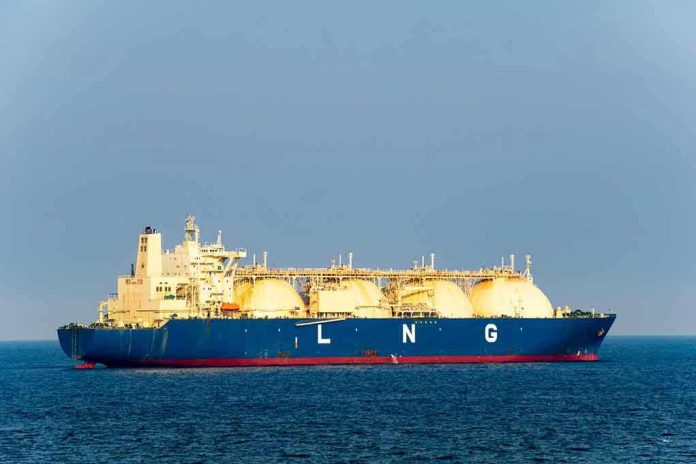
A $500 million superyacht linked to a sanctioned Russian oligarch sailed unobstructed through the heavily blockaded Strait of Hormuz while ordinary commercial vessels remain trapped, attacked, or forced to pay millions for passage—exposing a two-tiered system where elite wealth trumps international sanctions and military restrictions.
Story Snapshot
- The luxury yacht Nord, connected to sanctioned Russian billionaire Alexey Mordashov, completed transit through Iran’s blockaded Strait of Hormuz on April 26, 2026
- Commercial shipping through the strait has collapsed to a handful of vessels, with Iran charging up to $2 million for passage and attacking ships that attempt unauthorized crossings
- The clearance mechanism for the $500 million yacht remains unexplained, raising serious questions about sanctions enforcement and privileged treatment for the ultra-wealthy
- Iran has weaponized control of the critical shipping chokepoint, placing mines and using the Islamic Revolutionary Guard Corps to enforce selective passage rules
Elite Vessel Bypasses Crisis Zone
The Nord departed Dubai on Friday afternoon, April 25, and successfully navigated the Strait of Hormuz the following day, docking in Muscat, Oman by Sunday morning. The 465-foot vessel features a helipad, swimming pool, and submarine—amenities that underscore the extraordinary wealth behind the transit. While the yacht’s passage occurred in plain view of maritime tracking systems, neither Iranian nor Russian officials have explained how the vessel secured clearance through a waterway where Iran recently attacked three ships and seized two of them just days earlier on April 23.
Sanctions Regime Credibility at Stake
Alexey Mordashov, a Russian steel magnate and sanctioned billionaire, maintains indirect ownership of the Nord through a Russian company registered to his wife in Cherepovets, headquarters of his steel empire Severstal. Russian corporate filings from 2025 confirm the vessel’s 2022 registration to this entity. Yet Mordashov’s representative declined to comment on the transit, leaving unanswered how a high-profile asset connected to a sanctioned individual moved freely through one of the world’s most restricted waterways. This silence from both ownership and transit authorities suggests either diplomatic backchannels or payment arrangements that undermine the entire framework of Western sanctions designed to pressure Russian elites.
Commercial Shipping Faces Opposite Reality
The contrast between the Nord’s smooth passage and the plight of commercial vessels exposes uncomfortable truths about power and privilege during international crises. The Strait of Hormuz normally handles 125 to 140 ship transits daily, but Iran’s February 2026 blockade following hostilities with the United States has reduced traffic to a trickle. Dozens of oil tankers now wait at the strait’s edge, unable to proceed without paying Iran’s reported $2 million passage fee or risking military action. Iran has placed mines throughout the waterway, forcing vessels into specific lanes near Larak Island controlled by the Islamic Revolutionary Guard Corps. On the same Saturday the Nord crossed, only two other vessels made the transit: a Chinese oil tanker and a Greek cargo ship, both coordinating directly with Iranian authorities.
Government Failure on Full Display
This incident demonstrates how those with wealth and connections operate under different rules than ordinary citizens and businesses struggling with the economic consequences of geopolitical conflicts. While American energy consumers face market volatility from blocked oil tankers and shipping companies hemorrhage money waiting for clearance, a luxury yacht sails through unimpeded. The Trump administration’s sanctions against Russian oligarchs were designed to hold Putin’s allies accountable, yet the Nord’s passage suggests these measures lack enforcement teeth when confronting the intersection of international wealth, strategic chokepoints, and foreign powers willing to grant selective favors. The dual US-Iranian blockade has created chaos for legitimate commerce, but apparently not for a half-billion-dollar pleasure craft.
The unanswered questions multiply: Did Iran waive its $2 million fee? Did Russia negotiate special passage? Does Iran’s selective enforcement signal coordination between Moscow and Tehran that undermines US strategic interests? American taxpayers fund the naval presence meant to maintain freedom of navigation and enforce sanctions, yet a sanctioned billionaire’s yacht demonstrates those efforts ring hollow. Whether through payment, diplomacy, or deliberate Iranian tolerance of non-commercial vessels, the Nord established a precedent that high-value private assets can navigate crisis zones while ordinary shipping remains paralyzed. This is government failure in its most visible form—policies that burden regular citizens and businesses while the global elite sail past restrictions that supposedly apply to everyone.
Sources:
Russian Superyacht Slips Through Hormuz Blockade – Newser
Russian Superyacht Crosses Blockaded Strait of Hormuz – YNet News
Nord Crosses the Passage – Luxury Launches