Blowing up a gang leader’s house is a spectacle; degrading a gang’s power is a system. The Haiti strike attributed to Salvadoran-backed forces sits at that fault line, where a vivid kinetic action is easy to message and far harder to translate into lasting security.
The Short Version
- The publicly supported fact is the destruction of a residence linked to 400 Mawozo leader Wilson “Lanmo San Jou” Joseph during a Haitian police–Salvadoran operation; branding it a “headquarters” rests primarily on Bukele’s own assertion.
- The strike followed the disappearance of four Salvadoran aviation technicians and coincided with a rapid Salvadoran troop surge in Haiti, mostly outside the UN-backed chain of command.
- Joseph was not reported killed or captured; credible reports say Haitian leaders often rotate safehouses, limiting strategic effect from demolishing a single property.
- Without clear command arrangements, a neutral damage assessment, and evidence of sustained loss of gang capacity, a dramatic demolition does not, by itself, equal strategic defeat.
What the evidence supports: a targeted demolition amid a rapid foreign escalation
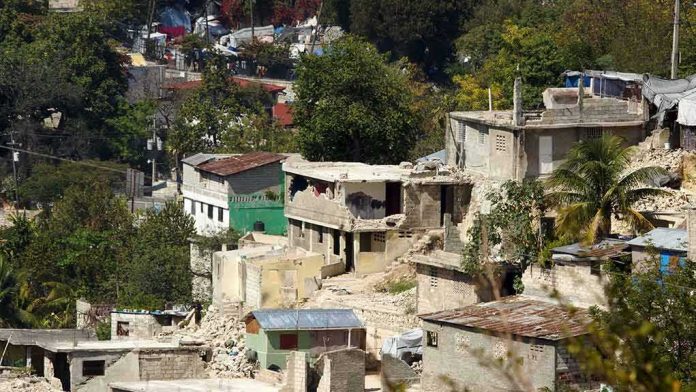
The clearest through-line in the record is discrete and specific: Haitian police, supported by Salvadoran soldiers, targeted and destroyed a residence associated with 400 Mawozo leader Wilson Joseph near Croix-des-Bouquets, on the outskirts of Port-au-Prince. This action was immediately framed by El Salvador’s president as the destruction of both Joseph’s house and the gang’s headquarters, and accompanied by video showing helicopters circling and firing on the area. Independent outlets corroborate the house’s destruction; they do not independently verify that a distinct “headquarters” was eliminated. The distinction matters because a headquarters is a function—communications, logistics, command—not an honorific for any house a leader uses.
The strike fits a broader operational tempo that spiked after four Salvadoran aviation technicians disappeared in an October 18 ambush. The United Nations documented that disappearance and, in subsequent days, international and regional reporting traced a rapid Salvadoran military buildup, with references to roughly two thousand or more troops in Haiti—most of them operating outside the UN-supported Gang Suppression Force. That posture clarifies the urgency and explains the optics of decisive action, while simultaneously clouding the legal mandate and reporting line for kinetic operations like the Croix-des-Bouquets strike.
What was hit versus what was claimed: residence, “headquarters,” and battle damage
Parsing claims against verifiable facts is straightforward here. Multiple reports, including the Associated Press network coverage, identify the structure as Joseph’s home; none provide a neutral, independently produced battle-damage assessment establishing that the site functioned as a 400 Mawozo headquarters. Bukele’s statement is on record and contemporaneous, which matters as an attributable claim; it is not, on its own, dispositive. In parallel, reporting emphasizes that Joseph was not killed or captured, and that Haitian gang leaders commonly move between multiple residences—so the demolition of one property is not evidence that command-and-control was dismantled. Those are ordinary realities in counter-gang and counterinsurgency work: places are fungible, power is portable, and the loss of a safehouse may be operationally annoying but rarely existential.
Accounts also diverge on collateral details—how extensive the damage was, whether the property was wholly destroyed or heavily targeted, and who, if anyone, was inside. Such gaps are normal in the first wave of reporting from urban conflict zones, and they are exactly why serious assessments look for geolocated before-and-after imagery, on-site inspection, or forensics matched to the weapons used. In their absence, the prudent reading is narrow and sober: a residence was destroyed during a Haitian police–Salvadoran supported action; claims that a headquarters was eliminated remain unverified.
Mechanism and command: how the strike likely came together
Open sources converge on a plausible mechanism: a Haitian National Police drone task force or police-led targeting cell executed or cued the strike, while Salvadoran troops provided enabling support and air cover. Visuals released by Salvadoran officials showed helicopters engaging the target area, consistent with close air support, overwatch, or show-of-force tactics. This hybrid model—host-nation police targeting with foreign military enablers—is common in urban anti-gang operations when the host force provides local intelligence while the foreign partner supplies lift, precision munitions, ISR (intelligence, surveillance, reconnaissance), and force protection. The unresolved piece is the chain of command. UN reporting indicates most Salvadoran personnel were outside the UN-supported force, leaving questions of authorization—in Haitian law, bilateral agreements, or Salvadoran orders—unanswered in public. That ambiguity is not academic; it shapes accountability for targeting decisions and civilian protection.
From a technical perspective, destroying a walled compound in dense urban terrain does not require exquisite munitions if attackers can mass fires from rotary-wing platforms or set charges after breaching; a police drone element can also designate or deliver light ordnance. Each method leaves a different forensic signature—blast pattern, fragmentation, or burn—and each has different implications for proportionality. Absent a neutral site survey, analysts are left to infer from imagery and flight profiles shown in official videos, which is insufficient for a definitive call.
Strategic value: what counts as success against 400 Mawozo
Measured against the goal of rescuing kidnapped personnel and degrading a gang’s coercive capacity, a single demolition is, at best, an opener. Real impairment looks like fewer roadblocks and extortion checkpoints in the Plaine du Cul-de-Sac; a drop in kidnappings along the routes 400 Mawozo taxes; arrests, defections, or sustained flight of key lieutenants; seizures of weapon stocks and communication nodes; and an observable contraction of the gang’s territorial presence. Success also appears in what does not happen—no rapid reconstitution of safehouses in the same grid and reduced intimidation of local populations. Those are empirical questions, answerable with targeted data over weeks, not hours. The public record to date does not show that 400 Mawozo’s command structure was dismantled, only that a property linked to its leader was destroyed and that the leader remained at large.
There is a political logic too. The disappearance of Salvadoran technicians created intense pressure to demonstrate capability and resolve. In such moments, governments often select targets that are legible to the public—a leader’s home—because they communicate consequence. The risk is that symbolism is misread as systemic effect. Without follow-on operations that hold territory, protect civilians, and restore basic policing and justice functions, the net effect can be episodic disruption followed by adaptation, a cycle Haiti has seen across prior international interventions.
Salvadoran forces strike on suspected 400 Mawozo headquarters in Haiti; no official confirmation https://t.co/b4WqeoCmag
— K13 News (@K13News) November 11, 2026
How to evaluate similar claims going forward
Three tests separate messaging from measurable progress. First, function over facade: demand evidence that a hit site hosted command, logistics, finance, or weapons—not simply that it belonged to a leader. Second, persistence over puncture: track whether territorial control, kidnapping rates, and extortion revenues fall and stay down in the affected grid. Third, authority over ambiguity: clarify who authorized the strike, who owned the rules of engagement, and which oversight body—UN, Haitian, or bilateral—reviews civilian-harm allegations. Applied here, those tests yield a restrained bottom line: credible destruction of a residence, an unproven “headquarters” label, a surviving leader, and an unsettled command framework. That profile can be the start of a campaign; it is not its culmination.
Sources:
insiderpaper.com, news.un.org, standardmedia.co.ke, wspa.com, genocidewatch.com, riotimesonline.com, thepeninsulaqatar.com, newsday.com, latintimes.com, haitiantimes.com