
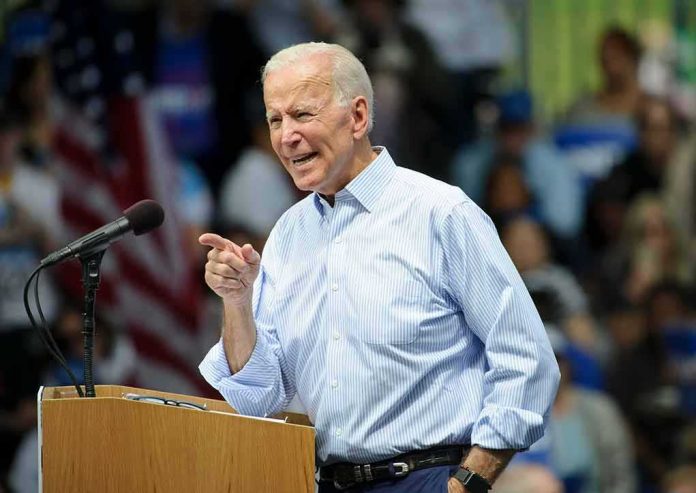
When a public figure shares a serious diagnosis yet emphasizes that treatment is going well, the headline tends to chase the drama; the real story is the balance he is striking—continuing meaningful work while acknowledging the practical limits cancer imposes.
The Short Version
- Joe Biden says his cancer treatment is going well and that his doctors are encouraged by his response.
- He will scale back promotional events for his memoir because treatment “slows me down.”
- The memoir, Promise Me, America, is scheduled by Little, Brown and Company for a November 17, 2026 release.
- Biden says radiation “worked as intended” and that he finished the book despite treatment.
What Biden has said—and what is firmly established
In two public updates months apart, Joe Biden described steady progress in his cancer care and conveyed that his medical team remains encouraged by his response to treatment. He tied that reality to a pragmatic choice: the promotional push for his forthcoming memoir would be pared back because treatment sometimes “slows me down.” The key facts are not in dispute. Little, Brown and Company is publishing Promise Me, America; the publisher announced the project and listed November 17, 2026 as the on-sale date, and preorders were opened on the standard retail timetable. In a separate update, Biden said that radiation “worked as intended” and that he was able to complete the manuscript while in treatment, underscoring that a metastatic cancer diagnosis can coexist with sustained, purposeful work.
There is one appropriate caveat: Biden’s descriptions of improvement and his doctors’ optimism come directly from him, not from released clinical records or named physicians. That does not undercut the basic facts of the book’s publication or his stated plan to limit events; it simply situates the medical detail where it belongs—as patient testimony rather than a published medical chart.
How metastatic prostate cancer and its treatment typically shape daily life
Metastatic prostate cancer—disease that has spread beyond the prostate, often to bone—typically is not curable, but it is frequently manageable for extended periods with contemporary therapy. Patients can experience symptom control, biochemical responses (for example, declines in prostate-specific antigen, or PSA), and months to years of meaningful activity under thoughtfully sequenced regimens that may include androgen-deprivation therapy, modern androgen-receptor pathway inhibitors, chemotherapy, targeted radiopharmaceuticals, and focal radiation for pain or control of defined lesions. Median survival varies widely with tumor biology, metastatic burden and location, overall fitness, and the effectiveness of systemic therapy—a variability that explains why “going well” is medically compatible with a serious diagnosis. The clinical goal is control and quality of life, not cure, which can allow for writing a book while still making commonsense adjustments to travel and appearances.
Radiation’s role depends on the setting. In metastatic disease, clinicians use external-beam radiation or targeted radioligand therapy for symptom relief or local control; in selected situations, consolidative radiation can also contribute to disease management. Major guidelines emphasize careful monitoring—PSA trends, imaging when appropriate, and attention to bone health and performance status—to gauge response and guide the next line of therapy. The upshot is practical: treatment may leave enough energy for sustained cognitive work (writing, meetings, recorded conversations) while making cross-country travel, late-night events, and long days on stage less feasible—a pattern that aligns with Biden’s choice to trim a book tour rather than cancel it.
The memoir’s publishing facts and the decision to scale back events
The publishing record is straightforward. Little, Brown and Company announced Promise Me, America and set a November 17, 2026 publication date; the catalog entry confirms the imprint and schedule, and the framing emphasizes a first-person account of Biden’s presidency and decisions around running for and ultimately stepping away from reelection. The release sits in a familiar publishing lane: high-profile political memoirs are routinely paired with media rounds, marquee interviews, and selected live events. Here, the author’s own calculus modifies that norm—fewer live appearances, more controlled formats—so the campaign for the book relies more on taped conversations and print features than on a grueling city-to-city itinerary. Biden’s statement that treatment “slows me down” is not a withdrawal; it is a boundary consistent with how patients and clinicians plan energy-intensive activities during therapy cycles.
What remains unspecified is simply logistics: how many events were initially planned, how many were scrapped, and which formats will substitute. Those are marketing decisions rather than matters of medical dispute. The essential point stands: the memoir is arriving on schedule, and the promotional footprint is being right-sized to fit the author’s health priorities.
Reconciling personal health updates with clinical standards of evidence
Patients describe experience; clinicians document endpoints. Those are parallel, not competing, truths. When Biden says radiation “worked as intended,” lay readers hear “it helped.” In oncology, that phrase could map to several valid outcomes: pain relief from a targeted field, a PSA decline, radiographic stability, or prevention of a threatened complication. Expert guidelines stress that treatment choices and assessments hinge on a matrix of markers—PSA, testosterone, alkaline phosphatase for bone turnover, hemoglobin, LDH—as well as imaging and performance status. Absent a released chart, the public gets the appropriately private version: the patient’s summary and the observable behavior—continuing work, adjusting travel.
From a health-communication perspective, that approach is sound. It tells readers what they need to know to set expectations for public engagement, without breaching the boundary most people claim to value when the patient is not a celebrity. The medical consensus also supports the plausibility of the account: advanced prostate cancer is generally not curable, but, with modern therapy, many patients live for years and remain active, punctuating activity with planned rest and measured adjustments.
Joe Biden Says Cancer Will Limit Him From Promoting His Upcoming Memoir https://t.co/p5UtnctwnZ
— Chris Dimma (@Karis198019) November 9, 2026
Why this matters beyond one book tour
Two broader points are worth underlining. First, health and productivity are not binary. The public often expects a clean line—either “sick” and sidelined or “well” and fully engaged. Chronic and advanced cancers defy that simplification; the arc is management, not cure, and management frequently leaves room for sustained intellectual work and meaningful presence, provided the patient is judicious about exertion. Second, disclosure calibrated to purpose is not evasion. Here, the purpose is to explain why a major public figure will do fewer live events around a significant publication while confirming that treatment continues and is meeting its intended aims. That is exactly the level of specificity warranted for the decision at hand, no more and no less.
Sources:
nypost.com, hachettebookgroup.com, en.wikipedia.org, eu.usatoday.com, apnews.com, huffpost.com, auanet.org