Witnesses saw a man fall from Six Flags Over Georgia’s Goliath roller coaster; police confirmed he died.
Story Snapshot
- Cobb County police confirmed one death linked to a Goliath incident.
- Several guests reported injuries; riders were evacuated from the stalled train.
- Six Flags expressed condolences and said it is working with investigators.
- Amusement-ride deaths are rare, but shock and scrutiny follow high-profile cases.
What Happened On The Ride
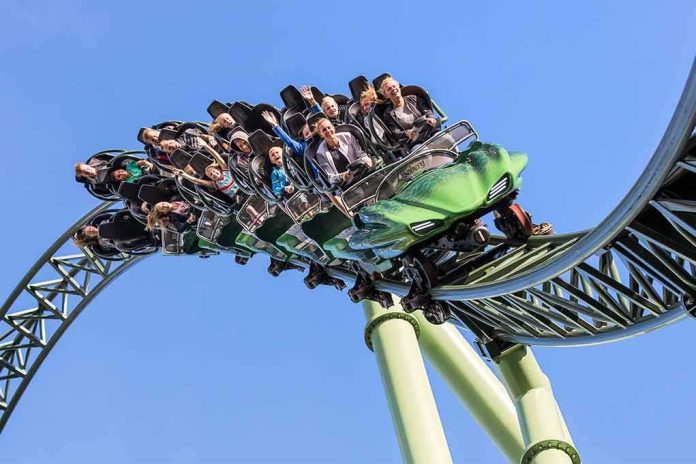
Cobb County police said a man died after an incident tied to the Goliath roller coaster at Six Flags Over Georgia in Mableton, near Atlanta. The call came just before 4:00 p.m., and police also documented several injured guests. Multiple outlets reported witnesses who said the man fell from the ride and struck parts of the structure before landing. Park staff halted the coaster, and guests on the train were evacuated off the incline by responders.
Six Flags stated it was deeply saddened, offered condolences to the family, and said it would support the investigation with local authorities. The park stopped operations on the attraction and worked with police and emergency crews who secured the area. News outlets showed riders being escorted down the stalled train, and local coverage reported four additional injuries tied to the same event, though details on those injuries were limited at publication.
How Police And Park Officials Are Handling It
Cobb County’s Major Crimes Unit opened an inquiry, which is standard when a death occurs in a public venue. Investigators will examine restraint systems, train and track condition, operating logs, and staffing procedures. They will also gather statements from riders and employees and review camera footage where available. The park, meanwhile, must preserve the scene, maintain maintenance records, and cooperate with law enforcement requests while it manages guest communications and addresses staff trauma.
Witness accounts often flood the first hours after a crisis and can vary in detail. That is normal in high-stress events with loud noise and rapid motion. Police will weigh these accounts against physical evidence and ride data. That process helps sort whether mechanical failure, operator error, rider conduct, or a medical issue played a key role. The final report will typically place findings in a clear timeline and cite the technical cause with supporting evidence.
What We Know About Risk, Responsibility, And Common Sense
Fixed-site amusement rides carry millions of riders every year, and serious injuries are rare on a per-ride basis. Industry reporting with the International Association of Amusement Parks and Attractions estimates the chance of a serious injury on a fixed-site ride at about one in 15.5 million rides. Government studies also point to a small number of deaths across many years compared to total rides taken. Low base rates, however, do not soften the grief when a single ride goes wrong.
BREAKING NEWS: A tragic safety incident occurred today on the Goliath roller coaster at Six Flags Over Georgia, resulting in one fatality and four injuries. In this video, we break down exactly what happened! https://t.co/gqUbfH39L4 pic.twitter.com/BnicN9G7Xv
— Shannel TV (@ShannelTV) October 13, 2026
American conservative values place duty of care and personal responsibility side by side. Parks owe riders working equipment, trained operators, and honest safety rules. Riders owe it to themselves and others to follow posted instructions and respect restraints and size limits. Clear rules, strict enforcement, and personal accountability fit together. The right balance is not anti-fun. It is pro-family, pro-safety, and pro-freedom to enjoy thrills without preventable harm.
What Investigators Typically Look For Next
Investigators will scrutinize restraint design and function: lap bars, seat belts, sensors, and locking status. They will check dispatch procedures, height and size checks, and whether operators followed every step. They will review maintenance logs for missed inspections or parts flagged for service. They will analyze train speeds and braking, look for loose items or guest behaviors that could affect restraint security, and test for medical events that may have started the chain of events.
Families and the public need candor once the facts are settled. A clear report should show the root cause and any contributing factors. If equipment failed, parts and procedures must be corrected. If training fell short, operators need retraining and stronger supervision. If rider conduct played a role, parks must tighten screening and communicate rules more plainly at the queue, the platform, and the seat. Accountability creates trust and prevents the easy repeat of a hard lesson.
Why This Tragedy Will Shape Park Safety Conversations
One death on a marquee coaster triggers more than grief. It prompts audits, new signage, and sometimes redesigns. It also resets parent instincts and rider habits. People want thrills that respect common sense limits. The theme-park industry sells joy, not risk theater. The best operators already treat every dispatch as a promise. Keep that promise, and most riders will never think twice. Break it once, and the whole country pays attention.
Sources:
foxnews.com, 11alive.com, nbcnewyork.com, fox5atlanta.com, wesh.com