
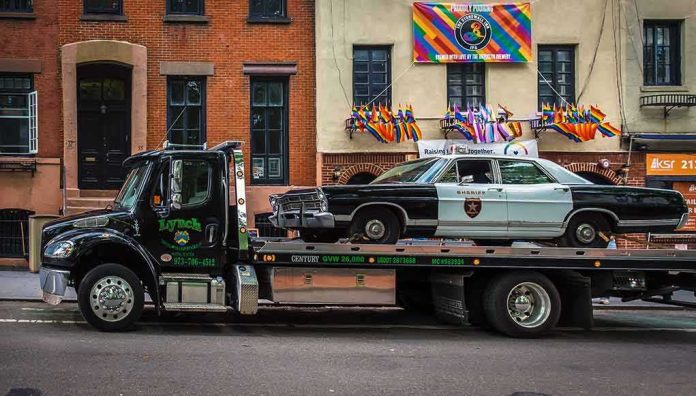
Concertgoers left a Sacramento show and found their cars gone, then faced a $562 cash demand to get them back.
Story Snapshot
- Drivers described a repeat pattern: cars vanished, a sign listed a number, and releases cost $562.
- One driver said his car came back so damaged it could not be driven; his insurer treated it like a theft claim.
- Paperwork shown to drivers lacked basics like the vehicle identification number and tow times, raising red flags.
- Aftershock festival materials say off-site parking is not managed by the event and is at your own risk.
A weekend out turned into a $562 surprise
Drivers who parked near the Aftershock festival returned to empty spaces and a new routine they never asked for. A temporary sign listed a phone number. A caller reached a person who directed them to an address on Del Paso Boulevard. The price to get a car back was $562, flat. Different drivers told the same story and showed preprinted slips that did not include the vehicle identification number, the tow time, or the release time. That pattern alone should make anyone’s brake lights flash.
Ryan Capagli said he paid the fee and still suffered a larger hit. He said his car was damaged so badly it could not be driven. His insurance company treated the case as if the car had been stolen, not as a normal tow. That stance says a lot, because insurers do not use that label lightly. Police were told about the incidents, and a report was filed with the Sacramento Police Department, which gives this a track to run on.
The paperwork problem you can spot in seconds
California law sets guardrails for private-property towing. The property owner or lawful agent must authorize the tow, and charges cannot exceed approved local or California Highway Patrol rates. The law also limits certain fees when a driver returns during the tow and requires clear documentation, including who authorized the tow and when. When paperwork skips basics like the vehicle identification number or timestamps, it invites doubt about whether the tow followed the rules, or whether someone is hiding the ball.
Capagli questioned an affidavit that claimed tow authorization and believed it was forged. That is an allegation, not a confirmed forensic finding. No handwriting analysis appears in the public record. Still, the preprinted slips without core details look sloppy at best. Sloppy paperwork in towing is not a victimless clerical error. It erases the timeline and blurs who had the legal right to do what. That is where many bad tows go to hide.
Who said what, and what it means
The owner of the company named by drivers said the operation was legitimate but did not give a license number when asked and declined interviews. That statement asks for trust without proof. In disputes like this, credibility rests on documents that match the law and on records that can be checked. A simple, verifiable license number would help. Without it, the claim carries less weight than the drivers’ matching accounts and the missing details on the receipts.
Festival and city guidance also sets the frame. Aftershock’s “Getting Here” page says the festival does not manage the surrounding lots, parking is at your own risk, and overnight parking is not allowed. The City of Sacramento’s event-parking pages describe official options, but they do not change the core rule that a private-property tow needs real authorization and lawful fees. The festival’s disclaimer may shield it from blame, but it does not excuse an unlawful tow by anyone.
How California law narrows the facts that matter
Two questions decide most of these cases. First, did the property owner or a lawful agent actually authorize the tow? Second, did the charges track the approved rates? The California Vehicle Code puts hard caps on private-property towing charges and storage rates and requires specific procedures for releases and partial tows. If a company followed those steps, it should have clean records: the signed authorization, the rate sheet, the itemized invoice, and the timestamps. If those are missing, a judge will notice.
State complaint data show that towing and storage spark steady consumer friction year after year. The Bureau of Automotive Repair’s reports list dozens of towing and storage complaints each quarter statewide, which signals a chronic pain point rather than a rare fluke. That context does not prove wrongdoing here, but it explains why drivers feel burned and why regulators stress clear authorization and lawful rates.
What a smart driver does next
Start with the basics. Photograph every sign near where you parked, especially any that list towing terms or a phone number. Save call logs and text messages to the number you dialed. Ask, in writing, for the tow authorization, the tow ticket, all photographs, and the itemized invoice. Compare the fee to local approved rates. If you suspect a violation, file a police report and a complaint with state and local agencies. Those steps build a paper trail that courts and insurers respect.
Sources:
nypost.com, cityofsacramento.gov, cbsnews.com, sacbee.com, law.lis.virginia.gov