
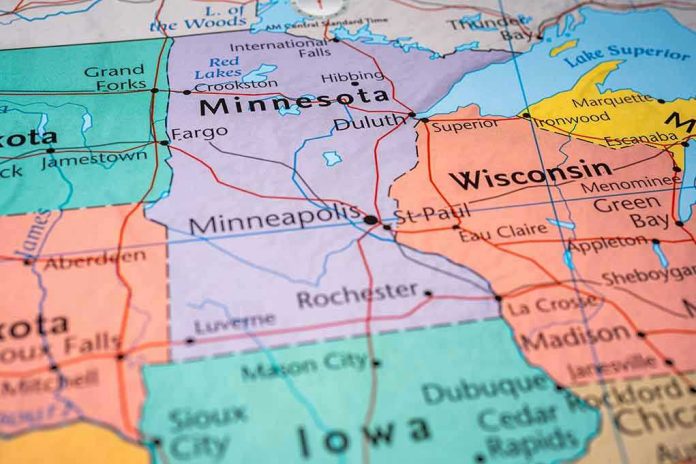
Law enforcement in Minnesota says roughly 300 Somali youth across about a dozen groups are driving shootings from Minneapolis to its suburbs, and that claim just crashed into politics, schools, and the evening news.
At a Glance
- Officials estimate about 300 Somali youth across around 12 groups in the Twin Cities metro.
- Recent shootings in Eden Prairie and Bloomington raised urgency and public pressure.
- Rep. Tom Emmer urged federal action and blasted local media over gang labeling.
- Somali leaders reject broad blame and question the term “gangs” for all cases.
What Law Enforcement Says Is Happening Now
Ramsey County investigators told reporters they track about 12 groups involving roughly 300 Somali youth across the Twin Cities metro. They said these groups link to violence that reaches beyond Minneapolis into suburbs like Burnsville and Eden Prairie. The sheriff’s office has also cited totals of 14 homicides and more than 100 shootings over two years tied to these groups, though a full public case list has not been released. These are not vague campus scuffles; police are describing organized conflicts with guns and cars and social-media sparks.
Eden Prairie became the flashpoint after shots outside the high school homecoming game on October 2 left two people hurt. Police said the incident linked to Somali American gang activity while they reviewed whether it connected with other events. Six people later faced charges in that case, while a separate Bloomington shooting drew headlines for a flood of shell casings and no arrests reported at the time. Those twin scenes—school lights, chaos, and unanswered questions—made suburban parents demand faster answers and tougher prevention.
How The Fight Jumped From Streets To Washington
Representative Tom Emmer put a spotlight on the problem in a July 23 letter to the United States Attorney and then on social media after the Eden Prairie shooting. He argued that Somali gangs “shot up high school graduations” and assaulted basketball players, and he accused Minnesota media of dodging the words “Somali gang crime”. Emmer’s claim resonates with common sense instincts: call things what they are, protect kids first, and do not wait for a poll-tested label. His tone also sparked pushback from community leaders who say his framing sweeps in the innocent with the guilty.
State and federal officials announced a new collaboration to counter youth violence, but they also faced a trust gap. About 40 agencies were already sharing information, yet there was no regional gang task force with unified rules and shared data. That matters. Fragmented files lead to fuzzy counts, and fuzzy counts fuel political heat. Voters do not want a seminar; they want a plan that gets the worst actors off the street before the next homecoming game.
What Communities Dispute, And Why It Matters
Somali American residents and several Somali American police officers pushed back on blanket use of the term “gangs,” saying it harms innocent families and paints every fight with one brush. Leaders argued that crime by some youths does not define more than 100,000 Somali Minnesotans, and that slurs or shortcuts will only choke off witnesses and parents who could help. They also warned that arrests alone will not fix a pipeline fed by truancy, petty theft, and online feuds that grow into gunplay. Their point is not to deny shootings. It is to separate precision policing from broad blame.
The record shows both limits and urgency. The most-cited numbers—12 groups, 300 youths, 14 homicides, 100-plus shootings—come through press briefings and meetings, not a posted master list that the public can audit. Yet the school parking lots and hospital rooms are real. For conservatives, the duty is simple: protect the public while insisting on clean data, clear standards for gang designation, and open reporting that neither hides facts nor smears neighbors.
What Accountability Should Look Like Next
Police leaders should release a de-identified, case-numbered table for the two-year homicide and shooting totals, with criteria for how they tagged group ties. That lets the public see patterns without doxxing kids. County attorneys should fast-track violent-gun cases and publish outcome dashboards by charge and sentence. Schools should tighten event security with controlled entry, cameras, and parole alerts, and expand mentor programs that track at-risk teens before they jump cars and crews. Civic groups should recruit respected Somali adults to sit inside intervention teams, not outside them.
REP. EMMER BLASTS MEDIA OVER #SOMALI GANG VIOLENCE IN MINNESOTA.#Islam #Muslim
Rep. Tom Emmer says 13 Somali gangs involving roughly 300 youths are wreaking havoc across the Twin Cities, accusing the media of concealing perpetrators’ identities as shootings, assaults, and… pic.twitter.com/gtaugo7itT
— Radio Australis (@freedom4UU) November 22, 2026
Congress and the Department of Justice should back a true regional gang task force with common rules, one database, and quarterly public summaries. Local media should keep naming concrete facts from police and courts, and make clear when identities are unknown rather than withheld. That balance—truth without hype, prudence without euphemism—earns trust. The streets of the Twin Cities do not need another argument. They need fast, focused pressure on the small group driving the gunfire, and a wide shield for everyone else.
Sources:
facebook.com, madisoncourier.com, startribune.com, eplocalnews.org, x.com, foxnews.com, heraldonline.com, usnews.com