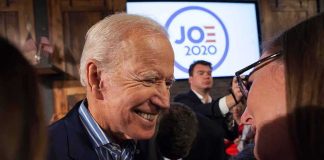
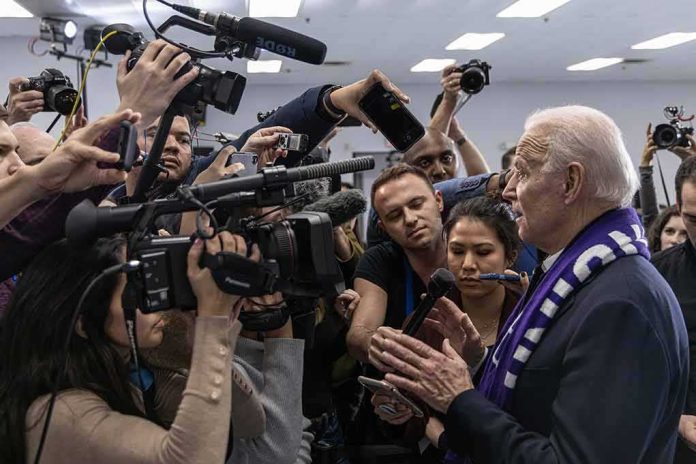
Campaigns don’t just court voters anymore; they court the people who court voters. The clip of Joe Biden appearing with Spanish-language TikTok creator Carlos Eduardo Espina is not an oddity at the margins of politics but a window into how modern persuasion actually moves: through creators who sit inside trusted communities and translate political messaging into the vernacular of their audiences.
The Short Version
- Biden appeared in a video with Spanish-speaking TikTok influencer Carlos Eduardo Espina during a broader influencer outreach effort.
- This reflects a strategic shift: campaigns use creators as message conduits to reach communities they can’t reliably reach via traditional media.
- Espina has been a visible Democratic-aligned creator, including at a White House event tied to immigration policy in 2024.
- Influencer outreach sits in a regulatory gray zone; disclosure rules for political content remain uneven and limited.
What Happened And Why It Matters
Joe Biden shared a video segment featuring Carlos Eduardo Espina, a Spanish-speaking TikTok creator with a large Latino following, nested within a weekend gathering of online creators reportedly invited to Biden’s Wilmington, Delaware, home to discuss outreach around his memoir and politics. The imagery is straightforward: a political principal validating a creator inside that creator’s own milieu. The substance is more strategic than theatrical. Spanish-dominant and bilingual audiences are among the least efficiently reached by conventional political media buys. Partnering with creators who already command trust within those communities provides a shortcut to relevance and attention that a candidate’s official channel rarely earns on its own. Espina, in particular, has become a repeat bridge between Democratic messaging and Latino online spheres; in 2024 he appeared with Biden at the White House during an announcement on relief pathways for certain mixed-status families.
To reduce the moment to “a bizarre clip” is to miss its function. Campaigns have learned that the most persuasive messengers often aren’t politicians or journalists but everyday-seeming figures who narrate politics in the idiom of lifestyle content, immigration advice, or campus life. That is, influence is relational, not merely informational. Research terms these actors “political relational influencers” because they operate from within social graphs where they already possess credibility and can legitimize political messages by proximity and tone rather than by argument alone.
The Mechanics Of Influencer Politics
Influencer outreach works by moving from broadcast to embedded communication. Rather than pushing a uniform ad to a demographic, a campaign identifies community-specific creators and outfits them—formally or informally—with access, frames, and occasionally assets that fit each creator’s voice. The creator then packages the moment for their audience in a way that feels native to the feed. Academic and field studies show that such messages can increase collective political efficacy—people’s belief that their group can act together effectively—which is often the precondition for turnout, volunteering, or small-dollar giving. In Latino digital spaces, this strategy has clear upside: creators translate policy into concrete implications for families, work, and legal status in a way that mass media rarely does. Espina’s content niche—immigration explainer, community updates, and political interpretation—exemplifies that conduit role.
There are constraints. The same creator ecosystems that can mobilize are also fertile ground for rumor-chains and politicized misinterpretations, particularly on immigration; fact-checkers have documented how creators can accidentally or deliberately garble complex policy changes into viral half-truths. That double edge places a premium on campaigns cultivating creators who can stabilize, not just amplify, the message.
Precedent And Pattern: Not A One-Off
Espina’s repeated proximity to Democratic venues signals continuity, not opportunism. His White House appearance in June 2024 tethered immigration policy to a familiar face for his audience. More broadly, major campaigns on both sides now court creators systematically—through in-house digital teams, third-party agencies, and creator networks—to reach voters who spend more screen time in TikTok, Instagram Reels, and YouTube Shorts than in cable news or newspaper sites. A growing scholarly literature argues that political influencers have migrated from peripheral players to central agents in electoral communication, particularly for young, multilingual, and diaspora audiences who treat creators as first-line interpreters of civic life.
That shift didn’t happen in a vacuum. Traditional ad avoidance, audience fragmentation, and the algorithmic privileging of personality over institution all push campaigns toward intermediaries who look more like neighbors than news anchors. The goal is less to “go viral” than to borrow a creator’s trust and texture so that political content feels like part of a familiar feed rather than an intrusion.
Where The Real Frictions Are: Money, Disclosure, And Perception
When politics fuses with creator economies, standard transparency expectations wobble. The Federal Trade Commission’s Endorsement Guides require clear disclosure when there’s a “material connection” between an endorser and a marketer that the audience wouldn’t reasonably expect. Yet U.S. rules specific to political influencer content remain a patchwork. There is no comprehensive federal requirement that creators disclose all compensated political advocacy, and only a handful of states impose explicit obligations; industry research and reporting indicate that many political posts remain quietly paid, leaving audiences uncertain about who, if anyone, funded a message.
That ambiguity matters because relationship-based influence works precisely by feeling organic. If compensation or coordination is opaque, audiences may experience the content as authentic when it is, in effect, an advertisement in creator clothing. This does not mean all such posts are paid—many are not—but the line is blurry, and it varies by campaign, cycle, and platform. The Biden–Espina clip fits the larger pattern of high-touch outreach; whether a given post is compensated or simply access-enabled, the ethics hinge on candor and context.
Effectiveness And Limits
Do such clips move votes? Evidence suggests they move something that is often more decisive: salience and social proof. Experiments and field studies find that creator-delivered political messages can boost a sense that “people like me” are paying attention and can act together—an antecedent to turnout and advocacy behaviors. For Spanish-speaking and bilingual audiences, a credible intracommunity narrator can also reduce the cognitive overhead of parsing policy or candidate intent. Yet the tactic is not wizardry. Its impact is bounded by the creator’s reach, the platform’s recommendation system, and the audience’s prior beliefs. Moreover, high exposure to online political influencers has been associated with increased polarization in some studies; the same intimacy that makes a message persuasive can also harden in-group identity.
For campaigns, the calculus remains compelling: a three-second cameo that travels through a creator’s channel can outperform a polished 30-second ad that never clears the algorithmic threshold for attention. For creators, moments like Espina’s clip with Biden are career-defining—proof of access that can be reinvested into audience growth and perceived authority.
How To Watch This Space As A Voter
Two simple habits inoculate against confusion without forfeiting the value these creators provide. First, look for disclosures and contextual cues: Was the creator invited to a campaign event, given exclusive access, or supplied with footage? If so, treat the content like advocacy and weigh it accordingly. Second, triangulate: when a post touches policy, scan an official source and a high-quality explainer to confirm the basics. Influencers can be outstanding translators of policy to lived experience; they are not replacements for primary sources.
Sources:
thegatewaypundit.com, news-pravda.com, cip.uw.edu, reutersinstitute.politics.ox.ac.uk, abc7chicago.com, ijoc.org, tandfonline.com, link.springer.com, academic.oup.com, seattletimes.com, research.manchester.ac.uk