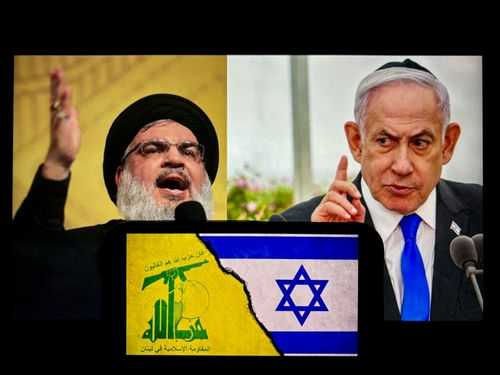
A new U.S.-backed deal says Iran and Hezbollah are “out” of Lebanon’s future, but the real test is whether this framework finally lets a free Lebanese state push a terror army off its soil and secures Israel’s border for good.
Story Snapshot
- Marco Rubio announced a U.S.-mediated framework that Israel and Lebanon call a first step toward lasting peace and security.
- The trilateral deal openly aims to disarm Hezbollah, push it out of southern Lebanon, and restore Lebanese sovereignty over Israeli-occupied areas.[1]
- Israeli leaders say troops will stay in a “security zone” inside Lebanon until Hezbollah is dismantled, keeping pressure on the Iran-backed group.[3]
- The agreement creates “pilot zones” where only Lebanese soldiers can operate, with Iran and Hezbollah formally excluded from the peace track.[3][7]
Rubio’s Framework: Peace Built on Strength, Not Appeasement
United States Secretary of State Marco Rubio stood beside the Israeli and Lebanese ambassadors in Washington to announce a new framework agreement they all describe as the first step toward peace after months of fighting with the Iran-backed Hezbollah.[1] Rubio said the signing “begins to put in place a framework for lasting peace and security,” arguing both nations deserve stability after years of outside meddling on Lebanese soil.[3] For many conservatives, that phrase matters: peace is tied to rolling back Iran’s influence and crushing terrorist power, not rewarding it.
Reports on the deal make clear this is not a feel‑good photo op but a structured plan to end hostilities and reassert state control.[3] The agreement is trilateral, with the United States as sponsor, and follows five rounds of talks in the U.S. capital.[3] It comes after a long pattern of fragile, conditional ceasefires that collapsed because terror groups like Hezbollah never truly accepted them.[11] Rubio’s team is now framing this as different: a performance-based roadmap where hard benchmarks—disarming non-state militias and restoring borders—must be met before deeper concessions happen.[3]
Hezbollah “Out,” Lebanese State “In”
The core of the framework is simple but tough: Iran and Hezbollah are formally cut out of the agreement, and the road to peace runs through Israel, Lebanon, and the United States.[4][7] Lebanese officials say the deal aims for a full Israeli withdrawal from Lebanese land while the Lebanese state extends its authority, through its army, over all territory.[1] That sounds like common sense to American readers: only national armies, under accountable governments, should hold guns and control borders. Terror militias backed by Tehran have no rightful claim to that role.
The State Department says the framework sets up a process to dismantle Hezbollah and help Lebanon regain areas seized by Israel during fighting with the group.[1] Lebanese Ambassador Hamadeh called it “a first step on the road to restoring Lebanese sovereignty and territorial integrity, securing a permanent and final cessation of hostilities.”[4] At the same time, Israel and Lebanon requested international and Arab support to achieve the complete and verified disarmament of all non-state armed groups—a clear reference to Hezbollah.[3] That language should resonate with conservatives who see armed proxies as tools of globalist chaos, not defenders of local people.
Pilot Zones and a Security Buffer: Pressure on Terror, Support for Allies
One of the most concrete tools in the agreement is the creation of “pilot zones,” areas where the Lebanese Armed Forces alone will control security after Israeli redeployment.[3] These zones are supposed to be free of all non-state armed groups, which means Hezbollah fighters and infrastructure must be gone before foreign monitors sign off.[3] Initial zones have already been identified, and future ones will be set by mutual consent, giving both governments a step-by-step way to test whether Lebanon can really enforce sovereignty without terror militias calling the shots.[3]
27 June 2026 — Hizbullah Secretary-General Sheikh Naim Qassem’s Statement on the Framework Agreement between Lebanese Authorities & the Zionist Enemy Entity 2/2
4. What a catastrophic fall this is. What a grave sin: surrendering sovereignty to the “Israeli” Enemy. Nitinyahu…
— د (@trhxianl) June 27, 2026
Israeli Prime Minister Benjamin Netanyahu has praised the framework as a major victory for Israel and a blow to Iran’s regional designs.[2][4] He said Israeli troops will remain inside a self-declared “security zone” roughly ten kilometers from the border as long as Hezbollah has not disarmed.[3] For Trump-supporting readers, that stance lines up with a familiar principle: you don’t pull back your forces while a sworn enemy keeps rockets pointed at your towns. You hold the line, with American backing, until the terror threat is removed and borders are secure.
Why This Matters at Home: Terror Proxies, U.S. Credibility, and the Cost of Weakness
This framework also highlights a deeper foreign policy divide many conservatives feel at home. Past globalist approaches tried to “manage” Hezbollah as a political player, even while it stockpiled missiles and assassinated opponents. The new deal instead treats Hezbollah as what it is—an armed proxy of Iran that must be dismantled if Lebanon is ever to become a normal sovereign state.[1][3] That shift reflects a Trump-era view that American diplomacy should stand clearly with allies who fight terror, not blur the lines with double talk and endless concessions.
The agreement also shows how U.S. credibility is built or broken. Lebanon’s government is publicly asking for Arab and international help to disarm non-state groups, while Israel refuses to leave occupied areas until that job is done.[3] If Washington keeps its word—backing Israel’s right to self-defense, helping Lebanon’s army, and refusing to legitimize Hezbollah—this deal can strengthen America’s standing as a serious power that protects its friends.[3][11] If, instead, pressure grows to water down the terms or rush Israeli withdrawal while Hezbollah stays armed, we’d see yet another failed ceasefire, more civilians caught in crossfire, and more proof that weakness invites war.
Sources:
[1] YouTube – Rubio says Israel, Lebanon reach framework agreement aimed at ‘lasting …
[2] Web – Israel, Lebanon reach framework agreement, ceasefire – CNBC
[3] Web – Israel, Lebanon sign framework deal after US-mediated talks
[4] Web – 2026 Israel–Lebanon ceasefire – Wikipedia
[7] YouTube – Israel, Lebanon agree to renewed ceasefire
[11] Web – Israel and Lebanon Engage in New US-Mediated Ceasefire Agreement