Hundreds of pounds of fireworks stored in a quiet Whidbey Island neighborhood turned one home into a bomb, destroying houses, injuring firefighters, and raising hard questions about basic safety and government accountability.
Story Snapshot
- About 700 pounds of fireworks stored in a home exploded, destroying two houses and damaging a third.[2][6]
- Three firefighters and at least two residents were injured, one firefighter needing surgery for a serious hand injury.[6]
- Investigators say smoking near the fireworks likely sparked the blast, but the official cause is still not confirmed.[2][6]
- Neighbors report repeated pallet deliveries of fireworks and unsafe burning, yet no criminal charges have been filed so far.[2][6]
Massive Fireworks Stash Turns a Family Home Into a Blast Zone
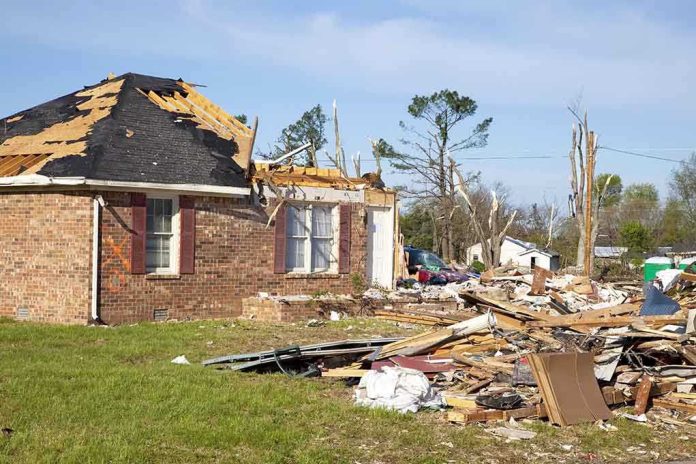
On Whidbey Island in Washington State, a regular single-family home hid a dangerous secret: roughly 700 pounds of fireworks stacked inside.[2] Fire investigators and a firefighter from Central Whidbey Island Fire and Rescue said the amount was enough to fill multiple pallets, far beyond anything a normal household should store.[2][6] When that stash ignited, the home effectively became a bomb. The resulting explosions destroyed two houses, damaged a third, and scattered burning debris across the neighborhood.[2]
Neighbors described a terrifying scene that lasted for hours. After the first blast, fireworks kept detonating, shooting flames and explosions into the sky as firefighters tried to gain control.[6] Residents reported seeing pallets of fireworks delivered to the home in the days and months before the disaster, raising concerns about what was being stored next door.[2][6] One neighbor recalled a similar delivery around the same time last year, suggesting this was not a one-time mistake but a pattern of risky behavior that had gone unchallenged.[2]
Smoking Near Fireworks Blamed, But Investigation Still Not Finished
Local media and several officials now say smoking very close to the fireworks likely triggered the blast.[2][4][7] KING 5 and other outlets report that a lit cigarette or smoking materials may have ignited the stash, turning an avoidable bad habit into a life-changing disaster.[4][7] A KIRO 7 follow-up showed fire investigators saying they found signs of smoking right where the fire started, and neighbors say they saw the homeowner smoking near the boxes of fireworks shortly before the explosion.[6]
Despite this, the Island County Sheriff’s Office has not yet declared an official cause of the fire and explosion, and the investigation remains open.[2] Region 3 Arson Task Force and the federal Bureau of Alcohol, Tobacco, Firearms and Explosives are working to identify the exact ignition point and decide if criminal charges are warranted.[2] This gap between the cautious official language and the confident media narrative matters. It means the “smoking cigarette” story, while likely, is still a working theory, not a settled fact backed by completed forensic reports or a filed criminal case.
Firefighters Injured While Protecting a Neighborhood Put at Risk
The explosion did not just destroy homes; it seriously hurt the very people who ran toward danger to protect the community. Three firefighters from Central Whidbey Island Fire and Rescue were injured while responding to the fire, with one suffering a severe hand injury that required surgery.[6] Reports indicate at least two residents were also hurt, adding to the human cost of what appears to be a preventable disaster.[2][6] Fire crews also had to deal with “a few” unexploded items left at the scene, forcing them to work in a still-dangerous environment.[2]
Evidence found of someone smoking near huge Whidbey Island neighborhood fireworks explosion https://t.co/XXLK8f4C2l pic.twitter.com/8gmC7qTElE
— KIRO 7 (@KIRO7Seattle) June 27, 2026
For many conservative readers, this episode highlights a deeper frustration: when private recklessness and weak enforcement collide, it is often first responders and neighbors who pay the price. Investigators say they are now reviewing state rules for storing fireworks and considering whether charges fit the facts.[6] Yet neighbors had already complained about unsafe burning and large fireworks deliveries before the explosion.[2][6] The system clearly had warning signs, but those warnings did not lead to timely action that might have prevented this disaster.
Illegal Storage, Media Narratives, and the Larger Pattern of Fireworks Disasters
This Whidbey Island blast fits into a wider national pattern where large, unpermitted fireworks stockpiles in residential or light commercial areas end in catastrophe. A medical case series on firework-blast injuries found that injuries from these incidents have been rising steadily in the United States since 2012, with half of cases involving alcohol use.[18] That data shows how small personal choices—drinking, smoking, ignoring basic safety rules—can mix with explosive material to produce deadly results that spread far beyond the person who made the risky decision.
Recent cases in California underline the danger when fireworks are stored or handled outside clear, enforced rules. In Esparto, California, a fireworks warehouse explosion killed seven people and scattered a huge fireball over the region.[16] After a seven-month investigation, California’s State Fire Marshal concluded that there had been illegal activity by an unpermitted fireworks company, and its licenses were suspended and later revoked.[15] That case shows what thorough investigation and firm action can look like. For Whidbey Island families now homeless, the hope is that local and federal authorities will be just as serious in tracing responsibility and enforcing the law, rather than letting a vague “it was smoking” storyline stand in for real accountability.
Sources:
[2] Web – Whidbey Island, WA fireworks blast destroys homes, injures 5
[4] YouTube – 700lbs of fireworks destroys 2 Whidbey homes
[6] YouTube – Fireworks explosion destroys Whidbey Island homes | FOX 13 Seattle
[7] Web – A massive explosion triggered by hundreds of pounds of stored …
[15] YouTube – Esparto explosion investigation ends with evidence of illegal activity
[16] Web – 7 unaccounted for after explosion at California fireworks warehouse
[18] Web – Patterns of Firework-blast Injuries: A Descriptive Case Series – PMC