
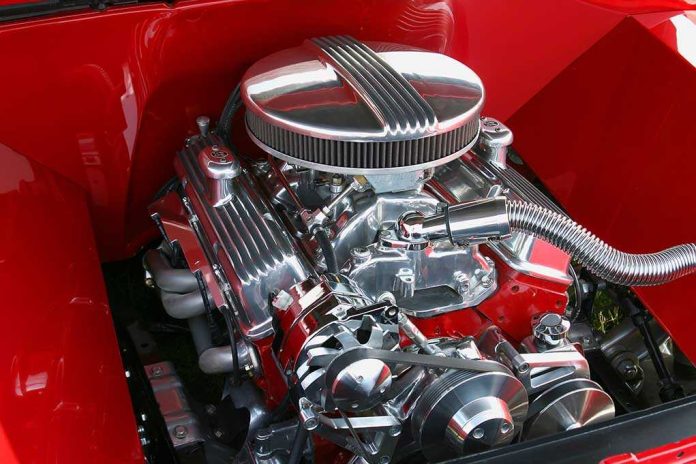
A phrase that should never show up in a public safety report—“consumed by engine”—is also quietly draining billions from American drivers in a very different context: your car’s motor.
Quick Take
- “Consumed by engine” is widely used in auto maintenance to describe oil burned inside the cylinders—not leaked onto the ground.
- Industry guidance says some oil use can be normal, but sharp spikes often point to wear, clogged rings, or valve-related problems.
- Excessive oil burning can raise emissions, damage catalytic converters, and trigger repairs that commonly run into the thousands.
- Newer oil standards and synthetic oils can reduce consumption, but they cannot “fix” mechanical wear once it sets in.
Why “consumed by engine” matters beyond the headline shock
Automotive technicians use “consumed by engine” to describe oil that enters the combustion chamber and burns during normal operation, usually through piston rings or valve pathways. That matters because many drivers still assume oil only “goes missing” through leaks. Industry sources describe typical consumption as relatively small, but they also outline thresholds where oil burning signals underlying wear or design problems rather than routine operation.
Drivers notice the problem when the dipstick keeps dropping between oil changes, the exhaust shows blue haze, or the vehicle begins fouling spark plugs. Diesel engines and high-load applications can face different measurement standards, but the practical warning is the same: if consumption rises, something changed mechanically. Because oil burning does not always leave a puddle in the driveway, the failure can go undetected until performance declines or emissions hardware starts failing.
The most common mechanical pathways that burn oil
Mechanics typically trace oil consumption to ring-pack wear, stuck or clogged piston rings, valve guide or seal deterioration, and blow-by that carries oil mist into the intake stream. Dirt ingestion and poor maintenance can accelerate those conditions by increasing abrasion and sludge formation. Industry write-ups emphasize that oil consumption is often a “symptom” to diagnose rather than a standalone defect, meaning the right fix depends on confirming the actual route oil takes into the cylinder.
Modern engines also create a policy-like tradeoff that frustrates everyday owners: designs optimized for fuel economy and lower friction can be less forgiving when maintenance slips. Thin, low-viscosity oils and long drain intervals may perform well under ideal conditions, but wear, deposits, or heat cycles can change the equation quickly. Several industry sources recommend monitoring trends—how fast consumption changes—not merely whether a vehicle uses any oil at all.
What “normal” looks like—and when it stops being normal
Oil consumption standards vary by engine family, duty cycle, and manufacturer guidance, but multiple industry references converge on a key idea: small usage can be expected, while rapid loss is a red flag. Some sources describe average rates as a fraction of fuel use, while consumer-facing rules of thumb often cite “quarts per thousand miles” as an easy benchmark. The practical point for owners is to document mileage and top-offs to see whether consumption is stable or accelerating.
Because “excessive” is not a single universal number, consumers can feel stuck—especially in used-car situations where warranties are limited and sellers may label the condition “normal.” That uncertainty is one reason oil consumption has repeatedly become a dispute between owners and manufacturers when ring designs or deposits lead to high burn rates. Where the facts show consumption exceeds published guidance, the dispute shifts from personal opinion to verifiable mechanical evidence.
Costs, emissions, and why this becomes a public policy issue
Excessive oil burning can become expensive fast. Industry sources tie high consumption to catalytic converter damage and higher particulate and hydrocarbon emissions, along with measurable performance degradation. For families already squeezed by years of inflation and high repair costs, a several-thousand-dollar engine teardown or emissions-system replacement is more than an inconvenience—it can be the difference between staying mobile and falling behind at work or in caregiving responsibilities.
This is also where the politics of regulation and the realities of daily life collide. Emissions compliance is not just a bureaucratic box-check; oil burning can directly affect what comes out of the tailpipe and whether a vehicle passes inspection. As the national conversation shifts toward electrification, millions of Americans still depend on aging internal-combustion vehicles and work trucks. That makes practical maintenance guidance—and fair, consistent standards—more relevant than slogans.
What owners can do now, and what remains uncertain
Owners can take straightforward steps that don’t require guessing: track oil level consistently, follow the specified viscosity, and investigate sudden changes immediately. Several sources point to synthetic oils and newer oil specifications as tools that can reduce volatility and help mitigate consumption, but they do not claim miracles. If rings are worn, valve seals are failing, or blow-by is severe, the long-term solution is mechanical repair, not additives alone.
#UPDATE Person struck and killed by Frontier jet was “at least partially consumed” by engine, official confirms to ABC News.https://t.co/o2EUyS7cbD
— ABC7 Eyewitness News (@ABC7) May 9, 2026
Limited public data makes it hard to estimate how many vehicles cross from “normal” to “excessive” in any given year, and definitions differ across gas, diesel, and hybrid operating patterns. Still, the theme is consistent across technical and consumer guidance: “consumed by engine” is a diagnostic description, not a shrug. In an era when many Americans distrust institutions, transparency from manufacturers, clear standards from regulators, and basic diligence from owners can keep a maintenance issue from turning into a financial crisis.
Sources:
Understanding How Engines Consume Oil
Understanding Excessive Oil Consumption: Causes and Symptoms
What Causes Engine Oil Consumption
When Is an Engine Consuming Too Much Oil?