
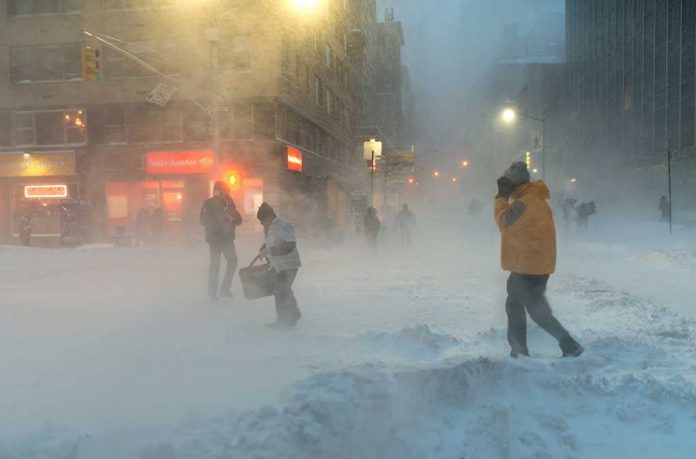
A major winter storm threatens travel chaos across the nation, highlighting vulnerabilities in infrastructure and emergency preparedness.
Story Overview
- The storm is set to impact a 2,000-mile stretch of the U.S. this weekend.
- Airlines have already canceled over 3,000 flights, with more disruptions expected.
- Major airports from Dallas to Boston are bracing for severe disruptions.
- Travel waivers are being offered by major airlines to mitigate passenger inconvenience.
Winter Storm’s Expansive Reach Threatens Travel
This weekend, a significant winter storm is forecasted to affect a vast 2,000-mile region of the United States, posing severe challenges to travel infrastructure. The storm will bring a mix of ice, snow, and freezing temperatures, creating hazardous travel conditions. Airlines have already canceled numerous flights in anticipation of the adverse weather, aiming to prioritize passenger safety and reduce operational risks during the storm.
As of Thursday afternoon, airlines had canceled 956 flights, with an additional 2,255 flights already canceled for Saturday. This precautionary measure underscores the anticipated severity of the storm, which threatens to paralyze transportation networks across several states. Key affected areas include North Texas, Oklahoma, Arkansas, Louisiana, and Tennessee, with ripple effects expected in eastern U.S. airports such as Boston, New York, and Philadelphia.
Airlines Respond with Travel Waivers
In response to the impending storm, major U.S. airlines, including Delta, American, Southwest, and United, have issued travel waivers. These waivers allow passengers to reschedule flights without incurring penalties, offering flexibility during this challenging period. American Airlines, for example, permits free rebooking for flights scheduled between January 23-25, provided tickets were purchased before January 19. However, passengers are reminded that changes to the origin or destination cities are not permitted under these waivers.
These proactive measures aim to minimize traveler inconvenience and ensure safety amid the expected chaos brought by the storm. Despite these efforts, the scale of the storm presents significant challenges, reflecting broader concerns about the resilience of U.S. infrastructure to extreme weather events.
Need for Improved Infrastructure Resilience
This winter storm sheds light on the critical need for strengthening infrastructure resilience against extreme weather conditions. Airports and transportation systems face recurring vulnerabilities as they grapple with severe weather disruptions, highlighting the importance of strategic investments in infrastructure improvements and emergency preparedness planning. Enhancing these systems is vital to safeguard public safety and maintain operational continuity in the face of growing environmental challenges.
While immediate measures are being taken to address the current crisis, long-term solutions are necessary to mitigate future disruptions. Policymakers must prioritize infrastructure enhancements to protect the nation’s economic stability and ensure the safety of its citizens against increasing environmental threats.
Sources:
Winter storm disrupts U.S. travel with widespread flight cancellations