A cabinet secretary’s credibility is now under the microscope after he denied on-camera remarks about “reparenting” Black children—despite recordings of him using that exact language.
Quick Take
- HHS Secretary Robert F. Kennedy Jr. clashed with Rep. Terri Sewell (D-AL) during an April 23, 2026 House Ways and Means budget hearing over his past comments about Black children and ADHD medication.
- Sewell cited Kennedy’s 2024 podcast remarks suggesting Black children on certain medications should have a chance to be “reparented” in screen-free communities.
- Kennedy denied making the remarks and said he didn’t know what “reparenting” meant, even as Sewell presented a visual display referencing his prior statements.
- HHS later argued the comments were taken out of context and described “reparenting” as a psychotherapy concept, not a government family-separation plan.
What Happened at the Ways and Means Hearing
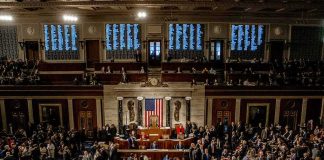
Rep. Terri Sewell confronted HHS Secretary Robert F. Kennedy Jr. during a House Ways and Means Committee budget hearing on April 23, 2026, pressing him about controversial statements he made in 2024 media appearances. Sewell framed the issue around a sensitive U.S. history of Black family separation and questioned Kennedy’s standing to speak about Black children’s upbringing and medical care, noting his lack of medical credentials.
Kennedy’s response escalated the exchange. Reports describe him refusing to directly engage Sewell’s premise while denying he had made the “reparenting” remarks and claiming he did not understand the term. Sewell replied that she was not inventing the quote and signaled that her final question was rhetorical. The confrontation became a high-visibility moment because it centered on whether a top health official was contradicting verifiable past statements.
The 2024 “Reparenting” Quotes and Why They Matter
The dispute stems from Kennedy’s 2024 podcast comments about ADHD treatment and medication use among Black children. In those recordings, he said “Every Black kid” is “standardly put” on medications including Adderall and SSRIs and claimed those drugs are “known to induce violence.” He then described a scenario in which children would have “a chance to go somewhere and get reparented,” living in communities without cellphones and screens.
Kennedy also referenced ideas such as “rehabilitation facilities” and “wellness farms” located in rural areas. Even if those concepts were framed as voluntary in his mind, the phrasing collided with the unavoidable American reality that government has a long record of overreach—especially when bureaucracies start deciding which families need “intervention.” For conservatives who prioritize parental rights and limited government, vague proposals involving children and institutions demand especially tight definitions, guardrails, and transparency.
HHS’s “Out of Context” Defense Doesn’t Resolve the Core Issue
An HHS spokesperson defended Kennedy by arguing the remarks were taken “out of context,” adding that “reparenting” can be a psychotherapy term involving emotional regulation, boundaries, discipline, and self-worth. That clarification may explain how the word is used in certain therapeutic settings, but it does not directly address the plain-language impression left by Kennedy’s recorded remarks—particularly the references to moving children to structured, screen-free communities and linking medication to violence.
This gap matters politically and administratively. Health agencies shape funding priorities, public-health messaging, and guidance that influences state and local systems. When terminology is imprecise—or when a senior official appears to disavow recorded statements—the result is predictable: more mistrust, more partisan warfare, and more Americans concluding that powerful institutions speak one way to the public and another way when held to account.
Oversight, Trust, and the Broader Fight Over Public Health
The hearing covered more than the “reparenting” controversy. Reporting indicates lawmakers also raised questions about Kennedy’s vaccine-related positions and major HHS budget issues, including large-scale cuts. That context is important because HHS sits at the intersection of science, spending, and personal liberty. Americans across the political spectrum are already skeptical after years of public-health whiplash and political messaging, making credibility at the top of the agency unusually consequential.
RFK Jr. Flails as Senator Interrogates Him for Saying Black Kids Need To Be 'Reparented' https://t.co/sUPlSnSxxT
— Mediaite (@Mediaite) April 23, 2026
Democrats are likely to keep using confrontations like this to paint the administration as reckless or unfit, while Republicans will argue oversight hearings are being used for political theater instead of budgeting and measurable outcomes. The most practical takeaway is nonpartisan: when federal health officials talk about children, medicine, and family life, they must be precise, consistent, and demonstrably truthful—because trust is the currency that makes public health guidance work at all.
Sources:
Shouting match erupts with RFK Jr., Dem lawmaker over comments about Black children
Under Fire, RFK Jr. Denies Calling for ‘Re-parenting’ of Black Kids
From Vaccines to Racism, RFK Faces Barrage of Questions in Congress