As Venezuelans claw through rubble for loved ones, clashing death tolls and tens of thousands missing raise hard questions about disaster honesty and government control.
Story Snapshot
- Twin mega-quakes killed at least 235 people at first count, with the toll later soaring into the thousands.
- Missing-person reports exploded past 50,000, while the regime kept tight control over official numbers.
- U.S. military and international rescue teams rushed in, giving President Trump a major role in saving Venezuelan lives.
- Media outlets and opposition groups say casualty figures are badly undercounted, exposing deeper crisis in Venezuela’s broken state.
Quakes Shatter A Fragile Country
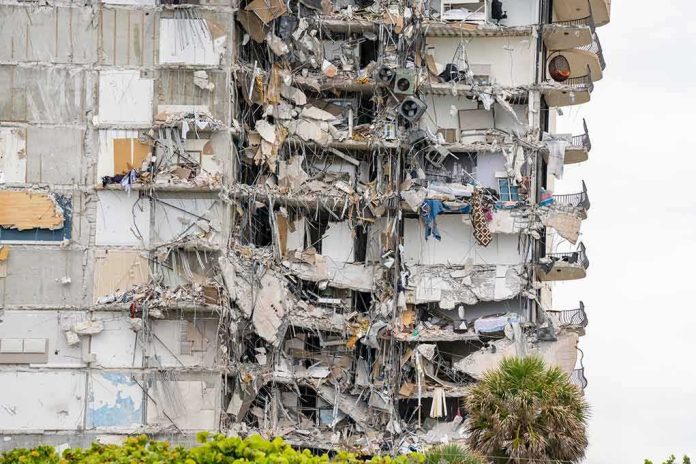
The earthquakes that struck Venezuela late Wednesday measured 7.2 and 7.5, making them the strongest quakes the country has seen in more than a century. The epicenters were near Yumare at shallow depth, which meant shaking was violent in key coastal cities and the capital region. Buildings collapsed in La Guaira and Caracas, roads and bridges were torn up, and power and water systems failed across several states. Early reports put the death toll at at least 235, with more than 4,000 injured and thousands missing.
Acting President Delcy Rodríguez quickly declared a state of emergency and announced a $200 million reconstruction fund for damaged hospitals and homes. She ordered rescue teams and heavy equipment into the hardest-hit zones and asked businesses to release machinery for clearing rubble. United Nations–certified search and rescue teams were mobilized, and by the end of the first week, more than two dozen foreign teams with trained dogs, cameras, and radar tools were on the ground. Despite this, many citizens still felt they were digging alone.
Mounting Death Toll And A Sea Of Missing People
As rescuers worked, the official numbers kept changing. Health Minister Carlos Alvarado first reported 164 deaths and 971 injuries, only counting people who reached hospitals. Within a day, other officials spoke of at least 235 dead and about 4,300 injured. By Friday, reports cited nearly 920 dead, 3,360 hurt, and more than 51,000 missing nationwide. Later counts pushed confirmed deaths past 1,900 and then above 2,295, while international analysis suggested the final toll could easily pass 10,000.
Opposition groups built their own missing-persons websites because the government refused to give an official figure for the missing. One platform logged more than 38,000 missing within days, and another listed over 43,000 people unaccounted for as of June 30. The United Nations Emergency Relief Coordinator said more than 50,000 people remained missing. This huge gap between confirmed deaths and missing-persons reports fueled suspicion that the public was not getting the full story and that many bodies were still under rubble or buried quietly.
Media Skepticism And ‘Undercount’ Narrative
Major outlets like The New York Times and others framed Venezuela’s official death counts as “substantial undercounts,” warning it could take weeks to understand the true scale. The United States Geological Survey’s PAGER system estimated a 44 percent chance that fatalities could reach between 10,000 and 100,000, far above early government figures. Experts said shallow quakes of this size near dense cities almost always mean thousands of deaths. These estimates did not prove a cover‑up, but they made low early numbers look doubtful and pushed global media toward an undercount narrative.
Rodríguez pushed back hard. She accused critics of spreading “narratives manufactured in propaganda laboratories” and insisted the state and private sector had fully mobilized within a day. Her government kept tight control over public communications and limited independent access to the worst-hit areas, a move that may have protected rescue operations but also made it harder for journalists and families to verify casualty numbers directly. In any fragile state, that kind of information choke point breeds mistrust.
International Help And Trump’s Role In The Response
While Venezuela’s institutions strained, international rescue teams rushed in. The United Nations Office for the Coordination of Humanitarian Affairs reported about 1,000 emergency responders in 25 search-and-rescue teams heading to Venezuela from Europe, Asia, and Latin America. Countries like Germany, Chile, Switzerland, Turkey, China, Qatar, Brazil, Portugal, Canada, El Salvador, the Dominican Republic, and Mexico sent specialized crews, dogs, and advanced gear. Satellite imagery showed widespread damage in cities, guiding teams toward the worst collapse zones.
Trained rescue dogs played a remarkable role alongside international search and rescue teams responding to the devastating earthquakes in Venezuela. Tsunami, known for his striking blue and brown eyes, completed his final mission before retirement after helping locate numerous… pic.twitter.com/5kBEcNQzUL
— Fetch Pakistan (@FetchPakistan) July 7, 2026
The United States stepped up in a major way. Reports say Washington deployed warships, transport planes, helicopters, and hundreds of service members, committing more than $300 million in aid. U.S. leaders also signaled plans to release frozen Venezuelan oil revenues for relief and rebuilding. For conservative readers at home, this matters: America, under President Trump, is not sitting on the sidelines. Our forces and taxpayers are helping save lives, even in a country long mismanaged by socialist policies that hollowed out its emergency systems.
A Broken System Exposed By Disaster
The chaos over casualty figures reflects a deeper problem. Years of inflation, health care shortages, and crumbling infrastructure left Venezuela poorly prepared for a major quake. Civil registries are weak, local hospitals are overwhelmed, and many deaths happen long before victims reach official care. That is why health officials admit their early counts covered only hospital casualties. In this kind of broken system, “undercounts” are almost baked in, whether by design or simple collapse of basic record‑keeping.
For Americans, this disaster is a stark warning about what happens when a government chases ideology instead of competence. Venezuela’s people now depend heavily on international help because their own state cannot fully protect them. The Trump administration’s strong support for rescue efforts shows how a free, functioning country can still be a lifeline in a broken world. At the same time, the fight over numbers in Venezuela should remind us to guard our own institutions, demand transparency, and resist any push toward the same kind of decay.
Sources:
insiderpaper.com, en.wikipedia.org, cnn.com, npr.org, news.un.org, disasteraware.com, reuters.com, usatoday.com, newindianexpress.com, butlereagle.com