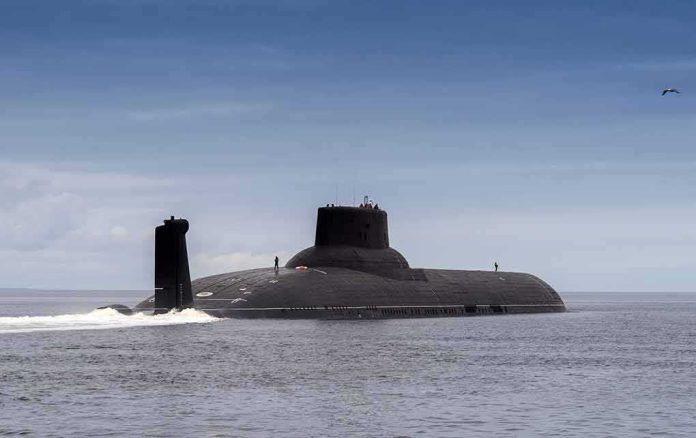
The U.S. Navy is set to retire four submarines that together can fire more Tomahawk missiles than most of the rest of the fleet combined, and no single new submarine can replace even one of them.
Story Snapshot
- Four Ohio-class guided-missile submarines, each carrying up to 154 Tomahawk missiles, are being retired between 2026 and 2028.
- Their replacement, the Virginia-class submarine with a Virginia Payload Module, carries only about 12 to 40 Tomahawks per boat.
- Reports differ on the exact missile total lost, with figures ranging from 600 to 2,080 depending on how “capacity” is counted.
- The Navy says it is speeding up construction of new submarines, but no official document confirms the gap will be fully closed in time.
Four Submarines Carry Half the Fleet’s Firepower
The Navy converted four Ohio-class submarines from nuclear missile boats into conventional strike subs decades ago. Each one can carry up to 154 Tomahawk cruise missiles, the Navy’s main long-range strike weapon. Analysts say the four boats together hold close to half of the entire submarine force’s missile-launching capacity, making their retirement a major shift in how the Navy can strike targets from underwater.
USS Ohio and USS Florida are scheduled to leave service in 2026, with USS Michigan and USS Georgia following by 2028. The retirements were planned years in advance as part of the Navy’s long-term shipbuilding schedule, not a sudden or unexpected cut.
The New Submarines Carry Far Fewer Missiles
The Navy’s answer is the Virginia-class attack submarine, built with an added section called the Virginia Payload Module. That upgrade lets each new boat carry roughly 40 Tomahawks, compared to the 154 on each retiring Ohio-class submarine. Some reporting puts the number as low as 12 to 28 missiles per Virginia boat, depending on the exact configuration built.
One estimate says the Navy would need 22 Virginia-class boats equipped with the new payload module just to match the missile capacity the four Ohio submarines are giving up. Building submarines at that scale takes years, and shipyards have already struggled to keep pace with the Navy’s production targets.
Navy Says Construction Is Speeding Up
Officials have said the Navy is accelerating submarine construction to close the gap as fast as possible. The retirements are also staggered over several years instead of happening all at once, which gives shipyards more time to deliver replacement boats before the last Ohio-class submarine leaves service.
Even so, no publicly available Navy budget document or congressional testimony in the current record lays out a year-by-year comparison of missile capacity lost versus missile capacity gained. That leaves the public relying mostly on outside estimates rather than an official Navy accounting of the transition.
The Numbers Keep Changing
Different reports describe the missile loss in different ways, and the totals do not always match. Some cite 616 missiles, others say 600, and one report claims a loss of 2,080 launch cells rather than missiles carried at any one time. Missile counts and launch-tube counts are not the same thing, and mixing them makes the size of the problem harder to pin down.
The debate is also sometimes mixed up with the separate Columbia-class submarine program, which replaces the Navy’s nuclear-armed deterrent fleet, not the conventional strike submarines at issue here. Keeping those two programs separate matters for anyone trying to understand what capability is actually changing hands.
Why This Matters Beyond the Navy
This story fits a pattern many Americans already recognize: a big, visible cut happens on a fixed timeline, while the promised replacement lags behind and gets described in vaguer terms. Whether the shortfall proves temporary or lasting, the public still lacks a clear, official government breakdown of the numbers, which fuels distrust in institutions on both the left and right.
Sources:
19fortyfive.com, en.wikipedia.org, nationalsecurityjournal.org, indiandefencereview.com, nationalinterest.org, submarinesuppliers.org, navalnews.com, businessinsider.com