A white Toyota Land Cruiser plowed into Australian lawmaker Helen Haines outside her own electorate office, leaving the 65-year-old independent member of Parliament fighting for her life and triggering a national counterterrorism investigation.
Quick Take
- A Toyota Land Cruiser struck Helen Haines on Murphy Street in Wangaratta around 3:35 p.m. on October 19, 2026.
- A 43-year-old man was arrested after a bystander held him until police arrived; a knife was found inside the vehicle.
- Prime Minister Anthony Albanese activated a national counterterrorism team to help investigate the attack.
- The suspect, later identified as Brendan Nugent, appeared in court and was charged, without seeking bail.
A Targeted Strike Outside a Country Office
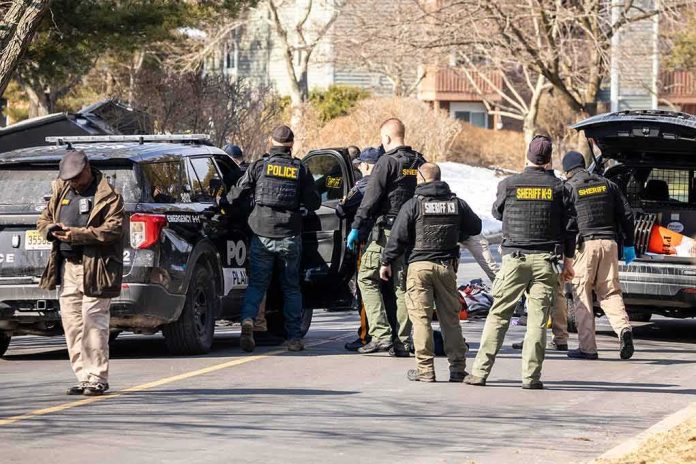
Helen Haines was walking near her own electorate office on Murphy Street in Wangaratta, a regional city in Victoria, when the vehicle hit her. Victoria Police said the crash happened at roughly 3:35 p.m. local time on October 19, 2026. Haines suffered critical injuries and was airlifted to a hospital for emergency treatment. Police called the crime scene “quite extensive,” a detail that signals how violently the impact tore through the area.
A passerby tackled and held the driver at the scene until officers arrived, preventing him from leaving before he could be taken into custody. Police later said they recovered a knife from inside the Land Cruiser after the driver was detained, giving investigators another piece of physical evidence to examine alongside the vehicle itself.
Police Treat the Crash as a Possible Crime
Acting Superintendent Ashley Mason confirmed that detectives were investigating whether the vehicle strike was a deliberate act rather than an accident. That distinction matters because it shapes which charges prosecutors can eventually file, from reckless driving all the way up to attempted murder. A 43-year-old man was taken into custody immediately after the incident, giving investigators a clear suspect to question and build a case against.
Within a day, police publicly named the suspect as Brendan Nugent and laid three charges against him. He appeared in court without seeking bail, a decision that typically signals either the severity of the alleged offense or an acknowledgment that release was not realistically on the table. Reporters also found that Nugent had replied to Haines’s social media posts years earlier, in 2019 and 2021, once describing her as a politician who takes climate change seriously.
Counterterrorism Teams Enter the Case
Prime Minister Anthony Albanese announced that a national counterterrorism team would help investigate the attack, drawing in the Australian Federal Police, the Australian Security Intelligence Organisation, Victoria Police, and the Joint Counter-Terrorism Team. That is a serious escalation for what began as a local traffic crime scene, and it tells the public that authorities see enough troubling signs to bring in Australia’s top national security resources rather than leaving the case entirely to local detectives.
Albanese was careful to say it was too early to identify a motive, and police had not pinned down why the attack happened. Victoria Police also described the incident as isolated, saying there was no ongoing threat to the wider community, even as the counterterrorism machinery spun up around the case. Those two messages are not contradictory. They simply reflect an investigation working through evidence while being transparent about what it does not yet know.
What Australian Law Requires to Call It Terrorism
Under Australia’s Criminal Code, a terrorist act has to meet three tests together: it must cause serious harm, be done to advance a political, religious, or ideological cause, and be intended to intimidate the public or coerce a government. The Australian Security Intelligence Organisation treats terrorism as one category within a broader universe of politically motivated violence, meaning an attack on a sitting lawmaker can be deeply serious without automatically clearing that specific legal bar. That is why investigators are still working to establish motive before anyone calls this terrorism in a courtroom sense.
A Community Rallies, A Suspect Faces Court
Flowers and handwritten notes piled up outside Haines’s Wangaratta office within hours of the attack, a visible sign of how rattled the small community felt watching their own representative nearly killed steps from where she serves constituents. Haines has represented the seat of Indi as an independent since 2019, building a reputation around rural health care and climate policy, which made the attack feel especially personal to local residents who know her by name, not just by title.
Flowers and heartfelt messages are piling up outside Helen Haines’ electoral office in Wangaratta, as the community rallies around the independent MP following Monday’s alleged attack.
Locals have gathered to show their support, with hundreds attending vigils to pray for her… pic.twitter.com/t06NxJ5QiN
— 10 News Melbourne (@10NewsMelb) October 21, 2026
Doctors have continued working to treat Haines’s injuries while investigators search Nugent’s home and comb through evidence from the scene. The case now moves through Victoria’s court system, where prosecutors will have to lay out exactly what they can prove about intent, motive, and planning. Australians watching this unfold are getting a real-time lesson in how far an investigation has to travel before “attack” becomes a proven, specific crime in front of a judge.
Sources:
youtube.com, nytimes.com, reuters.com, politico.com, abcnews.com, nine.com.au, afr.com, thewest.com.au