
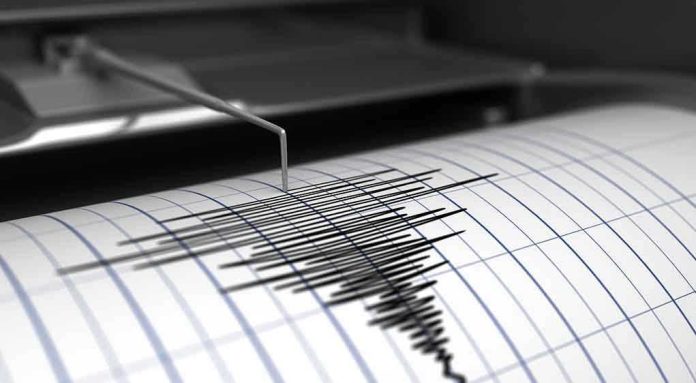
New scientific research reveals that Americans living along the West Coast may face not one but two catastrophic megaquakes in rapid succession, potentially overwhelming the nation’s emergency response capabilities.
Story Snapshot
- Oregon State University study links San Andreas Fault to Cascadia Subduction Zone, suggesting one major quake could trigger another
- Cascadia has 37% chance of magnitude 7.1+ earthquake in next 50 years, with potential for 9.0+ megaquake causing up to six feet of coastal subsidence
- Dual earthquake scenario could drain national resources from first disaster, leaving second region without adequate emergency support
- Federal and state agencies warn of doubled flood exposure from land subsidence, compounded by rising sea levels threatening Pacific Northwest permanently
Linked Fault Systems Present Dual Catastrophe Risk
Oregon State University marine geologist Chris Goldfinger published research in 2025 showing a seismic connection between California’s San Andreas Fault and the Cascadia Subduction Zone stretching from Northern California to British Columbia. Analyzing sediment layers and paleoseismic data dating back thousands of years, Goldfinger’s team found evidence suggesting major seismic events on one fault system may influence activity on the other. The 1989 Loma Prieta earthquake on the San Andreas potentially affected Cascadia, according to sediment analysis. While Goldfinger emphasizes that one quake will not necessarily trigger the other, he warns the possibility of back-to-back megaquakes represents a devastating worst-case scenario that federal planners have largely ignored.
Cascadia Subduction Zone Threatens Unprecedented Destruction
The Cascadia Subduction Zone, a 700-mile fault located 70 to 100 miles offshore, has produced 43 earthquakes over the past 10,000 years. The last major rupture occurred on January 26, 1700, generating a magnitude 9.0 earthquake that dropped coastlines several feet and sent tsunamis across the Pacific Ocean to Japan. Oregon’s Office of Emergency Management calculates a 37 percent probability of a magnitude 7.1 or greater earthquake within the next 50 years. Such an event would produce five to seven minutes of violent shaking along coastal areas, tsunamis reaching 50 to 100 feet in height arriving within 15 minutes, and land subsidence of up to six feet across affected regions.
Federal Government Warnings Highlight Compounding Threats
The U.S. Geological Survey’s Pacific Coastal and Marine Science Center released analysis in May 2025 warning that Cascadia-induced subsidence will double the number of people, homes, and roads exposed to coastal flooding. USGS scientists stress that land sinking from a megaquake, combined with rising sea levels, creates permanent changes to Pacific Northwest coastlines by 2100. This dual threat has received insufficient attention in federal disaster planning, according to government researchers. Communities from Washington to Northern California have begun constructing high-ground evacuation zones, recognizing that traditional emergency response models fail when entire coastal regions face simultaneous destruction from earthquakes, tsunamis, and permanent land subsidence.
Emergency Response System Faces Impossible Challenge
Goldfinger describes the linked-quake scenario as a national emergency response nightmare. A major earthquake on one fault system would deploy federal disaster resources to that region. If a second megaquake struck the other fault within hours, days, or even years, the nation would lack sufficient personnel, equipment, and funding to address both catastrophes simultaneously. This vulnerability exposes a critical failure in federal emergency planning that prioritizes single-event scenarios over cascading regional disasters. The research does not predict when earthquakes will occur or guarantee that one will trigger another, but Goldfinger characterizes seismic activity on one fault as a potential “alarm bell” for the other, giving authorities and residents limited warning time to prepare for a second catastrophic event.
West Coast residents face this compounding threat while federal agencies acknowledge preparedness gaps. The USGS continues compiling paleoseismic data to refine risk models, but concrete federal action to address dual-earthquake scenarios remains limited. State and local governments bear primary responsibility for building resilience infrastructure and evacuation systems, even as the scale of potential destruction exceeds local capabilities. Citizens living along both fault systems confront a fundamental question about government priorities: whether federal disaster planning serves the American people or merely maintains bureaucratic procedures inadequate for protecting millions facing foreseeable catastrophic risk from the natural forces building beneath the West Coast.
Sources:
Cascadia Subduction Zone – Oregon Office of Emergency Management