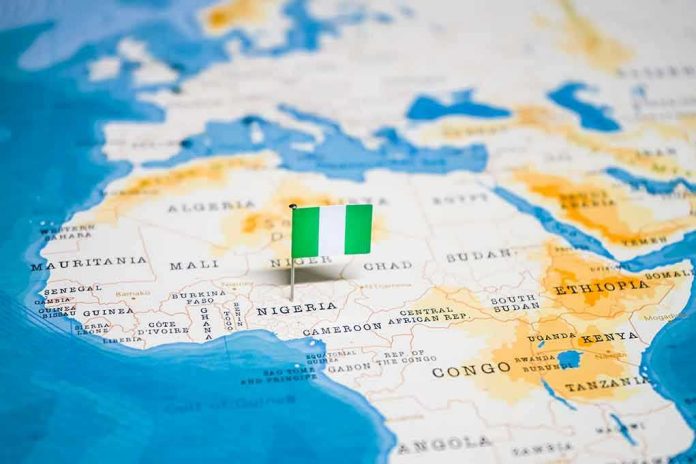
Nigeria’s new counter-terrorism strategy faces a daunting challenge as ISIS expands its reach across West Africa, raising concerns about the region’s security.
Story Highlights
- Nigeria’s new strategic counter-terrorism plan aims to tackle regional threats.
- ISIS affiliates continue territorial expansion in West Africa and the Sahel.
- Geopolitical shifts see Western military withdrawal and increased Russian influence.
- Efforts to counter terrorism are undermined by the growing power of ISIS groups.
Nigeria’s Counter-Terrorism Strategy: A Regional Leader
In 2025, Nigeria launched its National Counter-Terrorism Centre’s Strategic Plan 2025–2030, aiming to bolster its position as a regional leader in combating terrorism. This strategic initiative serves as a comprehensive framework to address security threats within Nigeria and across the region. However, the implementation of this plan occurs amid the alarming expansion of ISIS affiliates, particularly the Islamic State West Africa Province (ISWAP) and the Islamic State in the Greater Sahel (ISGS).
These groups have increasingly consolidated control over large territories in West Africa and the Sahel region, posing a significant challenge to both local and international counter-terrorism efforts. The launch of Nigeria’s strategy was accompanied by an ECOWAS summit, which discussed the possible deployment of a regional counter-terrorism force.
Geopolitical Shifts and Security Implications
The geopolitical landscape in the Sahel has witnessed dramatic shifts, with the withdrawal of French and American military forces from key areas. This vacuum has provided ISIS affiliates with the opportunity to expand their influence. Meanwhile, the central Sahel states, including Burkina Faso, Mali, and Niger, have aligned more closely with Russia, seeking military cooperation to counterbalance the withdrawal of Western forces. This shift signals a realignment of power dynamics in the region.
The dissolution of the Group of Five for the Sahel Joint Force (FC-G5S) and the emergence of the Alliance of Sahel States (AES) further highlight the evolving security landscape. The withdrawal of Western forces and the increasing influence of Russia challenge existing counter-terrorism strategies and raise questions about the effectiveness of international efforts to combat terrorism.
Challenges and the Path Forward
Nigeria’s counter-terrorism strategy, while necessary, faces significant challenges in the face of expanding ISIS territories. The displacement of over two million people across the Sahel has created humanitarian crises that require urgent international attention. The UN has warned that a vast territory stretching from Mali to northern Nigeria could fall under the control of ISIS affiliates if current trends continue.
Efforts to address these security threats must involve not only robust counter-terrorism measures but also a focus on community engagement and capacity building. The Global Counterterrorism Forum emphasizes the importance of local involvement and accountability mechanisms as essential components of effective counter-terrorism operations. As Nigeria implements its strategic plan, continued international cooperation and support remain crucial to achieving lasting security in the region.
Sources:
Interview with Major General Laka
UN Office of Counter-Terrorism