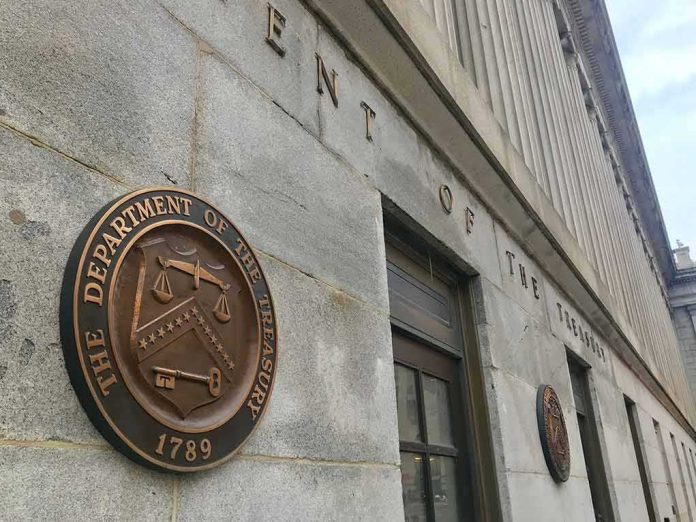
Washington and Beijing agreed to extend their trade truce to January 10, buying time but not solving the fight over tariffs and technology.
Story Highlights
- The United States and China extended the “Busan Agreement” truce to January 10.
- Treasury Secretary Scott Bessent said the extra time aims to push broader economic talks.
- The move follows a pattern of short pauses that lower market risk but dodge hard issues.
- The extension lands ahead of high-level meetings where both sides still differ on duration.
What The Extension Does And Does Not Do
U.S. Treasury Secretary Scott Bessent said the United States and China agreed to extend the “Busan Agreement” through January 10. He framed it as a way to keep talking about a bigger economic package while holding fire on new tariffs and related steps. The truce had been set to lapse in November, which could have triggered new friction. The two-month extension delays that risk and keeps current tariff pauses and commodity understandings in place, at least for now.
The timing underscores the stakes around a planned Trump–Xi summit and parallel talks among economic teams. Recent weeks included signals that Washington preferred a longer runway, while Beijing pushed its own terms, showing there was still no consensus on size or scope. By setting a January 10 marker, both sides preserve leverage into year-end. Businesses get a short window of predictability for shipping plans, pricing, and inventory decisions, but not a lasting peace.
How This Fits A Broader U.S.–China Pattern
Analysts describe these brief truces as a recurring tool. They cool markets and calm headlines, yet leave the core disputes untouched. Those core disputes include tariffs, technology export rules, critical minerals, and market access. Past rounds also used 60-to-90 day pauses to keep talks alive without major concessions. This extension appears to follow that script. It manages pressure in the short term, while the structural rivalry and strategic competition remain firmly in place.
Financial press and policy trackers have noted that deadlines often drive the drama more than breakthroughs do. The latest move continues that cycle: avoid a cliff, reset the clock, and reconvene after leaders meet. Markets often price these truces like treaties, then relearn the gap between a pause and a deal when the next deadline nears. The January date now becomes the new cliff. That keeps companies alert and may keep prices bumpy in trade‑sensitive sectors.
Why It Matters For American Families And Firms
Factory managers, farmers, and retailers face real costs when policy lurches. Even a short truce can steady freight bookings and help lock in holiday and winter supply plans. But a two‑month window is tight. Many firms cannot retool sourcing or switch suppliers on that timeline. Workers and owners on both coasts and in the heartland want clarity so they can invest, hire, and plan. A stop‑and‑go cycle makes that hard and feeds the sense that Washington is managing headlines, not fixing problems.
US, China agree to extend 'the Busan agreement' until January, Bessent says https://t.co/Y562WAEASJ https://t.co/Y562WAEASJ
— Peace Maker (@princezar) September 24, 2026
Both sides say they want progress. Bessent flagged the hope for a broader economic understanding. Yet officials also admit there is daylight on key terms, including how long any extension should last. That means the next few weeks will test whether the pause can become something more durable. Until then, the extension lowers immediate risk, but it does not close the divide on tariffs and technology. Voters see the pattern: short relief, long uncertainty.
Sources:
foxnews.com, newsbreak.com, firstpost.com, reuters.com, commbank.com.au, cfr.org, investing.com, news.sbs.co.kr