President Trump’s sudden green light for a massive local-TV merger is forcing conservatives to ask a tough question: does “more competition” come from fewer owners—or from breaking Big Media’s grip?
Quick Take
- Trump endorsed Nexstar’s $6.2 billion bid for Tegna on Feb. 7, 2026, reversing his November 2025 criticism.
- Trump framed the merger as a way to challenge “Fake News” national networks and urged regulators to approve it.
- The deal still needs FCC and DOJ approval plus Tegna shareholder sign-off, with an expected closing in the second half of 2026.
- Some conservative media leaders, including Newsmax and OAN executives, warn consolidation could hurt independent outlets.
Trump’s Reversal Puts a Local-TV Mega-Deal Back in Play
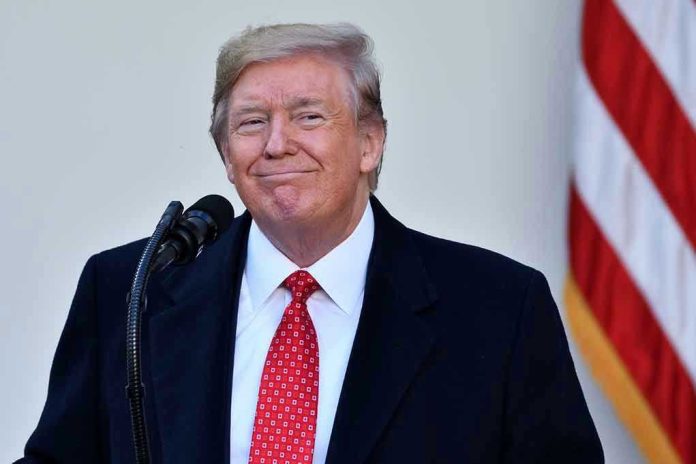
President Donald Trump used Truth Social on Feb. 7, 2026 to support Nexstar Media Group’s proposed acquisition of Tegna, a deal valued at about $6.2 billion. The endorsement marked a clear reversal from Trump’s November 2025 criticism, when he voiced concern the merger could enlarge “Radical Left” media power. This time, Trump argued the transaction would strengthen competition against national television networks he describes as “Fake News.”
Nexstar announced the acquisition in August 2025, saying it would combine Nexstar’s more than 200 stations across 116 markets with Tegna’s 64 stations in 51 markets. The merger is not final: it remains subject to review by federal regulators and approval by Tegna shareholders. Public reporting indicates the companies anticipated closing in the second half of 2026, assuming required approvals are secured on schedule.
What the Regulators Control: FCC Ownership Rules and DOJ Antitrust Review
The key gatekeepers are the Federal Communications Commission and the Department of Justice. The FCC’s broadcast ownership framework and related court decisions have been central to the debate, because local station combinations can run into market-by-market limits. At the same time, the DOJ evaluates whether a deal could reduce competition in advertising, carriage negotiations, or other local media markets. As of the latest reporting, no immediate post-endorsement agency decisions were publicly announced.
FCC Chairman Brendan Carr, an ally of the Trump administration’s deregulatory direction, has echoed concerns about concentrated power at national media companies. That context matters because the administration’s broader posture toward deregulation can affect how quickly rules are revisited and how aggressively agencies scrutinize consolidation. Even with political support, the legal process still requires an administrative record, potential conditions, and the possibility of court challenges from opponents.
Local Broadcasters vs. National Networks in a Streaming Era
The business argument hinges on audience behavior and scale. Cord-cutting and streaming have chipped away at legacy cable models, pushing broadcasters to seek efficiencies and bargaining power. Reporting cited a July 2025 Gallup poll showing far more Americans using streaming than cable, a trend that pressures local stations’ economics. Nexstar has positioned the Tegna purchase as a way to build leverage against “Big Tech/Big Media” and to keep local broadcasting viable.
Conservatives who are tired of activist corporate messaging often welcome anything that disrupts entrenched national media narratives. But the real-world tradeoff is straightforward: building a bigger chain can increase reach and resources, yet it can also reduce the number of independent owners controlling local newsrooms. That tension is at the heart of why Trump’s endorsement energized supporters while also triggering concern from some right-leaning competitors.
Conservative Dissent: Newsmax and OAN Warn About Consolidation
Politico reported internal conservative-media pushback, highlighting criticism from Newsmax CEO Chris Ruddy and One America News Network’s Charles Herring. Their argument is not that national networks deserve protection, but that consolidation can squeeze smaller outlets on distribution and advertising, leaving fewer lanes for independent voices. Herring summed it up bluntly, saying “Only competition (not consolidation) serves Americans,” reflecting a view that ownership concentration can backfire.
Trump throws support behind Nexstar-Tegna broadcast deal he once opposed – CBS News https://t.co/t85aQZc0FQ
— Logan R (@LoganinSanDiego) February 7, 2026
Trump, meanwhile, has publicly insisted opponents are misguided and that the merger would ultimately help competition against the national broadcast giants. The evidence available in current reporting supports the basic fact of Trump’s reversal and the existence of a conservative split, but it does not establish how regulators will rule or what conditions may be imposed. For viewers, the practical question is whether “localism” improves when fewer companies control more stations.
Sources:
Trump throws support behind Nexstar-Tegna broadcast deal he once opposed
Trump praises Nexstar-Tegna broadcast television deal he once opposed
Trump backs Nexstar-Tegna merger
Trump backs Nexstar-Tegna deal despite DEI philosophy
Trump throws support behind Nexstar-Tegna broadcast deal he once opposed