
A crude gas-canister bomb that killed a grandmother in Greece has now sparked a sweeping counterterror crackdown that many fear shows how fragile political stability has become.
Story Snapshot
- Greek counterterrorism police arrested three young anarchist suspects over deadly July 1 firebomb attacks targeting ruling party politicians.
- The bomb killed 72-year-old Vaya Nestora, mother of a New Democracy parliamentary candidate, and injured four others in Thessaloniki.
- Police say homemade butane gas canister explosives hit three politician-linked homes and vehicles in coordinated pre-dawn strikes.
- The case taps Greece’s long history of small extremist groups using low-tech bombs, and raises fresh questions about how governments protect citizens while political tensions rise.
Deadly Pre-Dawn Attacks on Homes of Politicians
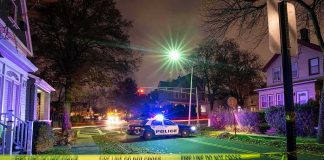
Before dawn on July 1, attackers struck three residential buildings in Thessaloniki tied to Greece’s governing New Democracy party. Police say homemade gas-canister bombs were placed near homes and vehicles belonging to local conservative politicians, turning quiet streets into fire zones within minutes. In one blast, a car exploded and flames spread to the apartment building, trapping residents and forcing rescues. These coordinated strikes were clearly aimed at political figures, but everyday families absorbed much of the damage.
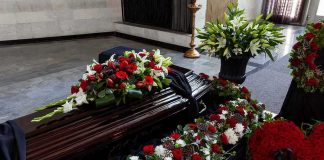
One of those families belonged to parliamentary candidate Afroditi Nestora. Her 72-year-old mother, Vaya, was caught in the explosion outside their building and suffered fatal burns. Four other people were hurt, adding to the sense that ordinary citizens are paying the highest price for political anger. For Greeks, this was more than another act of vandalism. It was one of the first deadly politically motivated bombings in years, reopening old fears about extremist violence and government security failures.
Counterterror Arrests and the Anarchist Connection
On July 10, Greece’s counterterrorism police announced they had arrested three suspects in connection with the Thessaloniki firebombings. Authorities say a 29-year-old man was arrested in Thessaloniki and a 26-year-old woman on the island of Crete, both suspected of direct involvement in the bombing at Nestora’s home. A third man is accused of hiding the pair in his apartment before and after the attack, suggesting a small support network rather than a lone actor.
Police statements and Greek media describe the detainees as young anti-establishment figures known to law enforcement, with alleged links to anarchist circles. Investigators say the same group likely carried out all three July 1 attacks, using small butane canisters turned into crude explosives. The counterterror unit continues to search for additional people who may have helped plan or support the attacks, indicating officials believe a broader cell could exist behind the scenes. For a government eager to show control, securing convictions will be a top priority.
A Long History of Low-Tech Political Violence
These bombings fit a pattern that has troubled Greece for decades: small far-left and anarchist groups using simple devices to send a political message. United States State Department reporting from the late 1990s already noted that most such attacks were firebombings against businesses and government offices, often carried out with improvised gas-canister explosives. Today’s case shows how that same low-tech method can still kill, even when attackers may claim they are only targeting “symbols” of power rather than people.
Modern terrorism data on Greece lists the July 1, 2026 Thessaloniki incident as a politically motivated attack with an improvised explosive device, leaving one dead and four injured. This echoes earlier periods when domestic extremist groups tried to pressure the state, especially after Greece’s 20th-century political turmoil and military dictatorship. For many Greeks, this latest blast is not an isolated crime but part of a recurring cycle where fringe ideologues lash out and ordinary families end up in harm’s way.
Security, Rights, and a Growing Distrust of “Elites”
Greece’s governing New Democracy party quickly called for public protests after the killing, urging supporters to stand against political violence and defend democratic institutions. At the same time, the counterterror arrests give security officials a chance to show they can protect citizens after a deadly failure. This mirrors broader global trends, including in the United States, where many people believe governments are quicker to stage press conferences than to fix deeper problems.
Leftist and anarchist groups often claim such crackdowns are more about silencing dissent than stopping violence, pointing to past abuses to argue that “the elites” use terrorism laws to control opposition. But for victims and their neighbors, the line is simple: they want to live without fear of bombs outside their doors, no matter who holds office. The Thessaloniki case shows how fragile that basic safety can be when politics, ideology, and distrust of the state all collide—and how easily regular people become collateral damage when extremists and governments both treat them as extras in a larger power struggle.
Sources:
humanevents.com, nbcnews.com, scmp.com, washingtonpost.com, instagram.com, wral.com, halifax.citynews.ca, nampa.org, news.sky.com, globalbankingandfinance.com, theconversation.com