
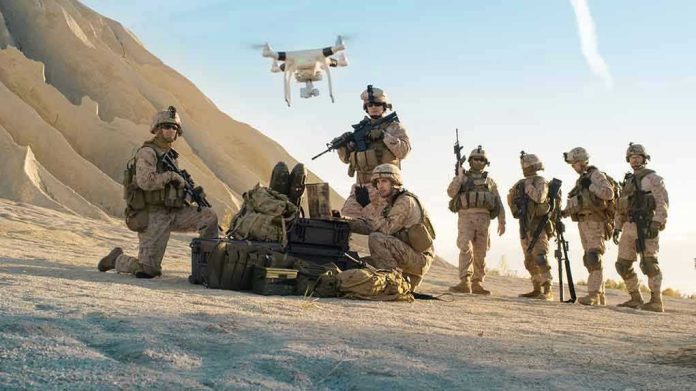
Army Special Forces are redefining battlefields by institutionalizing robotics across all domains, aiming to keep humans out of harm’s way and expand operational reach.
Story Summary
- Army Special Forces are integrating robots across land, air, maritime, cyber, and space.
- The initiative includes new units, training, and a dedicated robotics warrant officer specialty.
- Lessons from Ukraine and other conflicts drive this technology-centric strategy.
- Robots are intended to minimize human casualties by taking on first-contact roles.
Robotics Ecosystem in Special Forces
U.S. Army Special Forces are not just integrating robots but institutionalizing a comprehensive robotics ecosystem. This initiative involves the creation of the Special Operations Robotics Detachment (SORD), which was established in March 2024. SORD is responsible for embedding robots and autonomous systems (RAS) in all operational domains, including land, air, maritime, cyber, and space. This shift reflects the Army’s commitment to leverage technology to enhance operational capabilities and protect human lives.
The Army plans to introduce the 390A Robotics and Autonomous Systems Technician military occupational specialty (MOS), which will formalize the role of robotics in special operations. This new specialty is expected to start its pilot class in January 2026. The MOS is designed to provide specialized training in the planning, integration, and management of robotic platforms and payloads, ensuring that these systems are effectively incorporated into missions.
Lessons from Modern Battlefields
The decision to embrace robots stems from battlefield lessons learned in Iraq, Syria, and Ukraine, where drones and ground robots have significantly influenced reconnaissance, strike operations, and logistics. These conflicts demonstrated the potential of low-cost robotics to impact battle outcomes, especially against technologically advanced adversaries. The Army’s approach aims to apply these insights by expanding the role of robots, thus reducing human exposure to initial combat risks.
Incorporating robots into Special Forces operations is driven by a moral obligation to minimize human casualties. Leaders emphasize the importance of using robots to engage in first contact with the enemy, allowing soldiers to maintain a safer distance. This strategy aligns with broader Army modernization efforts, such as Project Convergence, which focuses on human-machine teaming and the integration of advanced technologies into military operations.
Institutionalizing Robotics in Special Forces
The establishment of the SORD and the introduction of the 390A MOS are part of a broader effort to institutionalize robotics within Special Forces. This approach goes beyond ad hoc experimentation, creating formal structures, career fields, and doctrine to ensure the effective use of robotic systems. By doing so, the Army aims to enhance the capabilities of small, elite units, enabling them to conduct long-range and clandestine missions with greater efficiency and safety.
Training is a critical component of this initiative. The U.S. Army John F. Kennedy Special Warfare Center and School (SWCS) has launched a six-week Robotics and Unmanned Systems Integration Course for Green Berets and other Special Operations Forces (SOF). This course aims to build a pipeline of operators skilled in the use of RAS, preparing them for the demands of modern warfare.
Future Implications and Challenges
The integration of robotics into Special Forces operations has significant implications for the future of military tactics and strategy. In the short term, it is expected to enhance operational reach and survivability, allowing SOF units to conduct more frequent and complex missions. The introduction of the 390A MOS and specialized training courses will help manage the cognitive load associated with integrating advanced technologies, enabling operators to focus on mission objectives.
Army Special Forces Embracing Robots in All Domains | Story by @LauraHeckmann | #specialops #army #robots
Read now: https://t.co/jpNEAHGEJM pic.twitter.com/tLyzwFrG1M
— National Defense (@NationalDefense) December 8, 2025
In the long term, the use of robots in first-echelon roles could lead to significant changes in tactics, techniques, and procedures. As robots take on more responsibilities, such as route clearance and target development, human operators may be able to manage larger areas and more challenging missions with fewer resources. This shift could also drive technological innovation, as the demand for advanced, interoperable, and attritable platforms grows.