In the middle of a shooting war, the biggest question isn’t Iran’s next move—it’s whether Iran’s new supreme leader is even alive.
Story Snapshot
- President Trump said he has not seen proof that Iran’s newly appointed Supreme Leader, Mojtaba Khamenei, is alive, calling his status “unclear.”
- Trump tied the uncertainty to pressure for Iranian “surrender,” arguing Tehran’s leadership chain is either hidden or broken.
- Iran’s system moved quickly after Ayatollah Ali Khamenei was killed, elevating Mojtaba while officials pledged loyalty and vowed to keep fighting.
- Fighting continued into at least day 17, with Gulf states reporting drone attacks and rising risks to regional security and energy flows.
Trump’s “Dead or Not” Remark Puts Iran’s Succession at the Center of the War
President Donald Trump publicly questioned whether Iran’s newly appointed Supreme Leader, Mojtaba Khamenei, is alive, saying he is “hearing he’s not alive” and that “nobody’s been able to show him.” The remark lands amid an active U.S.–Iran conflict and a leadership transition triggered by U.S.–Israeli strikes that killed Ayatollah Ali Khamenei and other senior figures. Iran has not provided widely reported, recent public proof-of-life appearances for Mojtaba in this window.
Trump linked the uncertainty directly to his demand that Tehran capitulate, saying that if Mojtaba is alive, he should “do something very smart for his country,” which Trump defined as surrender. That posture reinforces a broader U.S. message: Washington believes Iran’s war leadership has been degraded enough that it may be unable to negotiate or order a halt. Trump has also described Iran as seeking a deal while he holds out for better terms.
Iran Claims Continuity While Washington Highlights a Leadership Vacuum
Iran’s political system vests sweeping authority in the Supreme Leader, with control over security services and major state institutions. After Ali Khamenei’s death, Iran moved quickly to elevate Mojtaba Khamenei, described as a powerful behind-the-scenes figure with deep ties to the security apparatus. Iranian institutions publicly pledged loyalty and framed the conflict as a fight they would continue “until the last drop of our blood,” signaling continuity rather than collapse.
Trump, however, attacked the legitimacy of the succession itself. He described Mojtaba as “unacceptable” and a “lightweight,” and he said he wants a successor “agreeable to the U.S.” In other remarks, he suggested that a leader appointed without U.S. “approval” would not “last long.” The practical effect is to fuse battlefield pressure with political pressure, raising the stakes of who speaks for Tehran and whether any figure can credibly accept ceasefire terms.
Military Pressure, Energy Targets, and the Strait of Hormuz Factor
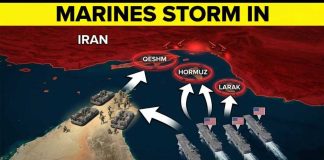
U.S. officials have emphasized claims that Iran’s air defenses and key capabilities have been heavily damaged, with messaging that Tehran is increasingly exposed. Reporting also pointed to strikes affecting critical infrastructure, including Iran’s oil export network—an area that can squeeze regime finances quickly. As the conflict stretched past two weeks, Gulf states reported additional drone attacks, highlighting persistent risk to neighbors and to shipping routes tied to global energy prices.
Those dynamics matter because any disruption around the Gulf and the Strait of Hormuz can trigger broader economic shocks, from insurance spikes to higher fuel prices. The available reporting does not provide full independent verification for each military claim, and wartime assessments often change as more evidence emerges. Still, the combination of sustained attacks and leadership ambiguity creates the kind of instability that can widen conflict even when one side claims the other is nearing capitulation.
Information Warfare Meets Negotiation: Who Can Even “Surrender”?
Trump’s messaging has also included a contradiction that explains why the “dead or not” line is more than a headline. He has said Iran is “about to surrender,” yet he has also argued that “no one knows who the leader is,” implying there may be no clearly empowered authority to declare surrender or accept terms. That framing functions as psychological pressure—delegitimizing Tehran’s chain of command—while also setting expectations for maximal concessions.
BREAKING – Trump says unclear if new Iran leader is 'dead or not'https://t.co/iIUg6S55tq
— Insider Paper (@TheInsiderPaper) March 16, 2026
For Americans watching from home, the immediate takeaway is that leadership uncertainty can shorten wars—or drag them out. If Iran’s top leadership is intact and simply hidden, the regime may try to project resilience while using drones and asymmetric tools. If leadership is truly fractured, the risk becomes miscalculation by semi-autonomous units and proxy networks. The reporting underscores one unresolved fact: without confirmed visibility of Mojtaba Khamenei, both diplomacy and escalation run through an information vacuum.
Sources:
Trump comments about new Iran supreme leader Mojtaba Khamenei
US-Iran-Israel war latest (March 15 live updates)
Trump “not happy” with Mojtaba Khamenei appointment; no decision on ground troops
Trump Iran “surrender” comments and Hormuz/oil stakes
Gulf states report drone attacks as Iran war enters day 17