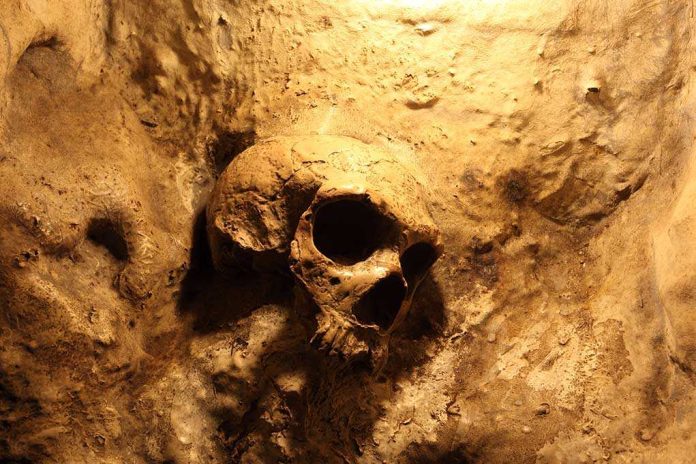
UK museums hoard thousands of human remains in jars from colonial atrocities, issuing stark warnings to shocked visitors while dodging demands to empty their collections entirely.
Story Highlights
- UK institutions like the Hunterian Museum display preserved skulls and bones acquired through violence, prompting ethical outrage and repatriation calls.
- English law prohibits ownership of human remains, mandating respect yet allowing indefinite storage without full transparency.
- Descendant communities demand returns for dignity, clashing with museums prioritizing research over restorative justice.
- Recent appointments like Scotland’s first osteoarchaeology curator signal slow reforms amid taxpayer-funded storage costs.
Colonial Legacy in Jars
UK museums hold thousands of human remains, including skulls and bones preserved in jars, acquired during 18th-20th century colonial eras through violence, grave-robbing, and looting. Anatomists like John Hunter collected surgical specimens now displayed at the Hunterian Museum. These collections stem from imperial wars, such as Sakalava king skulls taken after the 1903 Madagascar battle. Visitor shock arises from revelations of non-consensual origins, contrasting benign archaeological exhibits. English law under the Anatomy Act 1832 treats remains as non-ownable, requiring respect without clear repatriation timelines. This setup burdens institutions with ethical storage duties while hiding inventories as open secrets.
Repatriation Demands Intensify
Calls to “return the bones” and “empty the museums” surged in November 2025 via the Museums Association journal. Oxford professor Dan Hicks labels collections as reproducing colonial violence, urging audits and reburials for unnamed skulls. Descendant communities, including Sakalava princesses and Algerian kin, push for dignity through public campaigns. Museums like the British Museum resist full returns, citing research value and legal technicalities on “modified” remains like tattooed heads. Precedents include British Museum returns of Tasmania ashes in 2006 and Maori bones in 2008, plus France’s 2025 Madagascar skull transfers. Grassroots pressure challenges institutional inertia on these dehumanizing holdings.
Ethical Reforms Underway
National Museums Scotland appointed Jess Thompson in 2025 as its first osteoarchaeology curator to inventory and re-store over 2,500 remains with dignity. Hunterian Museum remains open Tuesday-Saturday, offering digital guides for Hunter’s jars without new repatriation announcements. Lancaster Maritime Museum launched its “Life After Death” exhibit in December 2025, ethically scanning local remains through April 2026. Museums Association urges transparency on unnamed specimens. These steps address visitor warnings on websites, driven by short-term storage improvements amid long-term risks of mass returns and legal challenges over illegal holdings.
Stakeholder Clashes and Impacts
Museums act as custodians prioritizing ethics and research, while descendant groups seek cultural reconnection. Academics like Hicks advocate emptying collections; Thompson emphasizes record updates for access. Governments enforce non-ownership laws, balancing heritage with reparations. Taxpayers face costs for audits and storage, with social pushes for decolonization pressuring UK colonial legacies. Broader effects include global inspirations like France-Algeria returns and UK adoption of osteoarchaeology roles. Pro-repatriation voices demand transparency first; retention advocates stress ethical research value. Controversies strain resources but drive reforms without resolving core tensions.
Sources:
‘Return the bones. Empty the museums’ – Museums Association
Scotland has its first curator of archaeological human remains – STV News
Life After Death – Lancaster Maritime Museum