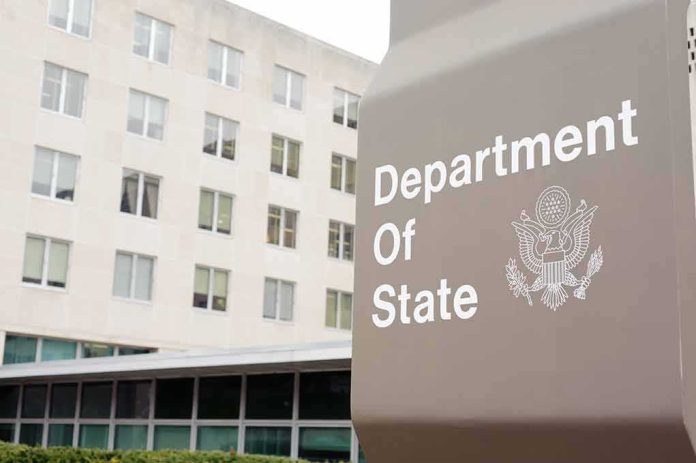
After 47 years, the United States has removed Syria from the terrorism blacklist, opening the door to investment and a major shift in Middle East policy.
Story Highlights
- President Trump notified Congress on July 8, 2026, starting a 45-day rescission clock.
- The Secretary of State made the delisting official after the review period ended.
- The move aims to reopen Syria’s economy and align with U.S. regional security goals.
- Bipartisan lawmakers urged removal, citing Syria’s post-Assad transition.
What Changed And When The Decision Took Effect
President Trump notified Congress on July 8, 2026 that he would rescind Syria’s designation as a State Sponsor of Terrorism, a step that by law started a 45-day review period before the decision could take effect. After that period expired, the Secretary of State issued a formal statement confirming the removal. The State Department announcement made the delisting official and marked the end of a status first imposed in 1979. This sequence followed the legal process for rescinding such designations.
The administration linked the move to Syria’s political change after the fall of Bashar al-Assad and the rise of Ahmed al-Sharaa’s government, framing it as a shift from isolation to cautious engagement. Officials also tied the action to national security goals in the Middle East. They argued that opening space for trade and finance could support stability and reduce incentives for violence, while restoring tools to influence reforms inside Syria.
Why The Administration Says It Matters
The State Department said the delisting would advance U.S. national security, peace, and prosperity in the region. It also said removing the label would help “unlock” economic potential by easing restrictions that have blocked outside investment and basic banking services for years. These claims point to practical effects: easier access to financing, more trade, and fewer hurdles for U.S. and allied firms that might back power, water, and rebuilding projects. Those results, however, will take time to measure.
Business and governance outcomes remain forward-looking. Reporting describes expected benefits such as investment access and economic revitalization, but it does not yet show confirmed projects or audited capital flows in the public record. The legal step is complete; the economic story is just starting. That gap matters to readers who want proof that policy changes improve daily life. It also matters to watchdogs who track where the money goes and who gets the contracts.
Support, Concerns, And The Evidence On The Table
Some members of Congress from both parties urged removal before the final decision, signaling that support was not limited to the executive branch. A July 1, 2026 letter from Senate Foreign Relations Committee leaders encouraged Secretary of State Marco Rubio to delist Syria, tying the appeal to the shift in Damascus and to U.S. interests. That backing helped blunt claims that the move was a unilateral White House push without legislative buy-in.
Syria is no longer on the United States’ list of State Sponsors of Terrorism, ending a designation that had remained in place since 1979 and removing what Washington says were major obstacles to private investment in the country. US Secretary of State Marco Rubio formally… pic.twitter.com/whoR2FVML1
— The Statesman (@TheStatesmanLtd) August 25, 2026
Policy experts and former officials raised concerns that still deserve daylight. They point to questions about foreign fighters, Syria’s ability to police terror finance, and whether new leaders can protect minorities and neighbors. A Congressional Research Service brief notes that some lawmakers want firm steps on those fronts as Syria reintegrates. These are credible issues to track, but they do not directly dispute the fact of rescission or the legal process that produced it.
What To Watch Next
Congress and the public should press for concrete markers. First, release the presidential notification and any unclassified legal memo to clarify how Syria met the standard for removal. Second, seek a declassified threat assessment that addresses foreign fighters, ties to armed groups, and financing routes. Third, monitor banking and project data to see if promised investment translates into jobs, power, water, and real recovery for Syrians. Transparency will build trust across the political spectrum.
Sources:
aljazeera.com, reuters.com, foreign.senate.gov, ntd.com, time.com