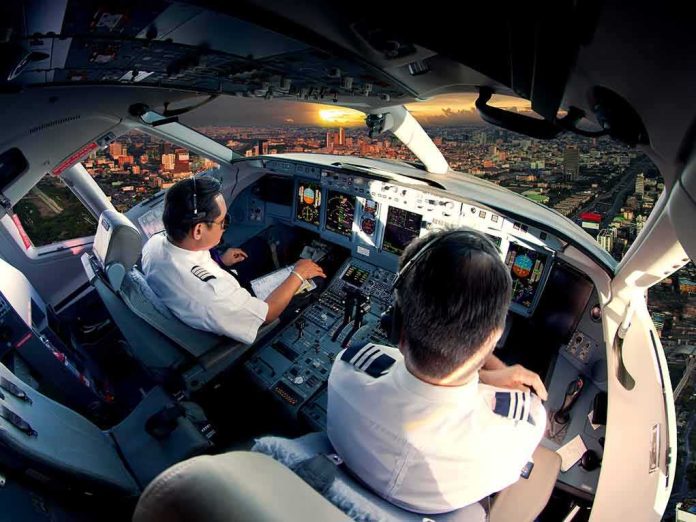
The most instructive fact about the Flydubai cockpit emergency over Saudi airspace is not the number of feet the aircraft fell — it is how little of the public narrative, even days later, rests on hard instrumentation rather than attributed statements and passenger recollection. That gap between dramatic claim and documented fact is not unusual in aviation emergencies; it is the rule, and understanding why tells you more about how these stories should be read than any single headline does.
Key Points
- Flydubai Flight FZ1073, bound from Dubai to Tel Aviv, diverted to Tabuk, Saudi Arabia on September 30, 2026 after an altercation in the flight deck
- Israeli Prime Minister Benjamin Netanyahu said one pilot stabbed the other and “apparently tried to crash the plane,” and that the attacking pilot was arrested
- Flight-tracking data showed a steep, rapid descent — reported variously as roughly 17,000 to 18,400 feet in under two minutes — before the crew regained control
- Flydubai’s own statement confirms only “an altercation” in the cockpit and says the “underlying reasons and motives behind this event are unknown and remain subject to a formal investigation”
- No cockpit voice recorder data, medical record, or arrest affidavit has been made public to independently verify the stabbing or intent allegations
What Is Established: The Diversion, the Descent, the Landing
Strip away the adjectives and a clean, corroborated sequence remains. Flydubai Flight FZ1073 departed Dubai for Tel Aviv on September 30, 2026, carrying roughly 170 passengers, a majority of them Israeli. Somewhere over Saudi airspace, something went seriously wrong inside the flight deck. The airline’s own statement, issued hours after the event, confirms “an altercation occurred in the flight deck of flight FZ 1073” and says the aircraft was “successfully secured by on-duty flydubai crew travelling on the flight, who diverted and landed the aircraft safely at Tabuk Airport”. Passengers and crew were accounted for; the flight was rerouted roughly 170 miles short of its destination. None of this is in dispute across any source reviewed, official or otherwise.
The descent itself is corroborated independently of any single party’s account, because flight-tracking services such as Flightradar24 record altitude continuously and publicly. Multiple outlets, drawing on that same public data, describe the aircraft shedding more than 17,000 feet of altitude in a window of roughly one to two minutes — a rate of descent far outside normal operations and consistent with a loss of control event, whether from mechanical failure, decompression, or human interference. The precise figures vary by outlet, from 14,000 feet in thirty seconds to over 18,000 feet in two minutes, which reflects differences in how each outlet sampled the public tracking feed rather than any real contradiction about the basic fact: the plane fell, hard and fast, and then stabilized.
The Stabbing and “Attempted Crash” Allegation
The sharper claims — that one pilot stabbed the other, and that the assault was an effort to crash the aircraft — trace almost entirely to Prime Minister Netanyahu’s public remarks on the day of the incident, echoed and amplified across dozens of outlets. Netanyahu stated that a pilot stabbed the other and “apparently tried to crash the plane,” and that the attacking pilot had been arrested and was being questioned by Saudi authorities. Passenger accounts reported by multiple outlets describe screaming, visible blood near the cockpit, and crew members or off-duty airline staff forcing their way in to restrain whoever was responsible and help land the aircraft. These are consistent, multiply-sourced accounts — but they are still accounts, not documents. No publicly released medical record, police report, or charging document has confirmed the stabbing mechanism or established motive, and even the strongest coverage hedges with qualifiers like “apparently” when describing intent.
It’s worth being precise about what that gap means and doesn’t mean. It does not mean the allegation is false — a sitting head of government making a specific, on-record claim about an arrest and an attempted crash is itself a serious evidentiary fact, not idle speculation. It means that the chain connecting “altercation” to “stabbing” to “attempted crash” to “terror motive” has, at each link, moved from confirmed fact toward inference, and a careful reader should track exactly where that chain currently stands rather than collapsing it into a single certainty.
Why the Airline’s Statement Reads So Differently From the Headlines
This is the genuine point of tension in the record, and it deserves to be stated plainly rather than smoothed over. Flydubai’s formal public statement — the version of events the airline is willing to put its name behind — confirms the altercation and the safe diversion, and explicitly says “the underlying reasons and motives behind this event are unknown and remain subject to a formal investigation,” urging “all parties to refrain from premature speculation while authorities gather the facts”. A spokesperson told CNN directly that “a motive has not yet been established”. Nowhere in the airline’s own public language does it confirm a stabbing or an attempted crash. That is not a denial of those claims; it is institutional caution of the kind every airline exercises before a formal investigation concludes, and it should not be read as Flydubai disputing Israel’s account. But it is a real, documented gap between the government framing and the operator’s framing, and an honest reader holds both in view at once.
📌 RVN: Flydubai – first the dive, then the stories
Wednesday: flydubai FZ1073, Dubai to Tel Aviv.
Over Saudi Arabia the aircraft suddenly goes down. Thousands of metres in seconds. Landing in Tabuk. All passengers alive. Both pilots to hospital.That is the core.
Then the…— Rubix (@Rubix_Ams) October 1, 2026
The Two-Person Rule, Reinforced Doors, and Why This Matters Beyond One Flight
Commercial aviation has spent two decades hardening the cockpit against exactly this scenario — a single compromised crew member with access to the controls. Reinforced, bullet-resistant cockpit doors became standard after September 11, 2001, and many carriers adopted a “two-person rule” requiring a second authorized individual in the flight deck whenever one pilot steps out, a policy introduced widely after the 2015 Germanwings crash, in which a co-pilot locked out the captain and deliberately flew the aircraft into terrain. This incident, whatever its final determination on motive, is already functioning as a live test of those post-Germanwings safeguards: reports describe additional crew and passengers reaching the cockpit and regaining control before the descent became unrecoverable, which is precisely the redundancy those rules were designed to produce.
What Would Actually Settle the Record
The facts that remain unresolved are the facts investigators are built to resolve: cockpit voice and flight data recorder analysis, Saudi police and medical documentation from the Tabuk landing, sworn statements from the crew and passengers who intervened, and air traffic control logs covering the descent and any emergency transponder codes. Until Saudi and Israeli authorities, along with Flydubai’s formal safety investigation, release findings drawn from that material, the public record will remain exactly what it is now — a well-documented emergency diversion with a credible but not yet independently verified account of what happened inside the cockpit, and a motive that even the airline operating the flight says it does not yet know.
Sources:
theguardian.com, straitstimes.com, thehill.com, marca.com, nbcnews.com, thesun.co.uk, yahoo.com