As Washington finally turns away from Biden-era bloat, one private company’s stunning rise is quietly proving how innovation and free markets can do what big government never could: bring fast internet to forgotten Americans and still shake up Wall Street.
Story Highlights
- Starlink web traffic more than doubled in 2025 as subscribers surged from 4 million to 8 million across 150+ markets.
- SpaceX is weighing a public listing that could value the company around $1.5 trillion, driven heavily by Starlink’s growth.
- Rural and small-town customers finally see real broadband competition after years of neglect and empty government promises.
- Starlink’s booming service raises key questions about regulation, national security, and keeping Big Government away from critical private innovation.
Starlink’s Surge and the Power of Market-Driven Innovation
In 2025, Starlink’s satellite internet traffic more than doubled worldwide, a remarkable jump that reflects both exploding demand and the hunger for alternatives to legacy providers that ignored rural America for years. Cloudflare’s annual review shows Starlink racing from about 4 million active customers in September 2024 to roughly 8 million by November 2025, now serving more than 150 markets across the globe. That rapid climb highlights what happens when entrepreneurs, not bureaucrats, lead.
Unlike traditional cable and fiber monopolies that spent decades stringing lines mainly through dense blue-state cities and suburbs, Starlink relies on thousands of low-Earth orbit satellites to beam broadband directly to homes, farms, and small businesses. That model lets the service scale rapidly into places Washington grants and subsidies never truly reached. For many rural families, this is the first time they can stream, work remotely, or school their kids online without watching a frozen loading bar.
From Growing Pains to Speed Leader in Rural America
Starlink’s early years were not painless, and that matters for understanding its 2025 success. As subscriber numbers rose in 2022, speeds temporarily dipped while the network strained under demand. Instead of lobbying for bailouts or special treatment, SpaceX responded by launching thousands more satellites, upgrading ground infrastructure, and optimizing network algorithms. By early 2025, median U.S. download speeds roughly doubled compared with 2022, surpassing 100 Mbps, while upload speeds and latency improved dramatically.
Those numbers translate into a concrete win for everyday users. By the first quarter of 2025, Starlink met or exceeded the FCC’s 100/20 Mbps broadband benchmark for a meaningful share of American customers, with certain states like South Dakota seeing more than four in ten users hitting that standard. That is precisely the kind of practical improvement people in small towns begged for while previous administrations poured money into programs that delivered glossy press releases but patchy coverage.
The $1.5 Trillion Question: What a SpaceX IPO Really Means
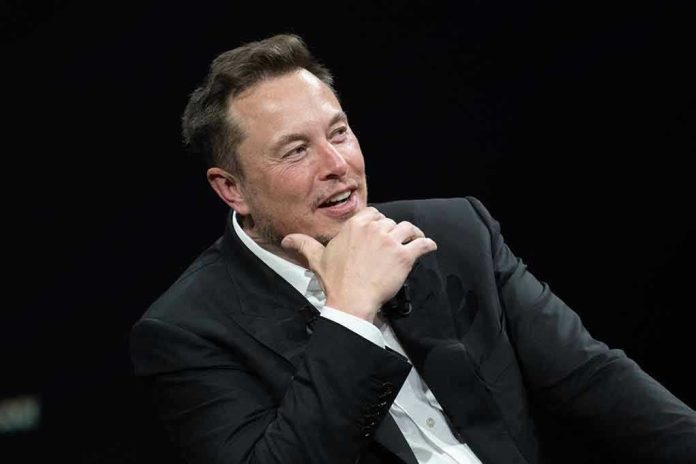
Wall Street is taking notice. Reports now suggest SpaceX is weighing a public listing that could value the company at around $1.5 trillion, with Starlink’s recurring subscription revenue and explosive growth as the main engine behind that figure. Elon Musk has publicly acknowledged that an IPO is under consideration as early as 2026, framing it as a way to unlock capital for further expansion, including satellite-powered mobile service and more ambitious space projects.
For conservative investors and retirees burned by years of weak returns and inflation under Biden-era policies, the prospect of owning a stake in a profitable, American-built space and communications powerhouse is hard to ignore. Starlink’s projected annual revenue around $10 billion by 2025, drawn from households, businesses, airlines, and governments, shows a business built on paying customers instead of taxpayer dollars. That distinction matters when Washington is already drowning in debt and voters are demanding fiscal sanity.
Competition, Freedom, and the Risk of Government Overreach
Starlink’s rise is also a story about competition and freedom of choice. In countless rural counties, families long had only one or two expensive providers—if any—leaving them effectively captive to whatever price and speed the local monopoly chose. Starlink’s arrival is pressuring those incumbents to upgrade service or lose customers, a textbook example of how market pressure can do more than another federal mandate or spending bill. Better service at lower cost is exactly the kind of outcome conservatives have argued for.
Yet success invites attention from regulators and globalists who see every new network as something to tax, control, or bend toward political goals. With more than 9,000 satellites already in orbit and millions of users depending on Starlink for work, school, and news, there will be strong temptation for future left-leaning administrations to push speech controls, climate mandates, or data-sharing schemes onto these systems. Protecting a privately built constellation from becoming another arm of government surveillance or censorship should be a priority for anyone who values the First Amendment.
National Security, Global Reach, and the Stakes for American Leadership
Beyond profit and convenience, Starlink carries serious national security implications. A resilient, American-controlled satellite internet network that works even when fiber lines are cut or cell towers fail strengthens the country’s ability to withstand cyberattacks, natural disasters, or foreign conflict. For rural critical infrastructure, law enforcement in remote regions, and military training areas, dependable connectivity can be the difference between vulnerability and preparedness. That advantage becomes even more important as China pushes its own space-based communication projects.
As Starlink expands into more than 150 markets, from Africa to Eastern Europe, it also exports American-built infrastructure instead of letting authoritarian regimes or globalist bodies set the rules. That reach can empower dissidents, entrepreneurs, and families bypassing corrupt state-run telecoms. The key battle ahead is whether Washington respects this as a private-sector success story or tries to smother it with international agreements, onerous regulations, and politicized conditions on spectrum, launches, and contracts once the company goes public.
Sources:
Starlink’s U.S. Performance in 2025
Starlink traffic doubles as Elon Musk’s SpaceX eyes $1.5 trillion public listing
Starlink Statistics and Usage Data
Satellite Internet Expansion: How Fast Is Starlink Growing?
Starlink Now: Subscriber Milestones and Growth