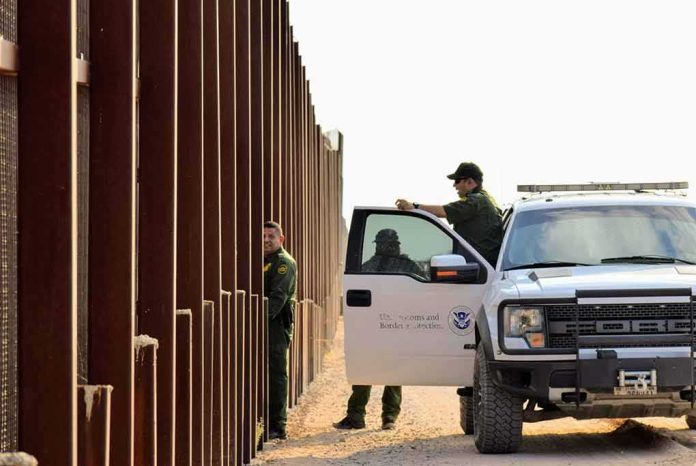
A federal judge slammed the brakes on Big Bend border work, underscoring how fast-track waivers and shifting plans collided with law and local pushback.
Story Highlights
- A judge issued a temporary injunction halting Texas Big Bend border-barrier work.
- Homeland Security invoked broad legal waivers to speed projects across Texas.
- Border officials say plans focus on roads, tech, and limited vehicle barriers, not a tall wall in the park.
- Plaintiffs argue the area is low traffic and waivers sidestep key protections.
What The Court Did And Why It Matters
On October 2, a federal judge ordered a temporary stop to border-barrier work in Texas’s Big Bend region. The injunction pauses ground activity while the court weighs legal claims from landowners and conservation groups. The ruling does not decide the final outcome. It signals the court found enough merit, for now, to prevent further work while issues are reviewed. That pause affects federal agencies and contractors who planned to move from surveys to heavier work this fall.
The case centers on how far the Department of Homeland Security can go when it uses waiver authority to fast-track projects. The Department announced in July that it would waive certain laws to speed roads and barriers near the Texas border. The government also told the court it was refining the scope to lessen impacts and would make final siting choices before any ground-disturbing work, a point the judge weighed in granting the pause.
What The Government Says It Is Building
Customs and Border Protection said the Big Bend effort is not a thirty-foot wall through the national park. Leaders described a narrower plan: one new access road, upgrades to existing roads, detection technology, and limited vehicle barriers at strategic spots. Officials also said current activity in the park is survey and design work, not wall construction. They linked the broader Texas program to historic high-entry zones, where agents see more illegal crossings.
Funding signals the project’s scale, even as scope evolves. In May, the government awarded a $1.7 billion contract tied to Big Bend-area border work. Later statements said money would support vehicle barriers, surveillance gear, and patrol roads rather than a traditional wall inside Big Bend National Park. The agency’s court filing in late September said it was considering adjustments to reduce harm and would lock decisions in early October, shortly before the injunction landed.
What Opponents Argue About Need And Harm
Plaintiffs from the region argue the Big Bend stretch is remote, rugged, and low traffic. They say calling it an area of “high illegal entry” is wrong and used to justify sweeping waivers. Their filings warn of damage to sensitive river habitat, private property losses, and risks to cultural sites and historic places. The judge’s order suggests these claims deserve full review, which is why work is paused while the court examines them.
Opponents also object to how the waivers set aside environmental and historic safeguards. They argue the government moved ahead without finishing the site-specific process the public expects in a national park setting. While the court has not ruled on the merits, the temporary halt increases pressure on the government to show detailed, location-based need and to clarify final designs that avoid lasting harm.
Why This Fight Resonates Beyond Big Bend
The clash reflects a familiar cycle at the southern border. Washington seeks speed and flexibility, claiming urgent security needs. Local communities see heavy federal power sweeping past guardrails they rely on. Here, the government’s changing public messages — survey work, then pauses, then potential scope cuts — fed confusion and doubt. Courts often step in when process and trust break down, even if the executive branch holds broad tools to act fast.
𝐅𝐄𝐃𝐄𝐑𝐀𝐋 𝐉𝐔𝐃𝐆𝐄 𝐅𝐑𝐄𝐄𝐙𝐄𝐒 𝐓𝐑𝐔𝐌𝐏’𝐒 𝐁𝐎𝐑𝐃𝐄𝐑 𝐖𝐀𝐋𝐋 𝐂𝐎𝐍𝐒𝐓𝐑𝐔𝐂𝐓𝐈𝐎𝐍 𝐀𝐂𝐑𝐎𝐒𝐒 𝐓𝐄𝐗𝐀𝐒’ 𝐁𝐈𝐆 𝐁𝐄𝐍𝐃 𝐀𝐅𝐓𝐄𝐑 𝐄𝐍𝐕𝐈𝐑𝐎𝐍𝐌𝐄𝐍𝐓𝐀𝐋𝐈𝐒𝐓 𝐋𝐀𝐖𝐒𝐔𝐈𝐓
One district judge just paused the border barrier on roughly a quarter of the… pic.twitter.com/othQzRtMtt
— M.A. Rothman (@MichaelARothman) October 3, 2026
For many Americans, the core worry is not left or right. It is whether the system listens, proves need, and respects land, law, and people. The Big Bend pause shows institutions can still check each other. It also shows how costly delays grow when plans, facts, and community input are not aligned early. Expect more records fights, more mapping of final alignments, and sharper data on crossings as both sides try to win the next round in court.
Sources:
nypost.com, federalregister.gov, cbp.gov, cbsaustin.com, clickorlando.com, cnn.com