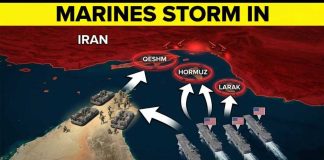
America’s allies are now openly coordinating around the Strait of Hormuz without Washington in the driver’s seat—while U.S. voters watch energy prices and war risks climb under a second Trump term.
Quick Take
- The United Kingdom convened talks with more than 40 countries to restore shipping through the Strait of Hormuz, a sign of widening daylight between the U.S. and Europe on the Iran war.
- European leaders have rejected joining U.S.-led military operations, arguing they did not choose the conflict and favor diplomatic and economic pressure.
- Iran has tightened control of the Strait by attacking ships and enforcing selective passage, reportedly allowing transit only for countries willing to “pay a toll.”
- Experts and officials cited in reporting warn military options to reopen and keep open the Strait carry substantial risk and may be unrealistic.
Allies Coordinate Shipping Security as U.S. Leadership Gets Sidestepped
United Kingdom-led diplomacy has moved to the foreground as maritime traffic through the Strait of Hormuz remains disrupted. London convened more than 40 nations to coordinate efforts to restore shipping flows and to frame Iran as responsible for the trade disruption. That approach has proceeded without clear U.S. leadership, reflecting a broader split inside the Western alliance over how to respond to the Iran war and the economic shock tied to a key global chokepoint.
European governments have drawn a bright line against joining U.S.-backed military operations in the Strait, pressing instead for diplomatic and economic pressure. France’s President Emmanuel Macron publicly rejected calls to participate in an operation Europe did not decide, and other European leaders have echoed that posture. The fracture matters because Europe relies heavily on Gulf energy, and the Strait carries roughly one-third of the world’s maritime oil trade, making any prolonged disruption politically and economically destabilizing.
Trump’s Mixed Signals Leave a Vacuum—and Feed Base Frustrations
President Trump has issued shifting public messages on who should shoulder the burden of reopening the Strait. Reporting describes him urging energy-dependent countries to “grab it and cherish it,” while also suggesting the United States could reopen the passage and profit from oil flows. The contradiction is now colliding with voter expectations at home: many conservatives who backed Trump to end “forever wars” are weighing the cost of escalation against soaring energy prices and a lack of a clearly stated endgame.
That tension is amplified by a separate, simmering debate inside the MAGA coalition about Israel and the risk of the U.S. being pulled into another region-wide war. The research provided shows allies refusing to sign onto Washington’s military posture, while Iran signals it will widen the target set if pressure continues. For constitutional-minded voters wary of open-ended deployments, unclear objectives can quickly become a blank check—one that historically leads to expanded executive latitude, emergency spending, and long-term commitments Congress and the public did not fully debate.
Iran’s Strait Strategy: Selective Passage, Economic Leverage, and Threats
Iran has used military coercion and economic leverage to control access through the Strait. Research indicates Iran attacked more than twenty ships in or near Hormuz since the war began and imposed a selective passage regime that reportedly allows safe transit only to countries willing to “pay a toll,” denying others. Iran has also demanded a “new legal regime” for the Strait as part of any end to the war, directly challenging long-standing expectations of free navigation.
Iran’s military messaging has also escalated in response to U.S. threats. After Trump issued an ultimatum warning Iran’s power plants would be obliterated unless it fully opened the Strait, Iran’s military threatened to target U.S.- and Israeli-related energy, information technology, and water desalination infrastructure in the region. Those threats raise the stakes for Gulf partners and for global markets, because attacks on critical infrastructure can amplify shortages and disrupt everything from fuel to shipping insurance and port operations.
Why “Just Reopen It” Isn’t Simple—And What Comes Next
Military assessments described in the research argue reopening the Strait and keeping it open would be dangerous, resource-intensive, and politically costly. Even after reported U.S. Navy actions destroying more than 130 Iranian naval vessels and 44 minelayers and striking targets along Iran’s coast, Iran has maintained enough capability and leverage to keep the Strait contested. Analysts warn Tehran can “play for time,” impose continuing limitations, and force Washington into an ugly dilemma: yield to demands or wage a protracted effort that drains focus from other priorities.
With that backdrop, governments and shipping companies are pursuing contingency planning and sanctions discussions while the United Nations has launched a task force to address shortages of essential supplies such as fertilizers and food inputs. Ukraine’s President Volodymyr Zelensky has urged separating energy negotiations from war talks and using parallel diplomatic tracks to stabilize the situation—an idea that underscores how central energy and trade have become to the crisis. For U.S. voters focused on lower costs and limited government, the policy test is whether Washington can protect core interests without sliding into another open-ended war.
Sources:
https://ianslive.in/allies-bypass-us-on-hormuz-crisis–20260405060304
https://www.socialnews.xyz/2026/04/04/global-leaders-bypass-us-to-tackle-strait-of-hormuz-crisis/