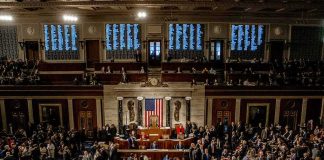
Supreme Court Justice Samuel Alito’s emergency order delivers a massive win for Republicans, restoring Texas’s redrawn congressional map poised to flip up to five House seats to the GOP in 2026 midterms.
Story Highlights
- Justice Alito blocks lower court ruling on November 22, 2025, reinstating Texas’s 2025 map temporarily for upcoming elections.
- Texas Republicans, backed by President Trump, target five districts held by Black and Latino Democrats to bolster narrow House majority.
- Lower federal court, led by Trump appointee Judge Jeffrey Brown, struck down map for likely racial gerrymandering under 14th Amendment.
- Texas AG Ken Paxton hails decision as victory against judicial overreach, ensuring stability ahead of December 8 filing deadline.
- Full Supreme Court review pending, highlighting tensions between legislative power and voting rights protections.
Timeline of the Redistricting Battle
Texas Republicans redrew the congressional map in summer 2025 following the 2020 census, which added two seats due to population growth among non-white voters. Despite this growth, lawmakers added no new minority-opportunity districts. President Trump urged changes to gain five GOP seats. The aggressive map replaced the 2021 version used in prior elections, aiming to strengthen Republican margins in the state’s pivotal 38-to-40 House seats.
MASSIVE WIN FOR GOP: Supreme Court Reverses Lower Court Block, Greenlights New Congressional Map That Will Deliver Up to FIVE Extra Republican House Seats in 2026 Midterms https://t.co/71dI7q8wJS #gatewaypundit via @gatewaypundit
— Vote RED! (@PetsRescues) April 27, 2026
Lower Court Ruling and Swift Appeal
Early November 2025 saw a federal trial court in Galveston, under Judge Jeffrey Brown—a Trump appointee—rule the 2025 map likely unconstitutional. The court cited direct evidence of race-based decisions violating racial gerrymandering bans and ordered a return to the 2021 map. Texas AG Ken Paxton, a Trump ally, filed an emergency appeal that same day. Hours later, Justice Alito issued a solo “shadow docket” stay, restoring the new map pending full review.
Key Players and Motivations
Texas Republicans in the state legislature drove the redraw to secure midterm gains and maintain House control. Paxton defended the maps, celebrating the stay as a major reversal affirming legislative authority. Alito provided temporary relief, leveraging conservative bloc influence. Trump mobilized allies informally. Plaintiffs—Black and Latino voters backed by civil rights groups—challenged under Voting Rights Act Section 2 and the 14th Amendment to prevent vote dilution.
Trump appointees on lower courts split, with some dissenting on appeal. Critics like the Brennan Center argue the intervention ignores trial evidence of racial targeting, fortifying undue deference to legislatures and burdening plaintiffs where race and partisanship align closely in Texas.
MAGA
MASSIVE WIN FOR GOP: Supreme Court Reverses Lower Court Block, Greenlights New Congressional Map That Will Deliver Up to FIVE Extra Republican House Seats in 2026 Midterms https://t.co/33V31K0LRL #gatewaypundit via @gatewaypundit
— JimGilles (@brojim3) April 27, 2026
Impacts on 2026 Elections and Beyond
Short-term, the stay allows GOP candidates to file under favored districts for March 2026 primaries, avoiding chaos near the December 8, 2025 deadline. Long-term, success could deliver five extra Republican seats, targeting minority incumbents and amplifying GOP House dominance amid Trump’s second term. Texas’s diversifying population sees no new opportunity districts despite growth, raising concerns over representation.
This mid-decade redraw sets precedent for partisan map changes nationwide, potentially weakening lower court voting rights enforcement via shadow docket actions. Both sides express frustration: conservatives decry judicial interference in state processes, while liberals highlight minority disenfranchisement. Yet many Americans across the spectrum see elite power plays prioritizing politics over fair representation, eroding trust in institutions meant to uphold founding principles of equal opportunity.
Sources:
Texas Tribune: Texas redistricting Supreme Court temporary stay
Brennan Center: The Supreme Court Messes with Texas’s Voting Map