Alleged Chinese Communist Party outreach targeting U.S. students has moved from rumor to documented case studies, raising urgent questions about campus security and intellectual theft.
Story Highlights
- Stanford-centered reports describe an impersonator, “Charles Chen,” contacting China-focused students, prompting law-enforcement interest [2].
- Media and expert accounts detail coercion and surveillance of Chinese dissidents on U.S. campuses by Chinese security services [3].
- Public evidence shows cases and patterns, but not a verified prevalence rate among the broader student population [2].
- Policy fixes center on visa integrity, counterintelligence, and transparency without blanket suspicion of all students [2][3][4].
Documented Stanford Case Sparks Nationwide Security Concern
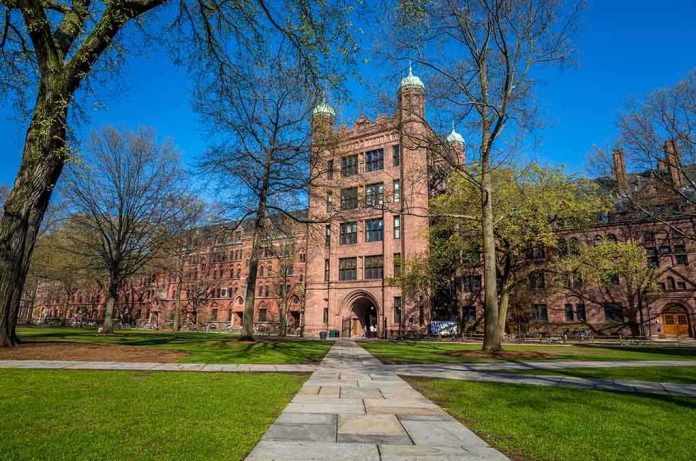
Stanford Review reporting documented an impersonation campaign by a man using the alias “Charles Chen,” who allegedly posed as a Stanford student and contacted multiple students, largely women in China-related fields, through social media. The outlet reported no real Stanford affiliation for the individual and said the pattern triggered outreach to authorities for investigation [2]. Fox News highlighted the campus reporting and framed it as part of a broader espionage risk emanating from Beijing’s security services [1].
The Free Press pointed to an earlier, separate federal case involving a visiting researcher indicted for lying about People’s Liberation Army ties in order to gain access to a United States research institution, underscoring how visa deception can open doors to sensitive labs [4]. The Stanford Review referenced the indictment as context for a campus environment where malign interest from Chinese state-linked actors is not hypothetical, though the case concerns a concealment allegation rather than proven campus-wide spy tasking [2][4].
Coercion and Transnational Repression: Pressure Beyond Espionage
The Center for Security and Emerging Technology at Georgetown University described how Chinese authorities pressure students abroad through threats to families and surveillance tactics, chilling speech and activism in the United States [3]. The analysis detailed cases where students who criticized the Chinese government faced harassment or downstream retaliation, illustrating how coercive control can operate even when students are physically outside China’s borders [3]. These facts support vigilance on campus, separate from any claim that most students act as intelligence operatives.
Reports from the Stanford Review and Fox News include interviews and expert assessments that describe techniques consistent with intelligence tradecraft, such as impersonation and targeted outreach to researchers in sensitive fields [1][2]. However, these accounts often rely on anonymous sources or secondhand descriptions, which limit independent verification for public audiences. The available materials therefore justify targeted counterintelligence steps while cautioning against sweeping population-wide assumptions [1][2][3].
What The Evidence Shows—and What It Does Not
Across the supplied public record, the strongest on-the-record facts include: an alleged impersonator with no Stanford ties contacting China-focused students; a federal indictment alleging deception of military affiliation to gain U.S. research access; and well-documented repression targeting students who speak against Beijing [2][3][4]. These cases establish that hostile activity occurs and that American campuses can be exploited, especially where vetting and oversight are weak [2][3][4].
What the record does not provide is a denominator-based estimate showing a high share of Chinese students acting as spies. Neither the Stanford Review, The Free Press, nor Fox News present a systematic audit or declassified dataset quantifying prevalence across campuses [1][2][4]. The absence of such data does not minimize the risk; it clarifies the need for disciplined policy grounded in verifiable indicators rather than general suspicion of all Chinese nationals studying in the United States [1][2][3][4].
Policy Priorities Under Trump’s Second Term: Security Without Overreach
The Trump administration can intensify targeted counterintelligence and visa screening while protecting constitutional rights. First, require rigorous verification of academic and military affiliations for exchange visitors in sensitive fields, with fast-track visa revocations when deception is discovered, consistent with due process [4]. Second, mandate campus reporting channels for suspicious approaches, including impersonation attempts like the “Charles Chen” contacts, and ensure rapid coordination with federal investigators [2].
🚨 Chinese Students in America?
Gordon Chang says “TOTALLY WRONG.”
They steal elite STEM seats from American kids
Flood campuses with CCP spies
Put U.S. national security at risk.Under Trump, New international student enrollment fell 20% in spring 2026 with China hit hardest. pic.twitter.com/tDjrfTTggX
— Alec Lace (@AlecLace) May 15, 2026
Third, direct universities to brief all foreign and domestic students on transnational repression, including how to report threats to families abroad, so that victims are protected and evidence flows quickly to law enforcement [3]. Fourth, pursue transparency: when investigations close, release unclassified summaries that separate confirmed findings from rumor, building public trust while maintaining operational security. These steps defend research, safeguard free speech, and avoid collective punishment—strengthening national security and American values simultaneously [2][3][4].
Sources:
[1] Web – Bombshell report suggests ‘Chinese spies’ infiltrating Stanford …
[2] Web – INVESTIGATION: Uncovering Chinese Academic Espionage at …
[3] Web – Even on U.S. Campuses, China Cracks Down on Students Who …
[4] Web – China’s Spies at Stanford – The Free Press