
Campaigns no longer just speak to voters; they route messages through creators who already command trust with niche communities—so a short, seemingly offhand clip of Joe Biden bantering with Spanish-speaking TikTok influencer Carlos Eduardo Espina is not a curiosity but a case study in how modern political communication actually moves.
The Short Version
- Biden shared a clip featuring Spanish-speaking TikTok creator Carlos Eduardo Espina during an influencer gathering tied to outreach and memoir promotion.
- The moment fits a broader shift: campaigns increasingly rely on “political influencers” who translate, legitimize, and amplify messages on platforms like TikTok and Instagram.
- Spanish-language and Latino-targeted content has become a competitive battleground, with creators shaping perceptions on immigration, elections, and identity.
- Disclosure norms for political influencer content are patchwork, leaving audiences unsure when posts reflect paid or coordinated messaging.
What happened: the clip, the host, and the setting
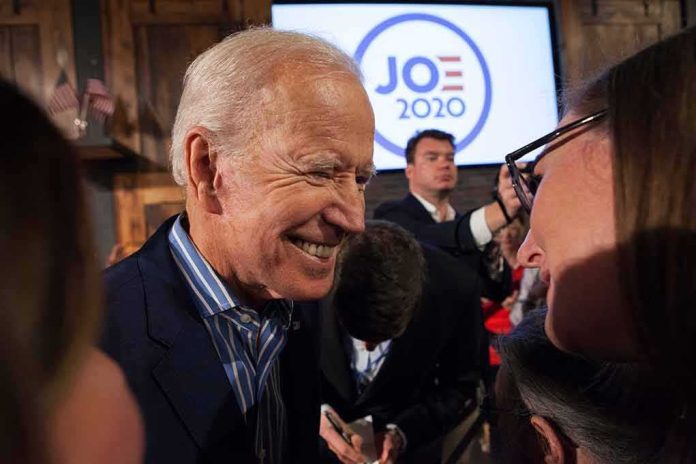
Joe Biden shared a short video featuring Carlos Eduardo Espina, a prominent Spanish-speaking TikTok influencer, as part of an influencer-focused gathering at Biden’s Wilmington, Delaware, home. Reporting indicates the event combined digital outreach with conversation around Biden’s memoir, and that Espina, known for Latino-focused political content, was among the invitees. The fact pattern is straightforward: there was a direct Biden–Espina interaction in a curated creator environment; a brief clip captured the vibe—casual, personal, optimized for social video.
Espina’s presence was neither random nor unprecedented. He has been in high-demand Democratic circles for years; in 2024 he joined Biden at the White House to spotlight executive actions on mixed-status families—policy terrain central to many Latino households navigating immigration rules. The Wilmington clip follows that trajectory: lean into a creator who already speaks the language—literally and figuratively—of a community the campaign wants to reach.
Why creators now sit at the center of political communication
Influencers compress two jobs into one: distribution and translation. Academic work on “political relational influencers” shows campaigns increasingly rely on creators who do more than relay talking points; they legitimize messages through preexisting parasocial ties and cultural fluency on TikTok and Instagram. That matters because attention is scarce and fragmented. A 30-second native video on a trusted feed can outperform a polished ad placed cold against a distracted audience. Experiments and field studies back this up: creator messages can measurably lift beliefs about collective political efficacy and spur action downstream.
Creators also function as cultural interpreters. In bilingual and bicultural spaces, subtle choices—dialect, humor, code-switching—signal in-group understanding. That is difficult to replicate from a podium or a campaign press release. A short clip with Espina accomplishes two things at once: it advertises access (Biden is here, in the room, speaking with your guy) and it borrows allegiance (if you trust Espina’s feed, you sample Biden’s message with less friction).
Latino-targeted digital outreach: a contested, high-stakes arena
Spanish-language political content has grown into a sprawling, competitive venue where immigration narratives, economic anxieties, and identity politics collide. Researchers and fact-checkers have documented how fast claims—especially around immigration policy—can mutate in creator ecosystems, sometimes slipping into oversimplification or misinformation when complex rule changes get reduced to viral tropes. This is precisely why campaigns court credible creators who can anchor nuance inside formats built for speed.
Espina occupies that middle lane: a large audience, a focus on immigration and Latino civic participation, and prior proximity to policy announcements. For a campaign, the upside is access and authenticity at scale. The risk is that interpretive layers—edits, captions, duet chains—can bend emphasis or meaning. That is not unique to Biden’s outreach; it is the structural condition of political messaging in creator spaces across parties.
Mechanics of the influencer play: how a 20-second clip does real work
First, it social-proofs the relationship. A quick on-camera exchange signals permission: this creator can bring you into the candidate’s orbit. Second, it re-encodes tone. Traditional media hears “talking points”; platform-native audiences hear vibe—humor, warmth, fluency with the medium. Third, it nests future content. One clip becomes a reference point others stitch, remix, or quote, extending the shelf life and reach. Research on platform dynamics shows that these iterative, relational posts disproportionately shape perceptions compared with one-off candidate ads.
For Spanish-speaking audiences, tone-setting is not ornamental; it is often the gateway to substance. If a viewer grants the post 10 more seconds because it feels familiar, the campaign has bought time to route them toward policy explainers or registration prompts later in the funnel. That is the practical calculus behind creator rooms and selfie-friendly backdrops.
The rules are thin: disclosure, sponsorship, and provenance
Audiences reasonably want to know when a post is organic affinity and when it is coordinated messaging. The regulatory environment is inconsistent. The FTC’s Endorsement Guides require clear disclosure when a material connection would surprise consumers and could affect their evaluation—but the Guides are general-purpose, not built for the messy realities of political speech on creator platforms. There is no comprehensive federal rule mandating disclosure for all compensated political content; instead, a patchwork of campaign-finance and state-level provisions applies narrowly, leaving large gray zones for influencer posts that are coordinated but not explicitly paid.
In practice, that means a clip like Biden’s with Espina can be both genuine outreach and strategic content, while viewers may lack a definitive label clarifying which. This is where norms matter: plain-English disclosures when compensation or coordinated production exists; provenance cues in captions; and consistent creator-side policies that distinguish access from endorsement. Without these, audiences will fill the vacuum with suspicion—often unfairly, sometimes justified—further polarizing interpretations of what is, mechanically, a standard tactic in 2020s-era campaigns.
Consequences: what this signals about campaigns and voters
First, creators are not a sideshow; they are the channel. The Biden–Espina clip is one artifact in an architecture where influence travels fastest through known voices, in short form, on personal feeds. Second, Spanish-language digital spaces are central terrain. Campaigns that cannot sound native—on language, cadence, and concern hierarchy—will underperform, regardless of their spend elsewhere. Third, governance will lag tactics. Until rules catch up, disclosure and sponsorship clarity will depend on voluntary compliance and platform norms, not robust, uniform law.
The practical upshot for voters is simple: treat creator content as a legitimate political touchpoint, but ask two questions—who is speaking to me, and on whose dime? For campaigns, the mandate is just as clear: if you plan to win trust in creator ecosystems, invest in cultural fluency and be forthright about relationships. The clip with Espina is not an outlier; it is a blueprint.
Sources:
thegatewaypundit.com, cip.uw.edu, kitv.com, reutersinstitute.politics.ox.ac.uk, abc7chicago.com, ijoc.org, tandfonline.com, link.springer.com, academic.oup.com