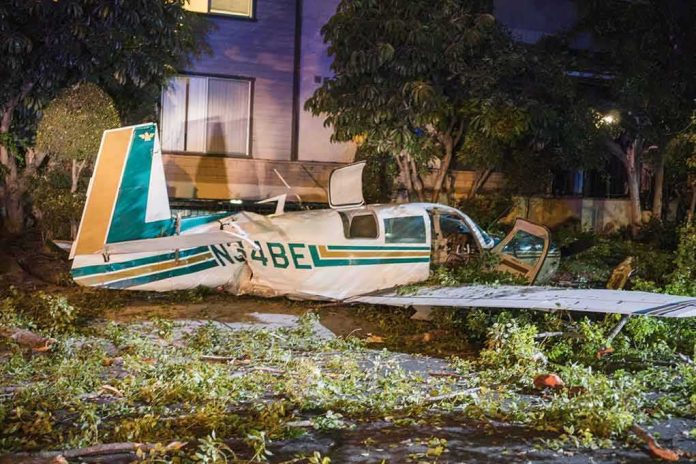
The essential fact is not ambiguous: a Piper Comanche carrying three people crashed in a remote Basin area near the North Rim of Grand Canyon National Park; search teams located the wreckage the next morning, and there were no survivors.
The Short Version
- Authorities found a Piper Comanche and debris field near the North Rim Basin; all three aboard died.
- The aircraft was reported missing late Sunday; wreckage was located at about 10:15 a.m. Monday.
- The NTSB is leading the investigation with FAA and National Park Service support.
- Accident time is preliminarily placed around early evening; precise timing may vary across early reports.
- Cause is undetermined; NTSB’s methodical process typically spans months before analysis and probable cause appear.
What happened: a concise, confirmed timeline
Late on a Sunday night, the Grand Canyon Regional Communications Center received a missing-aircraft report for a Piper Comanche with three people on board; the last known location placed the aircraft near the Basin area on the park’s North Rim. A coordinated search unfolded across rugged terrain with limited access. At approximately 10:15 a.m. the following morning, ground and aerial teams located the aircraft and a debris field in the specified area. The National Park Service, the authority responsible for the incident locale, confirmed a single stark outcome: there were no survivors. Independent reporting aligned on those fundamentals—aircraft type, three fatalities, search location on the North Rim, and the mid-morning discovery time—underscoring the reliability of the event narrative.
As is often the case in the first 24 to 48 hours of an accident, preliminary times can vary slightly across sources. An FAA estimate put the crash in the early evening—reported as about 7:15 p.m. by one outlet—while the formal missing report reached the park late that night. Early timing differences typically reflect rounded entries or asynchronous logs rather than a substantive dispute about the occurrence itself.
Why this part is settled while cause is not
Aviation investigations draw a bright line between event facts that can be quickly established—wreckage location, occupant count, survival status—and causal explanations that require disciplined, time-consuming analysis. The National Transportation Safety Board does not determine probable cause at the scene; it releases a preliminary report with on-scene factual information roughly a month later, then integrates laboratory work, component examinations, performance analysis, and human factors before publishing a final probable cause, often 12 to 24 months after the accident. That cadence is by design: it avoids premature conclusions and ensures that complex contributors—mechanical state, maintenance history, weather, terrain, pilot experience and decision-making, fuel status, and any recorded data—are weighed in context.
This crash fits that canonical pattern. The immediate facts are well-corroborated: a Piper Comanche, three aboard, no survivors, North Rim Basin location, wreckage discovered the next morning. The explanation of why it happened remains open pending the NTSB’s methodical work, which the FAA and the National Park Service are supporting.
How investigators will build the causal picture
Once on scene, the NTSB investigator-in-charge maps the debris field—its dimensions, distribution, and orientation often indicate whether an airplane struck terrain intact, broke up in flight, or lost control during a maneuver. Investigators document flight controls, engine and propeller condition, fuel system continuity, and any signatures of power at impact (for example, propeller blade bending or chordwise scoring). They review logbooks for maintenance actions, airworthiness directives, and modifications; examine engine and accessory components in a lab, when needed; and request toxicology and medical records as standard practice in fatal accidents. Weather data—including surface observations, radar, satellite imagery, and wind/temperature aloft—are correlated with the airplane’s track to assess turbulence, icing, convective activity, and visibility at the time of flight.
For general aviation, the presence or absence of recorded data can be decisive. Many legacy aircraft lack flight data or cockpit voice recorders, but ADS-B surveillance, radar returns, portable GPS traces, and even personal electronics can supply a useful flight profile. Air traffic control audio, if any, is reviewed for distress calls or advisories. The preliminary report, usually posted in the NTSB’s CAROL database about a month after the event, will summarize these early factual elements without analysis; the synthesis and final judgment come later.
The terrain and operating environment matter
The North Rim of the Grand Canyon presents a confluence of operating challenges that demand respect even from experienced pilots. Elevation drives density altitude—thinner air reduces engine performance and climb capability while degrading aerodynamic margins—and the Basin’s topography can funnel winds and spawn localized turbulence. Night operations in remote terrain add workload: visual cues are sparse, horizons can be deceptive, and decision time shrinks if conditions deteriorate. None of these factors assert causation in this crash; they simply outline the environment through which any investigator will thread the facts to test mechanical, operational, and environmental hypotheses.
The Grand Canyon also carries aviation history that reshaped national airspace policy. The 1956 mid-air collision between two airliners above the Canyon, which killed 128, became the turning point for centralized air traffic control and the creation of the FAA—an institutional memory that underscores why disciplined, system-level analysis follows every serious accident to extract lessons that improve safety.
Three people died in a plane crash at the North Rim inside Grand Canyon National Park in Arizona, officials said. The National Park Service located the downed aircraft, a Piper Comanche, and debris field on Monday.
DETAILS: https://t.co/0XRfIOtlNy pic.twitter.com/ThaXJ3OWBM— Las Vegas Review-Journal (@reviewjournal) November 18, 2026
What we know now, and what to watch next
Today’s bedrock facts are straightforward. The National Park Service located a Piper Comanche and debris field in the North Rim Basin at about 10:15 a.m. the morning after a late-night missing-aircraft report; all three people aboard were killed. Reuters’ coverage independently aligned with the NPS account, adding durable confidence in those particulars. CBS attributed an approximate accident time to the FAA in the early evening window; such preliminary timing variations are common and typically resolved when the NTSB aligns radar, ADS-B, ATC, and communications records in its docket.
From here, expect three public milestones. First, a preliminary NTSB report with basic facts, usually within about 30 days. Second, intermittent updates if component lab work, toxicology, or significant safety issues warrant interim communication. Third, a final report with analysis, findings, and probable cause—often a year or two later—accompanied by any safety recommendations the Board deems warranted. Through that cycle, the FAA and NPS will remain supporting participants, particularly on site access, documentation, and, if applicable, operational data.
Why clear boundaries on certainty protect safety
A well-run investigation resists the urge to convert early fragments into theories. Aviation is unforgiving of narrative shortcuts: small mechanical subtleties, modest weather variations, or minor procedural deviations can be decisive. The NTSB’s disciplined separation of early facts from later analysis is not bureaucratic delay; it is the mechanism that keeps the industry honest about what we truly know and what we are still learning. For families, that timeline can be excruciating; for safety, it is indispensable.
Sources:
nypost.com, fox10phoenix.com, avweb.com, home.nps.gov, ntsb.gov