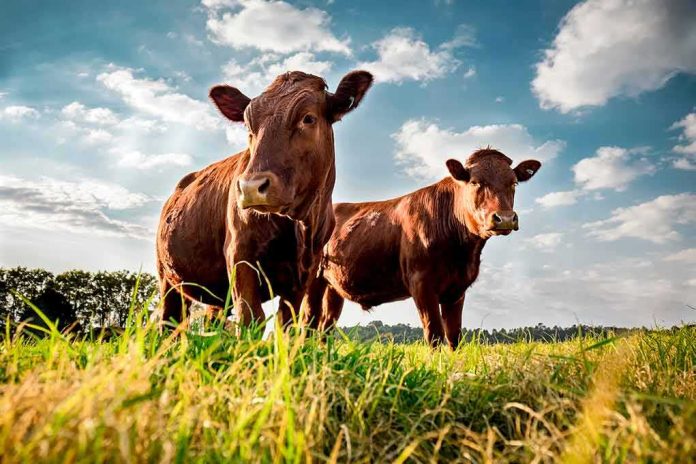
Washington officials confirmed a Yakima County resident died from H5N1 bird flu after contact with infected dairy cattle, sharpening concern about workplace safety even as public risk stays low.
Story Snapshot
- Yakima Health District reported a resident exposed to infected dairy cattle died after severe illness.
- Centers for Disease Control and Prevention identified the virus as H5N1, the avian influenza strain.
- Officials linked additional human cases to the same cattle outbreak and urged caution for exposed workers.
- Health agencies say general-public risk is low, but warn against raw milk and unsafe farm practices.
Confirmed Death Tied To Dairy-Cattle Exposure
Yakima Health District said a county resident who had contact with infected dairy cattle was hospitalized with severe illness and died on November 1, 2026. Reporting cited the Centers for Disease Control and Prevention as identifying the infection as H5N1, the well-known bird flu strain. Officials did not release the person’s name or age. They noted the patient had underlying health conditions. The death followed Washington’s first detections of H5N1 in dairy cattle announced in early October, linking the case to a known local outbreak.
Yakima County health leaders added that they were monitoring people who had close contact with the patient to check for spread, and that no sustained human-to-human transmission had been documented. The county also reported at least one additional confirmed human infection in a person exposed to infected dairy cattle, reinforcing the occupational route of risk. State officials urged farm owners and workers to follow strict protection steps around sick animals and to report symptoms quickly for testing and care.
Why Officials Still Rate Public Risk As Low
Washington’s Department of Health has said the current bird flu risk to the general public remains low. That message matches federal guidance that people with routine, everyday exposure face little danger, while those working with infected animals face higher risk. The low-risk message rests on a key fact: health agencies have not documented sustained person-to-person spread in this outbreak. Officials continue to watch closely, because the virus has reached more herds and more workers in the cattle sector.
Health leaders also warn against drinking unpasteurized milk, which can carry live virus from sick cows. Pasteurized milk sold in stores remains safe due to high-heat treatment that kills viruses and bacteria. Farm workers and veterinarians get different advice. They are told to use eye and face protection, gloves, and coveralls, and to avoid splashes from milk and secretions of sick cattle. They should wash well after contact and report symptoms like fever or eye irritation fast.
Outbreak Context And What It Signals For Policy
Washington officials reported dozens of infected herds during the fall, with Yakima County the most affected area. The pattern tracks what experts have seen elsewhere this year. Most human cases have come from close contact with sick cattle or poultry, not from other people. That mix creates a hard truth for leaders and workers. The average person can go about life with normal care, but people who run America’s food system shoulder higher day-to-day risk when safety steps slip or supplies run short.
For many readers, that split feeds a deeper frustration with how government manages real-world problems. Farm workers often lack reliable gear, paid sick time, or fast testing. Dairies face thin margins and labor gaps. Agencies issue guidance, but enforcement and support can lag. When a preventable workplace exposure ends in a death, it reinforces the feeling that the system protects institutions first and people second. Both conservatives and liberals see that gap, even if they disagree on the fix.
What To Watch Next In Washington
Health agencies are tracking contacts of the deceased patient and other exposed workers to confirm there is no onward spread. Investigators are comparing animal and human test results to map lines of transmission and timing. State officials continue on-farm testing to catch new herd infections and to guide isolation and cleanup steps. Yakima County is pushing protective gear, training, and fast reporting on farms. These steps aim to protect workers while keeping milk supplies safe for buyers.
"A Yakima County, Washington, resident hospitalized with severe avian influenza (H5N1) after exposure to infected dairy cattle died on November 1..
The death is the first from avian influenza reported in the US in 2026..
The Yakima Health District also confirmed a third human…— Hiroshi Yasuda (保田浩志) (@Yash25571056) November 3, 2026
For families and consumers, the guidance is simple. Do not drink raw milk. Buy pasteurized products. Stay away from sick or dead wildlife. For farm owners and managers, the bar is higher. Provide protective gear, improve hygiene stations, and rotate tasks to cut exposure time. For government, the test is follow-through. Clear rules, fast help, and honest data can cut risk without crushing small farms. That is how trust is earned when headlines raise alarm.
Sources:
washingtontimes.com, usnews.com, kyma.com, upi.com, cidrap.umn.edu, m.dailyadvent.com, link.springer.com