Authorities arrested a 21-year-old Florida woman after an Instagram post allegedly threatened to shoot President Trump at a Daytona Beach rally.
Story Snapshot
- Investigators say the post named President Trump and a specific rally in Daytona Beach.
- Officials identified the account holder as Allison Jeanne Albro, who admitted posting it, calling it a joke.
- Federal and local agencies responded, and deputies booked Albro without bond on a written-threat charge.
- Deputies reported finding no firearms during a consensual search; the case now moves to court.
What Investigators Say Happened
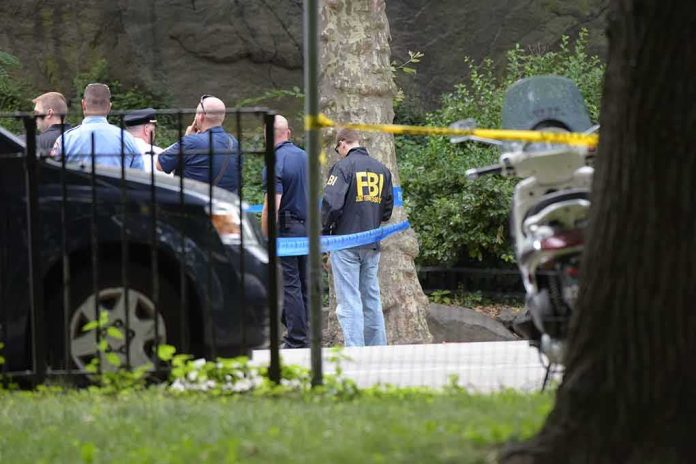
Volusia County authorities said they were alerted on the day of a Daytona Beach rally after the Federal Bureau of Investigation (FBI) flagged an Instagram post that threatened to shoot President Donald Trump. The Volusia Crime Center worked the lead and identified the account as belonging to 21-year-old Allison Jeanne Albro, according to local reporting. Detectives and United States Secret Service agents went to her residence. Sheriff Mike Chitwood later shared a photo of the alleged threat on social media, underscoring the rapid response.
Deputies arrested Albro on a state charge for written threats to kill and booked her without bond, according to the report. Investigators stated that Albro admitted to making the post but said it was a joke, that she did not mean harm, and that she did not own a gun. Officers conducted a consensual search and reported finding no firearms, ammunition, or related gear. The arrest shows how agencies treat direct threats to a sitting president as urgent security matters.
How Florida Law Treats Online Threats
Florida law makes it a felony to send or post a writing or electronic record that makes a threat to kill or cause serious harm when it can be viewed by another person. State courts have applied this statute to social media posts, not just letters or private messages, confirming that online statements can trigger criminal liability. At the same time, the First Amendment protects speech except for “true threats,” which are serious expressions of intent to commit unlawful violence. These lines guide how prosecutors frame cases like this.
In recent guidance from the United States Supreme Court, states must show a mental state above mere negligence to convict for true threats, which affects how cases based on online posts proceed. That standard helps separate crude or reckless online talk from punishable threats. In Florida, prosecutors still need to match facts to the statute’s elements, including that the message reached others and conveyed a threat to kill or cause serious harm. Social media posts to a public audience can meet that threshold when the language is specific and targeted.
Why This Case Hits Larger Nerves
Presidential visits draw heavy protection, so any threat prompts a fast and layered response from local detectives, the United States Secret Service, and the FBI. Citizens across the political spectrum worry that political rage online can cross into real-world danger, especially around high-profile events. Many also worry that government power can overreach when speech, even ugly speech, is at issue. This case sits in that tension: safety demands quick action, and the law must sort intent from recklessness.
JUST IN: A woman accused of making an assassination threat against President Trump at his Florida rally is reportedly behind bars as supporters gather ahead of his arrival.
Meanwhile, Florida’s early-voting numbers are drawing attention as Election Day approaches.
Florida…
— Rabindra. 🚩 (@rabindraX238) October 30, 2026
The report describes a named target, a public event, an admission to posting, and an arrest with no bond, all of which point to a serious security lead. The same report notes that Albro said she had no intent and had no firearm, which a judge and jury may weigh later. For now, the charge moves into the courts. The outcome will turn on the exact words used, how and to whom they were posted, and whether prosecutors can prove a true threat under Florida law.
Sources:
facebook.com, wftv.com, pubapps.fdc.myflorida.com, webapps.hcso.tampa.fl.us, brevardsheriff.com