
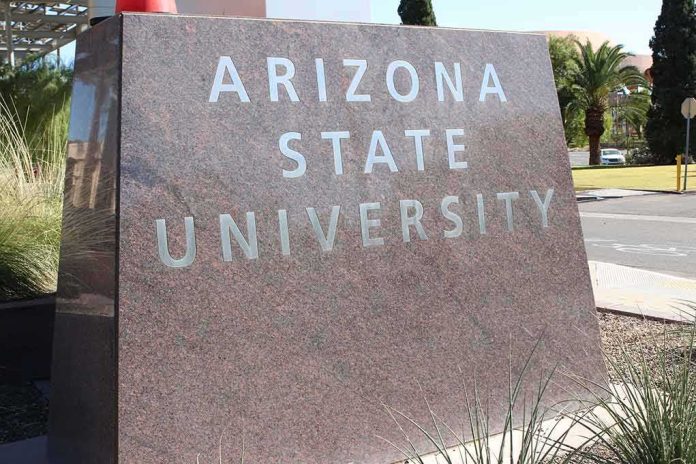
Arizona State University now faces its gravest moment in a month-long controversy as the family of hockey prospect Matthew Mayich says he has “zero chance of recovery” and remains in a coma after collapsing during a team workout.
Story Snapshot
- The family’s attorney says Mayich will not recover and remains in a coma.
- Arizona State University confirmed the Aug. 20 collapse occurred at a team workout with staff present.
- The family alleges exertional heat stroke and raises questions about water access and oversight.
- The university says it is reviewing the workout and its guidelines, with details still limited.
What We Know About the Collapse and Current Condition
Arizona State University said a student-athlete collapsed during an outdoor workout on August 20 and remained hospitalized, later identifying the player as defenseman Matthew Mayich, a St. Louis Blues prospect. The family’s attorney has since said Mayich suffered exertional heat stroke that deprived his brain of oxygen, and that doctors now see no path to recovery. The update turns a serious incident into a likely life-long tragedy, while formal investigative findings have not yet been released to the public.
The university stated that coaches and training staff attended the session, along with a third party who had previously worked with the team. Arizona State University described its response as a review and emphasized privacy limitations in its early statements. That narrow approach has fueled frustration from people who want clarity on workout intensity, timing, hydration access, emergency response, and whether the school’s heat-safety rules were followed that day.
Key Allegations and the Disputed Workout Conditions
The family’s legal team argues that Mayich’s injury came from exertional heat stroke during a grueling, military-style workout on the first day of fall classes, and that players who did not keep pace risked losing access to water. Reporting also cites an Arizona State University Athletics heat policy stating water must be provided at all practices, which creates a clear standard for any review. These claims raise hard questions about supervision, rest breaks, and whether the session adjusted to heat risk.
Counter-claims dispute those points. An attorney for the former Green Beret involved said the session followed rules, was not overly intense, and did not include timed events or water denial. That lawyer also said the organizer left before the collapse. Arizona State University says it maintains heat guidelines informed by national sports medicine groups and is reviewing how outside personnel should engage with student-athletes. The public is left with two clashing versions and a process that is still ongoing.
Why Heat Stroke Protocols Matter in College Sports
Sports medicine groups describe exertional heat stroke as a rapid, life-threatening emergency. They urge coaches and trainers to adjust work-rest cycles based on heat stress, guarantee hydration access, watch for central nervous system symptoms, and use immediate cold-water immersion when heat stroke is suspected. These standards exist because fast cooling can prevent organ damage and death. When tragedies happen, reviews often focus on whether teams recognized symptoms, cooled on site, and called emergency services without delay.
Arizona State University’s careful language about a “review” rather than a formal “investigation” has heightened public concern, given the severity of Mayich’s condition. Families across the political spectrum know this pattern: institutions promise guidelines, but when something goes wrong, details are slow and controlled. People worry that risk shifts to the athlete while the system protects itself. The Mayich case now sits at that fault line between trust and accountability that so many Americans see in public life.
What Happens Next and What Accountability Would Look Like
Clear answers will depend on records and witnesses. Workout plans, attendance logs, weather and heat index data, and communications can confirm whether hydration and rest rules were followed. Statements from coaches, athletic trainers, teammates, and the outside organizer can clarify who led what, when the signs of distress appeared, and how fast the medical response moved. Independent medical documentation can also speak to the injury mechanism and prognosis with more authority than attorney statements alone.
Arizona State's policies for preventing and treating heat-related illness are being called into question following the Aug. 20 collapse of hockey player Matthew Mayich, who remains in a coma…
To read full article go to https://t.co/LugxZz0xXS pic.twitter.com/qPXPqvViBk
— USCHO.com (@USCHO) September 5, 2026
For many readers, the core fear is simple: if a college athlete can suffer a catastrophic injury at a supervised team event, what stops it from happening again? Strong safeguards are not partisan. Parents, athletes, and taxpayers expect transparent rules, real-time heat adjustments, and immediate cooling when needed. The longer officials speak in tight legal phrases while a young man lies in a coma, the more it looks like a system that serves itself first and those on the field last.
Sources:
thegatewaypundit.com, nytimes.com, nypost.com, arizonasports.com, azcentral.com, azfamily.com, yardbarker.com