
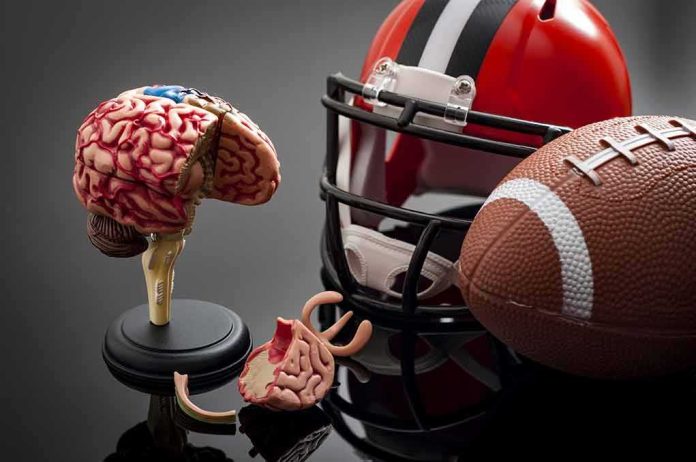
At least one in four former National Football League players who died from 2016 to 2021 had chronic traumatic encephalopathy, a brain disease tied to repeated head hits, according to newly reported research.
Story Highlights
- The study found chronic traumatic encephalopathy in 215 of 235 examined former players, a minimum prevalence of 24.5% among 878 who died in the period.
- Researchers and reporters call the 24.5% figure a floor because 643 brains were not examined, so the true rate could be higher.
- Families reported memory loss, mood swings, and addiction in many cases linked to donated brains.
- The National Football League says it is working to cut head impacts and make the game safer.
What the new research found and what it means
Researchers examined 235 brains from 878 former National Football League players who died between 2016 and 2021 and found chronic traumatic encephalopathy in 215 of them, creating a minimum prevalence estimate of 24.5% across the full group of deaths in that period. Coverage notes the affected players’ ages ranged from their 20s to their 80s, showing the disease crosses eras and life stages. Families often reported memory loss, reduced thinking skills, mood swings, and addiction when explaining why they chose to donate.
Experts say chronic traumatic encephalopathy is linked to repeated head impacts over time, not only to diagnosed concussions that show up on game-day reports. That means sub-concussive hits, which are common in line play and practice, likely matter as much as highlight-reel blows. The disease today can be confirmed only after death, which limits how well we can count cases in living players and complicates timing and risk estimates for current rosters. This gap leaves families grasping for answers and fuels debate about how to protect athletes.
Why the 24.5% figure is a floor, not a final rate
Reporters stress the 24.5% estimate is conservative because 643 of the 878 deceased players were not examined, and donation often comes from families who see troubling symptoms, which can shape the sample. The Athletic explained the math clearly: the minimum rate assumes none of the unexamined brains had the disease, which is unlikely, so the true prevalence could be higher. This is the tension in brain-bank research: it is meaningful evidence, but not a clean random sample of all former players.
National Football League voices and some commentators argue that because diagnosis is postmortem and donation is selective, the study cannot prove prevalence among living players. They point to years of safety changes and technology like better helmets and practice limits to manage risk, while admitting the sport’s violent nature makes full removal of head impacts hard. Those points do not erase the study’s findings, but they do explain why some fans and policymakers ask for broader data before sweeping changes.
What the league says and what families want
The National Football League responded by saying it continuously works to make football safer and is reducing concussions and head impacts through rules and strategy changes. League-linked coverage emphasizes mitigation rather than declaring an unmanageable crisis. At the same time, public discussion has shifted toward stronger long-term care for retirees, with commentators highlighting gaps in lifetime health coverage even as they accept that risk will never be zero in a collision sport.
CTE study finds at least one in four ex-NFL players over five-year period had disease https://t.co/jJLXdHYHTY via @ABCaustralia
— Fergus Tilt | Physio (@fitasaphysio) August 27, 2026
For many readers, this is about trust and accountability. Parents worry that a beloved game asks for too much from young men who chase a dream and then face years of memory loss or depression. Taxpayers and fans see money flow through television deals while basic medical answers arrive too slowly. When institutions urge patience, families hear delay. When headlines turn a careful “at least one in four” into a blanket claim, players hear panic. Both sides want clarity and honesty.
What to watch next: evidence, rules, and real support
Policymakers, team owners, and the players union face three near-term needs. First, push for transparent data: release full methods and anonymized case details so outside experts can test how donation patterns shaped the results. Second, expand independent research aimed at finding living biomarkers, so doctors can diagnose risk sooner and track it over time. Third, tie safety talk to concrete support, including post-career medical coverage that fits the risks the evidence now shows.
Sources:
pjmedia.com, bleacherreport.com, abcnews.com, cbssports.com, upi.com, thehill.com, sports.yahoo.com, nytimes.com, pmc.ncbi.nlm.nih.gov