
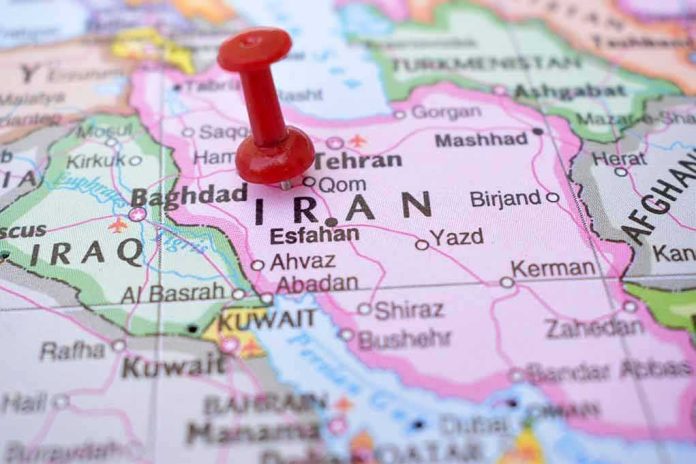
When Washington promises to “crush” an adversary without firing more shots, it is betting that finance, logistics, and law can do what missiles and brigades often cannot: change an opponent’s behavior at scale and at speed. President Trump’s declared “Economic D‑Day” against Iran is the latest—and most expansive—iteration of that bet.
The Short Version
- President Trump has shifted the center of gravity of U.S. pressure on Iran from overt military action to an intensified, system-wide campaign of economic coercion.
- Treasury-led measures aim to sever Iran’s access to oil revenue, foreign exchange, shipping, insurance, and digital-asset channels—an escalation beyond prior rounds of sanctions.
- The strategy follows a familiar U.S. playbook: sanctions and maritime interdiction as tools to impose high economic pain while deferring major combat.
- Research on sanctions is unambiguous on one point: they reliably damage targeted economies, but their record at delivering strategic concessions is mixed at best.
What Washington is actually doing when it says “economic warfare”
Economic coercion is not one policy; it is an integrated architecture. The anchor is sanctions—legal prohibitions that threaten penalties for transacting with designated people, sectors, and vessels. Treasury’s Office of Foreign Assets Control (OFAC) maintains the Iran program, which aggregates authorities passed by Congress and invoked by the executive branch, and which can expand via new designations, interpretive guidance, and secondary sanctions that target non-U.S. actors dealing with Iran’s energy, banking, shipping, or defense sectors. The “D‑Day” framing signals a surge across multiple lanes at once: tightening oil export interdiction with a naval blockade, drying up insurance and reinsurance for tankers, cutting correspondent banking paths, blacklisting front companies, and—newer to the toolset—sanctioning crypto exchanges and facilitators that help Tehran route around the dollar system.
Operationally, this is as much about enforcement as it is about new edicts. The playbook targets choke points: ship registries and flags; classification societies that certify vessel seaworthiness; satellite AIS data providers that track “dark fleet” behavior; bunker fuel suppliers at transit hubs; and the compliance departments of global banks and commodity traders. By making Iran’s oil and petrochemicals hard to move, hard to insure, and hard to pay for, Washington depresses realized export volumes and forces deeper discounts on any barrels that do ship—sapping Tehran’s fiscal capacity. Officials have repeatedly described this escalation as unprecedented in scope, building on earlier “maximum pressure” campaigns that already reached record scale.
Why pivot now: the logic and the lineage
The turn toward amplified economic measures follows months of kinetic exchanges and maritime incidents around the Strait of Hormuz, paired with clear signals from President Trump that he prefers to “low-key it” while watching financial strain mount in Iran. The logic is durable politics as much as strategy. Economic warfare projects resolve without committing large formations, manages escalation risk, and preserves the option to re‑swing to force if deterrence fails. It also fits a 40‑year lineage of Iran policy: phase up sanctions, squeeze oil lifelines, and try to force Tehran toward concessions on nuclear and regional behavior. In 2018, for example, the United States fully re‑imposed sanctions lifted under the JCPOA and pledged “maximum financial pressure,” a benchmark many in the current campaign say they intend to surpass.
History matters here. Each tranche of measures adds technical sophistication—better maritime analytics, more aggressive secondary sanctions, and, now, attention to digital rails—but it remains the same instrument family. The goal is to convert economic attrition into political leverage, ideally at a lower cost than renewed major combat. Whether that conversion happens quickly, slowly, or not at all is the central question.
How sanctions bite: the mechanics of pain
Three channels deliver the punch. First, export revenue suppression: if Iran cannot sell oil at volume and market price, budget deficits widen and the state must choose between guns, subsidies, and salaries. Second, currency and inflation dynamics: lost hard currency inflows weaken the rial, import prices jump, and inflation erodes household welfare. Third, investment freeze: sanctions raise country risk, shutting down foreign direct investment and technology transfer, degrading productivity over time. Empirically, sanctions on Iran have been shown to depress oil exports, weaken exchange rates, and reduce output growth; the economic harms are consistent across studies even as the political outcomes vary.
Sanctions now also reach into digital finance. OFAC has targeted exchanges and facilitators that Tehran and its networks use to convert crypto into usable fiat, aiming to close a backdoor that matured after the last maximum-pressure cycle. Combined with maritime interdiction and insurance denial, this makes even gray-market workarounds costlier and riskier for counterparties—from shipowners and brokers to small banks far from the Gulf.
The record on outcomes: pain is certain, strategic change is not
Here is where rigor is essential. The scholarly and policy literature is broad, but its through-line is consistent: sanctions are good at imposing economic costs; they are less reliable at producing the specific strategic concessions that motivate them. In Iran’s case, decades of cyclical pressure have yielded episodic bargaining but not a stable resolution of the underlying disputes over nuclear capability and regional power projection. Analysts describe a pattern of early-phase effectiveness—trade collapse, inflation spikes—followed by diminishing returns as the target adapts and builds alternative channels. That does not mean sanctions “fail” categorically; it means they achieve certain objectives (resource denial, signaling, constraint) more consistently than others (durable policy reversal, regime behavior transformation).
This mixed record explains both Washington’s escalation—more nodes, deeper enforcement—and the parallel hedging by shipping and energy markets. Insurers ration cover; tanker operators toggle transponders and alter routes; Gulf exporters finance pipelines that bypass chokepoints. The pressure system works, in other words, but the strategic conversion remains contested terrain.
What “most crushing ever” would have to look like
Superlatives are easy; architecture is hard. To exceed prior campaigns in practice, an economic D‑Day would pair measures that are mutually reinforcing and difficult to evade: blanket secondary sanctions on remaining oil buyers; aggressive detention and de‑flagging of suspected sanction‑evading tankers; systematic denial of reinsurance and port services to vessels linked to Iranian cargoes; synchronized designations with allied jurisdictions; and continuous disruption of digital asset conduits and trade-finance nodes used by Iranian front companies. It would also require sustained resourcing for enforcement—the unglamorous work of tracing registries, shell entities, and payment chains over months and years. The Treasury Department telegraphed such an approach in prior cycles; replicating it at larger scale is coherent with the current rhetoric.
Even then, two constraints persist. First, time: sanctions often deliver their largest marginal effects early and then taper as targets adapt and third parties recalibrate. Second, politics: coalition durability matters. The broader and tighter the participation by major economies and maritime hubs, the more complete the isolation; the looser the coalition, the more profitable the gray market for those willing to take the risk.
🇮🇷 Iran’s Foreign Minister Abbas Araghchi has criticized US President Donald Trump’s planned economic measures against Tehran, calling them an attempt to divert attention from US economic issues and warning that additional pressure will not succeed.#Iran #US #Trump… https://t.co/VoMxsOHgQQ pic.twitter.com/hIhvzm4ip0
— omaspire (@omanspire) August 20, 2026
Strategic implications and the path dependencies they create
Choosing economic warfare over immediate battlefield escalation sets path dependencies difficult to reverse quickly. For the United States, it ties leverage to enforcement tempo and partner alignment more than to troop levels. For Iran, it incentivizes investment in sanction‑resilient logistics, currency substitutes, and asymmetric retaliation short of open war. For global markets, it nudges capital toward redundancy—alternate pipelines, diversified cargo insurance pools, and energy transition bets that reduce exposure to chokepoints over the medium term. None of this is costless, but much of it is durable.
The bottom line is clear. Washington can, and likely will, make it substantially harder and more expensive for Tehran to earn and move money—through oil, through banks, and through digital rails. The United States has the legal authorities, the enforcement machinery, and the maritime leverage to do so, and the administration has signaled its intent to use them at scale. Whether that pressure translates into the precise strategic capitulation Washington seeks is the open question the scholarship has flagged for decades. That is not an argument against using the tool; it is an argument for understanding exactly what it can—and cannot—guarantee.
Sources:
aljazeera.com, cnn.com, cnbc.com, reuters.com, fortune.com, npr.org, finance.yahoo.com, state.gov, wsj.com