A Supreme Court ruling meant to shield birthright citizenship is already spawning new citizenship “scams,” and President Trump is now urging the justices to rehear the case before trust in the system erodes even further.
Story Snapshot
- The Supreme Court’s Trump v. Barbara decision upheld birthright citizenship for most children born in the United States.
- Executive Order 14160 tried to narrow who is a citizen at birth, especially for children of noncitizen parents.
- New legal gray areas have opened the door for rushed births, paperwork schemes, and political anger on all sides.
- President Trump and many critics now argue the Court must revisit the ruling before abuse spreads and public faith collapses.
What The Supreme Court Decided On Birthright Citizenship
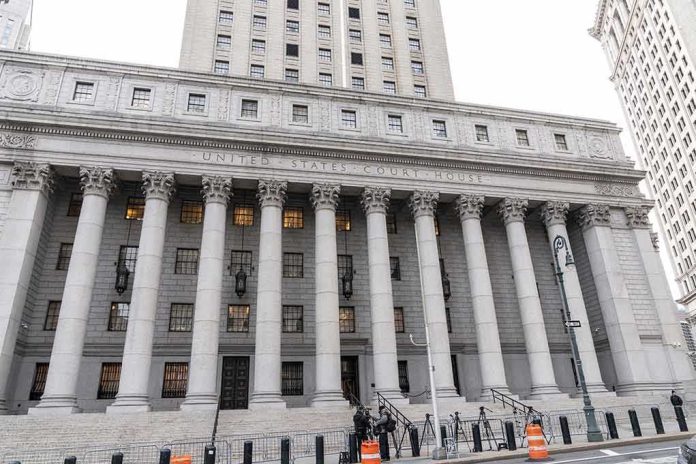
The case Trump v. Barbara asked whether children born in the United States to parents who were here unlawfully or only temporarily are citizens at birth under the Fourteenth Amendment. The Citizenship Clause says anyone born in the United States and “subject to the jurisdiction thereof” is a citizen. In June 2026, the Supreme Court held that these children are indeed under United States jurisdiction and therefore citizens at birth. The ruling was described as a landmark decision on who belongs in America’s national community.
For many legal scholars and civil rights groups, the Court’s decision simply confirmed what they considered settled law. They point to the 1898 case United States v. Wong Kim Ark, which held that a child born in San Francisco to Chinese immigrant parents was a citizen, and they argue the same rule applies today to almost all children born on United States soil. These experts say only narrow exceptions exist, such as children of foreign diplomats or occupying forces. They view birthright citizenship as a core promise of the Reconstruction era.
How Executive Order 14160 Tried To Rewrite The Rules
Executive Order 14160, issued by President Trump in January 2025, aimed to “protect the meaning and value of American citizenship” by limiting who counts as a citizen at birth. The order said a baby born in the United States would not be a citizen if the mother was in the country unlawfully and the father was not a citizen or lawful permanent resident, or if both parents were only temporarily present on visas. The administration argued that such children were not “subject to the jurisdiction” of the United States in the sense the Fourteenth Amendment requires.
The United States Citizenship and Immigration Services implementation plan laid out how agencies would treat entire categories of newborns as not born under United States jurisdiction. Civil rights organizations quickly challenged the order, saying the president cannot erase constitutional rights by executive action and warning that millions of families could see their children stripped of citizenship. The American Immigration Council and the National Association for the Advancement of Colored People Legal Defense Fund described the policy as an attack on the long-standing principle that if you are born here, you belong here.
Citizenship “Scams” And The New Legal Gray Zone
Once the Supreme Court blocked Executive Order 14160 in Trump v. Barbara, some immigration advocates celebrated, but the ruling also created new pressure points in the system. Hospitals along the southern border reported spikes in late-term travel by pregnant women hoping to give birth on United States soil before policy lines shifted again, raising fears of profit-driven “birth tourism” networks and rushed arrangements that game unclear rules. Lawyers now advertise services to help families assemble proof of jurisdiction and status in case future orders or rulings reopen the question.
The Supreme Court set four o'clock this afternoon as the deadline, so an answer on mail voting could come within days.
Trump v. California asks the justices to let the President's executive order on mail ballots and citizenship verification take effect before the November…
— @DMartinoLaw (@DMartinoLaw) August 3, 2026
President Trump and his allies claim these maneuvers show why they called broad birthright citizenship a “scam” and why they want the Supreme Court to reconsider its reading of “subject to the jurisdiction thereof.” Critics on the left answer that talk of scams is a way to paint millions of children as suspect when the Constitution, in their view, already grants them clear rights. Both sides, however, agree that the current patchwork of executive orders, court fights, and agency guidance makes it hard for ordinary families to know where they stand.
Why Both Left And Right See A Broken System
For conservatives worried about illegal immigration and strained public services, birthright citizenship feels linked to a wider sense that Washington refuses to secure the border or set firm rules. For liberals focused on equality and fair treatment, attempts to narrow birthright citizenship look like another way the government divides “haves” and “have-nots” and targets minority communities. Legal analysis from the Brennan Center and others notes that the Citizenship Clause has been “interpreted only sparingly,” which leaves room for political fights and confusion rather than stable guidance.
Many Americans now share a broader worry: that the federal government, not just one party, is failing to deliver clear, honest rules about something as basic as who counts as a citizen. Executive Order 14160 came from the White House, but it also relied on agencies, lawyers, and judges locked in their own turf battles. The Supreme Court’s ruling stopped one policy but did not repair the deeper trust gap. The ongoing push for rehearing shows how even constitutional questions can become one more arena where citizens feel the “deep state” plays games while their lives hang in the balance.
Sources:
pjmedia.com, congress.gov, scotusblog.com, youtube.com, brennancenter.org, law.stanford.edu, npr.org, constitutioncenter.org, americanimmigrationcouncil.org, aclu-nj.org, fwd.us, en.wikipedia.org, aila.org, supremecourt.gov, whitehouse.gov