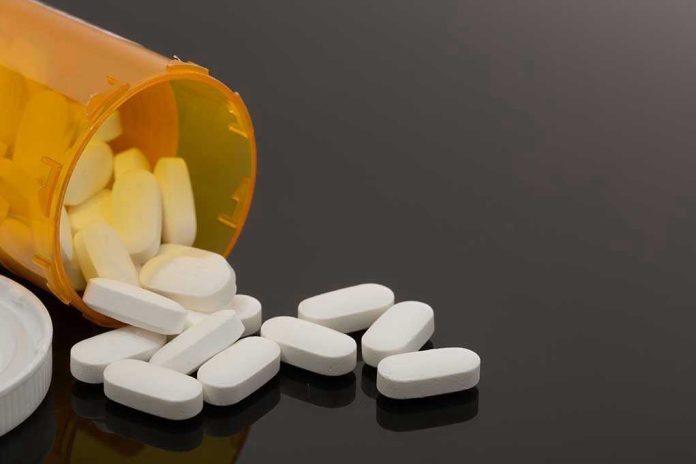
A Texas doctor stands accused of fueling Houston’s black market with over 5 million opioid pills through a cash-only pill mill, highlighting failures in regulating medical professionals amid a raging national drug crisis.
Story Snapshot
- James Robles, 70, indicted April 2, 2026, for conspiring to distribute 2.9 million hydrocodone, 1.3 million oxycodone, and 1.1 million carisoprodol pills without patient exams.
- Cash-only clinic in Houston deposited over $2 million in under three years, evading insurance oversight and prescription monitoring.
- “Crew leaders” allegedly recruited fake patients to resell pills on streets, tying into broader opioid epidemic killing over 500,000 since 1999.
- Faces up to 20 years per charge; presumed innocent, but case underscores need for stricter enforcement on rogue doctors.
Indictment Details
James Robles, a 70-year-old doctor from Weslaco, Texas, faces federal charges in the U.S. District Court for the Southern District of Texas. Prosecutors allege he ran a Houston clinic from around 2021 to 2025, prescribing over 5 million controlled substance pills. Patients, recruited by crew leaders, received scripts without examinations. These individuals filled prescriptions at complicit pharmacies and resold drugs on Houston’s black market. Robles deposited more than $2 million in cash into his accounts during this period.
Pill Mill Operations Exposed
The clinic operated on a cash-only basis, bypassing insurance scrutiny and state prescription drug monitoring programs. Crew leaders brought in individuals posing as patients, who obtained high-volume prescriptions for hydrocodone, oxycodone, and carisoprodol—drugs with substantial street value. This scheme parallels past Texas cases, like Dr. Oscar Lightner’s 2024 conviction for prescribing over 600,000 opioid pills for cash, resulting in seven years in prison. Federal investigators from DEA Houston uncovered the operation through bank records and prescription data.
Texas Doctor Found Guilty For Illegally Distributing Millions Of Opioid Pills https://t.co/FbWfxSd1WH
— zerohedge (@zerohedge) May 6, 2026
Broader Opioid Crisis Context
Houston’s proximity to Mexican cartels and major ports fuels opioid diversion, with Texas ranking third in DEA seizures in 2025. The U.S. opioid epidemic has claimed over 500,000 lives since 1999, per CDC data. Robles’ alleged actions occurred despite federal laws like the Ryan Haight Act and SUPPORT Act, which mandate exams for controlled substances. Cash clinics like his exploit regulatory gaps, contributing to street supplies amid rising threats like Frankenstein opioids more potent than fentanyl.
Stakeholders and Enforcement
The DOJ Criminal Division, led by A. Tysen Duva, and DEA Houston officials Brian C. Leardo and Daniel C. Comeaux announced the charges. No co-defendants named yet, but investigations continue into involved pharmacies. Robles remains presumed innocent; the case awaits arraignment within 60 days under federal rules. Texas Medical Board may review his license. This action aligns with Governor Abbott’s focus on border-related drugs, signaling ramped-up enforcement against pill mills.
Texas Doctor Found Guilty For Illegally Distributing Millions Of Opioid Pills https://t.co/6psiHOOssq https://t.co/ZuaGa22EB6$SPY $TSLA $AMZN $GOOGL $QQQ $HOOD $NVDA $AAPL $MFST $AMD $META $PLTR $CAR $BYND $OPEN $RKLB $ASTS $MVRL pic.twitter.com/G6B3mos9XX
— Florida Man (@FloridaMan729) May 6, 2026
Impacts on Communities and Policy
Houston communities suffer from overdose deaths tied to diverted pills, while legitimate pain patients face stigma. Short-term, the clinic shutdown disrupts local black market supply, though cartels persist. Long-term, conviction could deter rogue prescribers, bolstering PDMP audits and cash clinic bans. Economic losses include untaxed $2 million. Bipartisan frustration grows over government failures to curb the crisis, echoing calls for accountability beyond elite interests and toward protecting American families pursuing the dream through hard work.
Sources:
Texas Doctor Charged with Illegally Distributing Millions of Opioid Pills
Feds Charge Texas Doctor with Illegally Distributing Millions of Opioid Pills
Texas Doctor Accused of Illegally Selling Millions of Opioid Pills
DEA Press Releases on Recent Texas Cases
Physician Sentenced in $12M Pill Mill Scheme