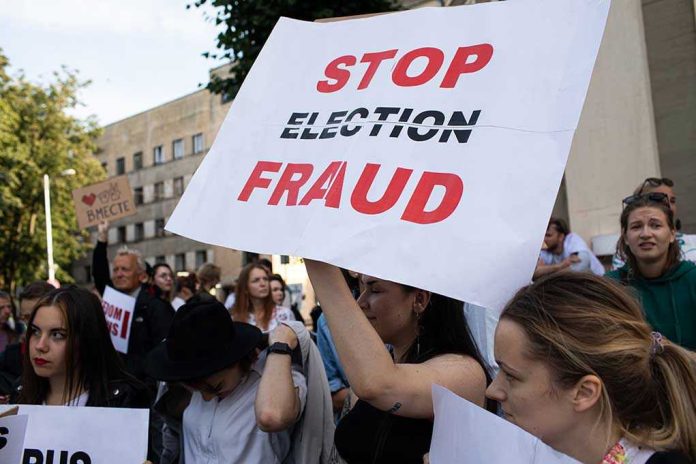
A former TPUSA leader and Arizona lawmaker’s conviction highlights the dangers of election-denial tactics in political spheres, posing questions about integrity and accountability.
Story Snapshot
- Liz Harris, former Arizona state representative, convicted over false allegations.
- Expelled from the Arizona House following an ethics probe.
- Her case underscores tensions within the conservative movement over election integrity.
- Harris’s sentencing reflects broader legal consequences for election-denial activism.
Liz Harris: From Activist to Convict
Liz Harris, once a prominent figure in Arizona’s conservative circles, found herself at the center of a legal storm following her expulsion from the state legislature. Elected in 2022, Harris was known for her zealous advocacy of election integrity, aligning closely with Turning Point USA’s ideological framework. Her journey from grassroots activist to legislator and now defendant highlights the volatile path of those who push unsubstantiated claims in official capacities.
In February 2023, Harris used her position to bring unverified accusations to a joint election committee hearing, claiming state officials were involved in bribery and cartel-linked conspiracies. The Arizona House Ethics Committee found her actions to be misleading, leading to her expulsion in April 2023. Despite the legal repercussions she now faces, Harris continues to champion herself as a whistleblower, a narrative that resonates with her supporters.
The Role of Turning Point USA
Turning Point USA, a conservative youth organization founded by Charlie Kirk, has played a pivotal role in shaping the narrative of election integrity among young conservatives. With its headquarters in Arizona, TPUSA has cultivated a network of activists committed to scrutinizing and challenging electoral processes. This backdrop provided Harris with the ideological support and platform to amplify her claims, even as they led to her downfall.
TPUSA’s influence underscores the tension between grassroots activism and the responsibilities of public office. The organization’s model of confrontational politics often clashes with the legal and ethical frameworks governing elected officials, a conflict exemplified by Harris’s case.
&t=1s
Implications for the Conservative Movement
Harris’s conviction serves as a warning about the risks associated with blurring activist fervor and legislative duties. Her case reflects a broader struggle within the conservative movement to balance passionate advocacy with accountability. As the Republican Party grapples with its identity in the post-Trump era, the consequences faced by Harris may deter similar tactics among lawmakers wary of legal repercussions.
The outcome of Harris’s legal battles is not just a personal setback but a flashpoint for discussions on election integrity and the boundaries of political activism. It raises critical questions about the role of elected officials in perpetuating narratives that lack factual grounding, and the responsibilities they bear in maintaining public trust.
Sources:
Charlie Kirk and the Founding of TPUSA