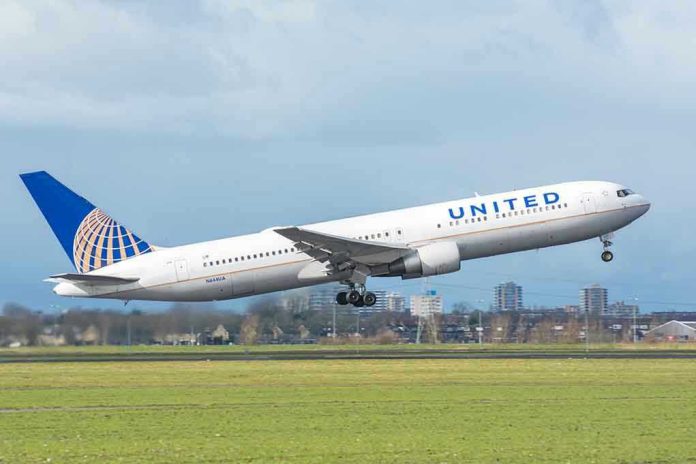
A new initiative by the airline industry aims to prevent luggage retrieval during emergency evacuations, addressing a threat to passenger safety.
Quick Take
- Airlines are calling in psychologists to study why passengers risk their lives for luggage during evacuations.
- The International Air Transport Association (IATA) highlights this behavior as a significant safety concern.
- New research aims to understand and change passenger behavior using psychological insights.
- Behavioral science could lead to redesigned safety briefings and protocols.
Psychological Study on Passenger Behavior
The International Air Transport Association (IATA) has announced a new initiative to study why passengers often risk their lives by retrieving luggage during emergency evacuations. This behavior has been labeled as “absolutely crazy” by IATA’s Director General, Willie Walsh. The industry plans to use formal psychological research to better understand the reasons behind this risky behavior and to develop strategies to mitigate it.
This move comes after numerous videos have shown passengers ignoring safety instructions in emergencies, focusing on grabbing their personal belongings instead. By leveraging behavioral science, the goal is to design more effective cabin briefings, signage, and training programs that can help overcome cognitive biases and attachment to personal belongings.
The Role of Behavioral Science
Behavioral science has already been successfully applied in other areas of aviation, such as security screening and managing disruptive behavior. The aviation industry now aims to extend these methods to passenger compliance during evacuations. Recognizing the human factors involved, researchers will examine cognitive biases, herd behavior, and emotional attachments that influence passenger decisions in high-stress situations.
By treating this as a human-factors issue rather than blaming passengers, the industry can develop evidence-based interventions. This shift in approach aligns with broader trends in aviation safety, where psychological insights are increasingly integrated into operational strategies.
Potential Impact on Aviation Safety
In the short term, airlines and their partners will focus on research and data collection, using surveys, simulations, and experiments to understand passenger behavior. In the long term, the findings could lead to redesigned safety communications and possibly new regulations. These changes aim to increase compliance and ensure passenger safety, potentially leading to stricter carry-on policies and improved evacuation protocols.
The aviation industry stands to benefit from reduced risk exposure and enhanced public confidence. As psychological expertise becomes more normalized in aviation, we may see a ripple effect across other transport modes, influencing evacuation planning in rail, maritime, and public buildings.
Sources:
Airlines launch study into why passengers risk their lives to take bags during emergency evacuations
Can psychology make airport screening safer?
Psychological and situational factors contributing to disruptive behavior in aircraft passengers