A top Democratic senator just got caught misunderstanding his own state’s voter ID rules on live national TV—and the confusion says a lot about how the system really works.
Story Snapshot
- Virginia law lets in-person voters show many kinds of ID, including non-photo papers like utility bills.
- Voters who have no ID can still cast a regular ballot by signing an ID Confirmation Statement.
- Senator Mark Warner claimed Virginia requires photo ID, but ABC’s Jonathan Karl corrected him on air.
- Confusing state materials and years of political messaging help explain how even leaders get this wrong.
What Virginia Law Actually Requires At The Polls
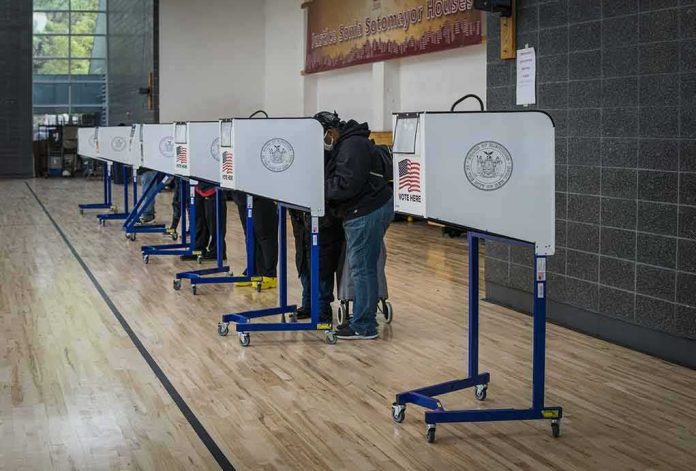
Virginia’s official election agency says every in-person voter will be asked to show one form of identification when they vote. That sounds simple, but “identification” covers much more than a driver’s license or a passport. The state’s voter ID chart lists items like a current utility bill, bank statement, government check, or paycheck with the voter’s name and address as fully acceptable ID. None of those documents need a photo, yet they count the same at the check-in table.
The Virginia Department of Elections also explains that voters have another option if they do not have any ID with them. A person who arrives at the polls without acceptable ID can sign an ID Confirmation Statement affirming who they are and then cast a regular ballot, not a backup or “provisional” one. Local guidance in places like Roanoke County repeats this rule and says only voters who refuse both ID and the statement are pushed into provisional status. In short, the law demands proof of identity but does not demand a photo.
How Warner’s TV Claim Collided With The Facts
During a July 2026 ABC News interview about election rules, Senator Mark Warner tried to defend voter ID by pointing to his own experience as a Virginia voter. He said he had to show his photo ID to vote, framing it as a basic security measure. ABC host Jonathan Karl, who also votes in Virginia, immediately pushed back. He told Warner that state law does not require photo ID and noted that voters can use a range of documents or sign an affidavit if they lack them.
The live correction turned a policy slip into a viral moment. Conservative commentators shared clips and headlines claiming Warner had been “busted” for lying about Virginia’s voter ID rules, treating the mistake as proof of bad faith rather than confusion. Yet the core dispute is straightforward: the statute and state guidance clearly allow non-photo IDs and the ID Confirmation Statement option, meaning Warner’s strict “photo ID” description was inaccurate. The record supports Karl’s explanation, not Warner’s sound bite.
Why Even Officials Get Voter ID Rules Wrong
This clash did not happen in a vacuum. For years, both parties have argued over voter ID, often blurring the line between having any ID rule and requiring a photo. National resources that track election law now list Virginia as a state that accepts non-photo identification at the polls, including utility bills and other government documents showing a voter’s name and address. That classification reflects changes made earlier in the decade, when lawmakers backed away from strict photo-only rules and opened the door to more flexible options.
Democrat Senator Mark Warner Gets Fact-Checked on Virginia Voter ID Laws on Live TV https://t.co/904IgBn0DL
— HP McLovincraft (@HellboundNDown) July 21, 2026
At the same time, some older or still-circulating state materials send a different message. A Virginia brochure titled “YOUR PHOTO ID. YOUR VOTE. YOUR VOICE.” tells readers that state law requires an acceptable photo ID at the polls. That kind of messaging can stick in people’s minds long after laws change. When leaders repeat what they think they remember, they can end up overstating the rule, as Warner did. The result is a system where citizens, and even senators, struggle to know what is actually required to vote.
What This Means For Voters And Trust In The System
For many conservatives, episodes like this confirm a deeper worry: that powerful officials talk loosely about election rules while real problems like illegal voting or weak security go unaddressed. For many liberals, the same episode fuels a different fear: that leaders use confusing or exaggerated ID claims to scare voters and make it harder for poor, elderly, or minority citizens to cast a ballot. Both sides see a system run by distant elites who do not seem to understand or fix the rules most people must follow.
Studies over the last two decades have found proven in-person voter fraud to be extremely rare, on the level of a handful of cases out of hundreds of millions of votes. That does not erase honest concerns about election integrity, but it does show why debates over ID often feel disconnected from actual risk. When laws allow non-photo papers and sworn statements, yet officials claim photo ID is universal, Americans are left wondering who to trust. The Warner incident is less about one senator’s slip and more about a government that cannot clearly explain the rules for its most basic civic act.
Sources:
townhall.com, elections.virginia.gov, fairfaxva.gov, yesjamescitycountyva.com, ncsl.org