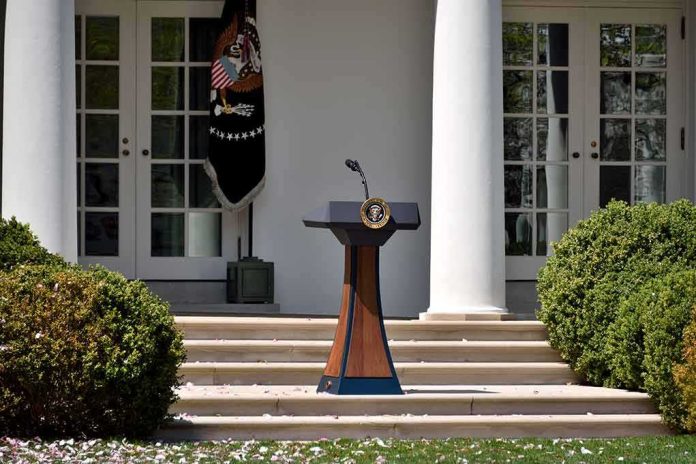
President Trump urged Congress to pass a national film and TV tax credit, drawing rare, public support from Democrats who usually oppose his agenda.
Story Snapshot
- Trump called on Congress to approve a federal production incentive to keep entertainment jobs in the United States.
- Democratic Rep. Laura Friedman backed swift passage, citing a year of talks with unions, studios, and producers.
- Supporters point to state studies that show job gains and local spending from film credits.
- Skeptics cite research that most film incentives lose money and do little for long-term jobs.
What President Trump Asked Congress To Do
On August 31, President Trump publicly pressed Congress to create a federal production tax incentive for film and television. He framed it as a way to bring jobs and shoots back to American cities after years of work moving overseas or to other countries that offer rich subsidies. The call landed fast on Capitol Hill and in Hollywood. It also put a spotlight on how much power Congress has to shape where and how films get made.
Democratic Representative Laura Friedman of California welcomed the request the same day. She said the legislation “needs to pass — and to pass quickly.” She also said she spent more than a year meeting with actor Jon Voight, unions, studios, and producers to build a bipartisan case for a national credit. That unusual alliance shows how this issue crosses party lines when jobs, middle-class crew work, and local vendors are at stake.
Why Supporters Say A Federal Credit Matters
Backers argue a national credit would stop the race among states and help crews in every region, not just a few hubs. They point to state reports that show gains from incentives. Hawai‘i’s analysis found each dollar of credit generated more than two dollars in state economic activity, though it returned less than a dollar to the treasury in taxes. Advocates say that boost still helps workers, small businesses, and cities that host productions.
They also say a federal credit could reduce the need for massive state-level bidding wars. By setting one clear national floor, Congress could make the United States more competitive with Canada and Europe, where national incentives draw many shoots. News reports describe growing bipartisan interest and the prospect of draft legislative text within weeks, with support from lawmakers who rarely agree with President Trump on other policies.
What Skeptics Warn Could Go Wrong
Critics respond that many state film incentives look good on paper but lose money when you count the cost. The University of Southern California Price School summarized research by Michael Thom that found little to no impact on film employment and revenue-negative results. He argued a federal version would likely fail on a larger scale and not pay for itself through added federal tax receipts. Budget watchdogs in several states have reached similar conclusions over the years.
Opponents also warn that large studios and unions could capture most of the benefits while taxpayers shoulder the bill. They question whether a national credit would create new shoots or simply move them around the map. They add that many studies funded by industry groups show big “multiplier” effects, while independent reviews often show weaker gains. That split makes design details crucial if Congress proceeds — including caps, audits, wage floors, and sunset dates.
What Congress Could Do Next To Protect Taxpayers
Lawmakers can blend the two camps’ goals. They can target the credit to real job creation by tying it to in-state crew wages, training, and apprenticeships. They can add strict audits, public cost reports, and clawbacks when promised jobs do not appear. Caps can limit risk and prevent runaway costs. A hard sunset can force a fresh vote after new data comes in. These steps could focus the policy on workers, not only on corporate bottom lines.
🚨What could a national film tax credit look like, who am I working with to get it done, and how did we get Trump on our side?
Spoke with @knxnews radio about all this and more. pic.twitter.com/E2LXlEzZCd
— Rep. Laura Friedman (@RepFriedmanCA) September 10, 2026
The deeper issue goes beyond Hollywood. People on the right and left see a system that often rewards insiders while missing kitchen-table needs. If Congress moves here, the process will matter as much as the promise. Clear rules, public ledgers, and worker-first metrics can show whether Washington serves citizens or caters to the well-connected. That proof is essential if leaders want to rebuild trust while trying to keep good jobs at home.
Sources:
townhall.com, friedman.house.gov, ep.com, nbcnews.com, politico.com, esd.ny.gov, towson.edu