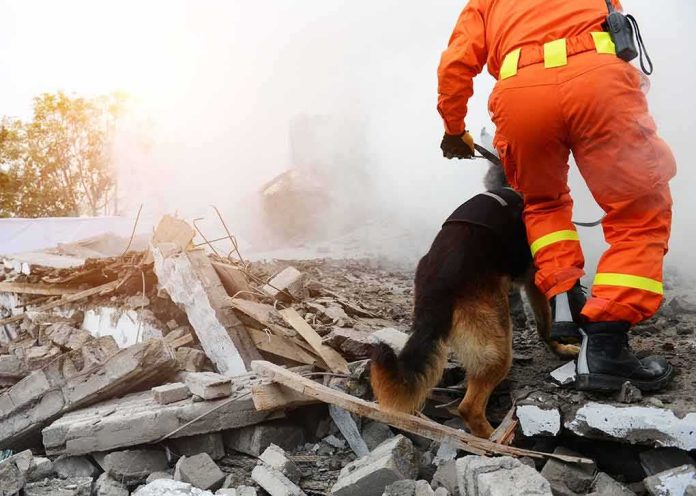
Rescuers in Nepal are cutting into mud-choked hydropower tunnels to reach hundreds of workers feared trapped after deadly floods, as the army reports its first breakthrough at a blocked entrance.
Story Snapshot
- Officials say the main push is to open tunnels at multiple hydropower sites.
- The Nepali Army reached one tunnel entrance and began clearing debris.
- Authorities cite hundreds to more than 900 workers unaccounted for across projects.
- About 10,000 troops and experts from China and India are aiding the effort.
Rescue Command Focuses on Opening Blocked Tunnels
Nepal’s Ministry of Energy, Water Resources and Irrigation said crews are concentrating on opening flood-blocked tunnels at hydropower projects after sudden high water struck mountain sites late this week. Officials said more than 100 people remained trapped in some locations, while national figures placed the number of workers believed unaccounted for across affected projects much higher. Leaders stressed that fast access is vital because time and rising debris loads threaten air pockets and safe paths for survivors.
Reuters reported that rescue operations are active at five hydroelectric projects, with the “main focus” on tunnel access. The Nepali Army said teams are using controlled blasts, excavators, and search lights to cut through packed mud and rock. Crews are also pumping water where possible to lower levels inside shafts. Commanders said the priority remains to punch through to interior chambers where workers may have gathered when the floods hit.
First Breakthrough and Scale of the Mobilization
Army officials said crews reached the entrance of at least one tunnel and began clearing debris, calling it the first breakthrough since the waters blocked access. The national disaster authority said roughly 10,000 troops are now deployed to the rescue. Specialists from China and India are assisting, and heavy machinery is being airlifted into rugged valleys. The army’s plan combines ground drilling, debris removal, and careful blasting to speed access without causing new collapses.
Conflicting headcounts reflect chaos across several sites. The Ministry of Energy cited more than 100 trapped in specific tunnels, while separate tallies from national officials placed the number of workers believed to be trapped or out of contact across multiple projects in the hundreds. One report put the figure at about 933 across 11 hydropower locations. Officials cautioned that rosters and communications vary by site, which can cause fast-moving totals to shift.
Confirmed Rescues and Conditions Underground
Local reporting described successful extractions at the Upper Trishuli tunnel system, where the Nepali Army and partners pulled out workers and residents who had taken refuge inside. One outlet said 350 people were rescued alive there as teams continued to search for others. Those rescues showed that air pockets and intact galleries can sustain survivors for a time, but moving them out through thick mud and unstable slopes remains slow and risky.
#Watch: Rescuers in Nepal are battling mud, rock and debris to reach hundreds of workers feared trapped inside hydropower tunnels after last week’s devastating floods.
Teams from Nepal, India and China are assisting the operation as the death toll crosses 900 and nearly 5,000… pic.twitter.com/dPkJyrykzV
— India Today Global (@ITGGlobal) August 31, 2026
Families and work crews said the tunnels fill with silt, rock, and water when rivers surge, making any movement hard. Commanders described a step-by-step process: locate the least-damaged entrance, clear collapsed sections, and then probe deeper chambers. Every meter cleared can take hours. Poor cell coverage, damaged bridges, and steep terrain add delays. Even so, officials say the multi-agency push is accelerating as more equipment reaches the sites and debris maps improve.
Why This Disaster Fits a Wider Himalayan Pattern
Hydropower tunnels in the Himalayas run through weak rock and landslide-prone slopes. When floods or slope failures strike, confined spaces turn dangerous fast. Studies on Nepal’s projects cite subsurface geology, force majeure events, and construction delays as key risks that can cascade during extreme weather. That mix often produces shifting casualty counts and rescue narratives that depend first on state and operator reporting, then on later technical reviews of what failed and why.
What to Watch Next
Rescuers aim to open more blocked portals today and push farther inside the worst-hit tunnels. Officials plan to reconcile worker rosters with on-site headcounts as communications improve. The public should expect updated tallies from project managers and national authorities as rescues proceed. The focus remains on life-saving access, followed by engineering checks to stabilize galleries and protect crews. As in past Himalayan emergencies, clear numbers will likely firm up after the most urgent rescues finish.
Sources:
kathmandupost.com, english.khabarhub.com, bbc.com, tbsnews.net